

Maddy summaryThe HCBS Access Act (S 762) requires states to provide Medicaid coverage for home and community-based services (HCBS) to eligible individuals with disabilities and older adults, aiming to eliminate waiting lists and ensure access to community-based care. The bill establishes a comprehensive definition of HCBS that includes personal assistance, transportation, respite care, housing support, and other services necessary for community living. It mandates states to develop implementation plans to expand access, improve compensation and working conditions for direct care workers, and report on quality measures and demographic data related to HCBS access. The bill also creates a national technical assistance center to support workforce development and ensures services are provided in settings meeting specific quality standards.
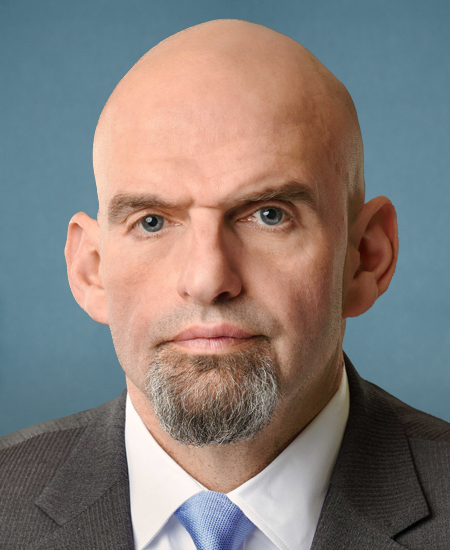
Sen. John Fetterman
Sponsored bills
Maddy summaryThis bill reauthorizes the Healthy Food Financing Initiative (HFI) through specific annual funding levels for fiscal years 2024-2028. It directs the USDA to use Commodity Credit Corporation funds, setting $25 million for 2024, $30 million for 2025, $35 million for 2026, $40 million for 2027, and $50 million annually starting in 2028. The initiative provides grants and loans to support grocery stores and food retailers in underserved communities, particularly in low-income areas lacking access to healthy food. This reauthorization ensures continued federal funding for programs that expand access to affordable, nutritious food options.
Maddy summaryThe Tax Fairness for Workers Act (S 738) allows employees to deduct certain work-related expenses from their taxable income. It creates an above-the-line deduction for union dues and adds a new exception permitting miscellaneous itemized deductions for other employee expenses, such as uniforms or tools, that were previously limited. This directly affects wage-earning workers who pay union dues or have unreimbursed job costs. The changes apply to taxable years beginning after December 31, 2022, and remove prior restrictions on these deductions.
Maddy summaryS 701, the Women’s Health Protection Act of 2023, prohibits states from imposing restrictions on abortion that are more burdensome than those for comparable medical procedures. It protects access to abortion before fetal viability (when a fetus could survive outside the womb) by banning requirements like unnecessary in-person visits, medically inaccurate counseling, or facility restrictions not applied to similar care. Post-viability abortions remain protected when medically necessary to safeguard a patient’s life or health. The bill preempts conflicting state laws and ensures enforcement through federal courts to uphold these access protections for patients and health care providers.
Maddy summaryThis bill authorizes the U.S. Mint to produce commemorative coins honoring working dogs, including $5 gold, $1 silver, and half-dollar coins, to be sold starting January 1, 2025. A surcharge of $35 per gold coin, $10 per silver coin, and $5 per half-dollar coin will be added to the sale price, with all surcharge funds directed to America’s VetDogs to support its service dog programs for veterans and people with disabilities. The coins are legal tender but will only be issued for one year (2025), with production limited to specified quantities (50,000 gold, 500,000 silver, 750,000 half-dollars). The bill does not create new government programs but uses commemorative coin sales to fund existing service dog initiatives.
Maddy summaryS 722, the Freedom To Invest in Tomorrow's Workforce Act, allows individuals to use funds from 529 college savings accounts to cover career training and credentialing expenses. It expands the definition of "qualified higher education expenses" to include tuition, fees, and exam costs for recognized postsecondary credential programs (like industry certifications) that meet specific standards under the Workforce Innovation and Opportunity Act. This directly affects workers seeking job-focused training or certifications instead of traditional college degrees, enabling them to use existing 529 savings for these expenses. The bill takes effect for expenses paid after its enactment date.
Maddy summaryThis bill prevents employers from dropping health insurance coverage for workers during lawful strikes or lockouts. It prohibits employers from terminating group health plans (employer-sponsored insurance) for employees participating in strikes or during employer-imposed lockouts. Employers violating this rule face civil penalties up to $75,000 per violation for lockouts ($150,000 for repeat offenses), and up to $50,000 for strikes ($100,000 for repeat offenses). The penalties apply regardless of other remedies the National Labor Relations Board may order.
Maddy summaryThis bill creates a new definition for "currently accepted medical use with severe restrictions" under the Controlled Substances Act, applying only to specific drugs. It covers drugs designated as FDA breakthrough therapies or authorized for expanded patient access under strict conditions for serious diseases with no alternative treatments. The definition excludes FDA-approved drugs and drugs under clinical hold. The bill requires the Health Secretary to notify the Attorney General when such drugs qualify, triggering specific scheduling procedures and mandating reclassification within 90 days if the drug no longer meets the criteria.
Maddy summarySRES 57 is a Senate resolution honoring David Ferdinand Durenberger, a former U.S. Senator from Minnesota (served 1978-1989). It commemorates his life and career, highlighting his role as the lead Republican sponsor of the Americans with Disabilities Act and his work protecting Minnesota's natural resources like the Boundary Waters Canoe Area Wilderness. The resolution directs the Senate to formally recognize his passing and transmit a copy to his family. This is a ceremonial resolution with no policy changes or direct impact on constituents.
Maddy summaryThis bill authorizes the presentation of a Congressional Gold Medal to honor Navy pilot Everett Alvarez, Jr., for his service as a Vietnam War POW and subsequent public service. It directs the Speaker of the House and Senate President pro tempore to arrange for the medal's presentation, specifying it must bear his name and image. Bronze duplicates may be sold to cover production costs, with proceeds deposited into the U.S. Mint fund. The bill is purely ceremonial, recognizing Alvarez's 8+ years as a prisoner of war and his post-military career. It does not create new policies or affect any government programs.