

Emergency Relief for Farmers of Color Act of 2021 This bill provides funds for the Department of Agriculture (USDA) to provide assistance to address historical discrimination and disparities in the agriculture sector. For example, USDA must provide debt forgiveness to help socially disadvantaged farmers and ranchers pay off outstanding farm loan debts and address issues relating to COVID-19 (i.e., coronavirus disease 2019). Additionally, USDA must provide a competitive grant to a school of law or legal research entity to establish the National Center for Minority Farmer Agricultural Law Research and Information. It must also provide grants and loans to resolve property issues relating to ownership and succession on farmland. The bill provides financial assistance to cooperative development centers, individual cooperatives, or groups of cooperatives that serve socially disadvantaged groups. It also provides financial assistance and technical assistance to certain nonprofit organizations that provide services to socially disadvantaged farmers and ranchers. USDA must provide support for research, education, and extension at historically Black colleges and universities and other minority-serving institutions. It must also provide grants to land-grant colleges and universities for student scholarships, including for students who are members of Indian tribes and pursuing an agricultural field of study. The bill also requires USDA to establish an equity commission to address and mitigate discrimination across its agency.
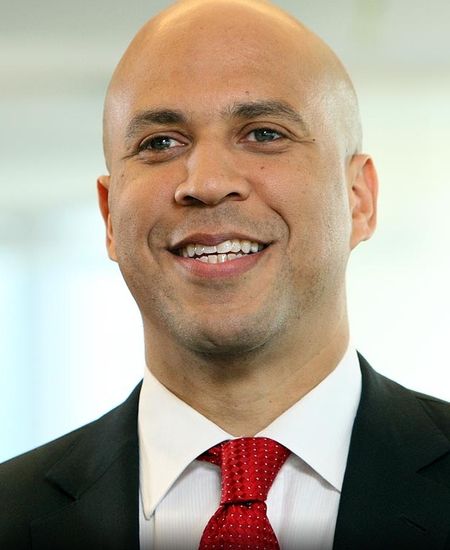
Sen. Cory A. Booker
Sponsored bills
Child and Dependent Care Tax Credit Enhancement Act of 2021 This bill modifies the tax credit for employment-related expenses incurred for the care of a taxpayer's dependent to (1) increase to $400,000, the adjusted gross income threshold level above which the credit is incrementally reduced; (2) increase the dollar limits on the allowable amount of the credit; (3) specify rules for married couples filing separate returns; (4) allow an inflation adjustment to the adjusted gross income threshold and the maximum credit amounts, beginning after 2022; and (5) make the credit refundable.
American Opportunity Accounts Act This bill establishes tax-exempt American Opportunity Accounts to provide children at birth with a $1,000 savings account with annual contributions up to $2,000 depending on family income. The accounts are available to children at age 18 for specified purposes, including educational expenses, home ownership, and investment that provides long-term returns.
This bill provides funds for assistance to homeowners to prevent mortgage defaults, foreclosures, and displacements of individuals and families experiencing financial hardship after January 21, 2020. The Department of the Treasury must disburse the funds to state housing finance agencies, territories, and Indian tribes for the provision of such assistance.
Family and Medical Insurance Leave Act or the FAMILY Act This bill entitles every employee to a family and medical leave insurance (FMLI) monthly benefit payment of two-thirds of the employee's regular pay, limited to a maximum of $4,000, for not more than 60 days of qualified caregiving. The bill establishes the Office of Paid Family and Medical Leave within the Social Security Administration to administer the FMLI program. An FMLI benefit payment must be coordinated with any periodic benefits received under a state or local temporary disability insurance or family leave program. The bill imposes a tax on employers, employees, and self-employed individuals to fund FMLI benefits. It also establishes the Federal Family and Medical Leave Insurance Trust Fund to hold tax revenues.
Competition and Antitrust Law Enforcement Reform Act of 2021 This bill revises antitrust laws applicable to mergers and anticompetitive conduct. Specifically, the bill applies a stricter standard for permissible mergers by prohibiting mergers that (1) create an appreciable risk of materially lessening competition, or (2) unfairly lower the prices of goods or wages because of a lack of competition among buyers or employers (i.e., a monopsony). Under current law, mergers that substantially lessen competition are prohibited. Additionally, for some large mergers or mergers that concentrate markets beyond a certain threshold, the bill shifts the burden of proof to the merging parties to prove that the merger does not violate the law. The bill also prohibits exclusionary conduct that presents an appreciable risk of harming competition. The bill also establishes monetary penalties for violations, requires annual reporting for certain mergers and acquisitions, establishes within the Federal Trade Commission (FTC) the Office of the Competition Advocate, and sets forth whistleblower protections. The Government Accountability Office must report on (1) the success of merger remedies required by the Department of Justice or the FTC in recent consent decrees; and (2) the impact of mergers and acquisitions on wages, employment, innovation, and new business formation.
Paycheck Fairness Act This bill addresses wage discrimination on the basis of sex. Specifically, it (1) limits an employer's defense that a pay differential is based on a factor other than sex to only bona fide job-related factors in wage discrimination claims, (2) enhances nonretaliation prohibitions, (3) makes it unlawful to require an employee to sign a contract or waiver prohibiting the employee from disclosing information about the employee's wages, and (4) increases civil penalties for violations of equal pay provisions. Additionally, the Equal Employment Opportunity Commission (EEOC) and the Office of Federal Contract Compliance Programs must train EEOC employees and other affected parties on wage discrimination. The bill directs the Department of Labor to (1) establish and carry out a grant program for negotiation skills training for girls and women, (2) conduct studies to eliminate pay disparities between men and women, and (3) make available information on wage discrimination to assist the public in understanding and addressing such discrimination. The bill also establishes the Secretary of Labor's National Award for Pay Equity in the Workplace for an employer who has made a substantial effort to eliminate pay disparities between men and women. Finally, the bill requires the EEOC to issue regulations for collecting from employers compensation and other employment data according to the sex, race, and national origin of employees for use in enforcing laws prohibiting pay discrimination.
Spotlight Act This bill renders null and void final Internal Revenue Service (IRS) regulations published on May 28, 2020, relating to the reporting requirements of tax-exempt organizations. The bill requires tax-exempt organizations that fall under sections 501(c)(4), 501(c)(5), and 501(c)(6) of the Internal Revenue Code (e.g., social welfare organizations, labor organizations, business leagues) to disclose the names and addresses of all substantial contributors (persons who contribute more than $5,000 per year to such organizations) on their information returns. The bill also eliminates the authority of the IRS to provide exceptions to the disclosure requirements for tax-exempt organizations. This provision does not apply to determinations made by the IRS before July 16, 2018.
Access Technology Affordability Act of 2021 This bill allows a refundable tax credit equal to the amounts paid for qualified access technology for use by a blind individual who is the taxpayer, the taxpayer's spouse, or a dependent of the taxpayer. Qualified access technology is hardware, software, or other information technology with the primary function of converting or adapting information that is visually represented into forms or formats useable by blind individuals. The credit is limited to (1) costs that are not compensated by insurance or otherwise, and (2) an aggregate amount of $2,000 per blind individual in any period of three consecutive taxable years. The credit must be adjusted for inflation after 2022 and terminates after 2026.
Climate Smart Ports Act of 2021 This bill requires the Environmental Protection Agency to establish a grant program for purchasing or installing equipment and technology to reduce pollution at ports. Specifically, the grants must be used for equipment or technology that produces zero exhaust emissions of certain pollutants and greenhouse gases or captures 100% of the exhaust emissions produced by an ocean-going vessel at berth.