

Maddy summaryS 566, the "Charitable Act," modifies tax deductions for charitable contributions for individuals who do not itemize their deductions on federal income taxes. It allows these taxpayers to deduct up to one-third of their standard deduction amount for 2023 and 2024 tax years, instead of the usual itemized deduction. The bill also removes references to a repealed penalty provision (Section 6662(b)(10)) and adjusts related penalty language in the tax code. This directly affects non-itemizing taxpayers who make charitable contributions, providing a new deduction option for those years only. The changes apply to tax years beginning after December 31, 2022.
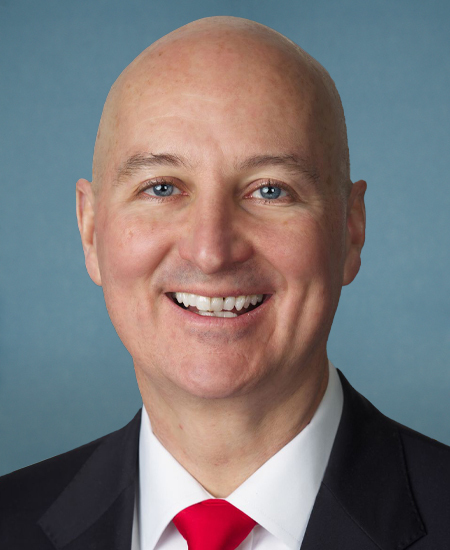
Sen. Pete Ricketts
Sponsored bills
Maddy summaryThe DAIRY PRIDE Act (S 549) amends federal food labeling rules to prevent plant-based products from using dairy-related terms like "milk," "yogurt," or "cheese" unless they meet the FDA's definition of dairy: derived from the lacteal secretion of hooved mammals (e.g., cows). It directly affects manufacturers of plant-based alternatives (e.g., almond, oat, or coconut milk) that currently label products with dairy terms. The bill requires the FDA to enforce this definition through new guidance within 180 days of enactment, clarifying that products not meeting the standard cannot be marketed as dairy. It does not change nutritional requirements but aims to reduce consumer confusion about product composition.
Maddy summaryThe National Right-to-Work Act would amend federal labor law to prohibit requiring employees to join a union or pay union dues as a condition of employment. It removes existing provisions in the National Labor Relations Act that allowed for "union security agreements" (such as agency shops) and similarly amends the Railway Labor Act for railroad workers. This change would mean private sector and railroad workers nationwide would not face mandatory union fees to retain their jobs, applying to all new or renewed employment agreements after enactment. The bill directly affects all covered employees in the private workforce and railroad industry by eliminating forced financial contributions to labor unions.
Eliminating Leftover Expenses for Campaigns from Taxpayers (ELECT) Act of 2023 This bill terminates (1) the taxpayer election to designate $3 of income tax liability for financing of presidential election campaigns, (2) the Presidential Election Campaign Fund, and (3) the Presidential Primary Matching Payment Account. The Department of the Treasury must transfer funds remaining in the Presidential Election Campaign Fund to the treasury for the sole purpose of reducing the deficit.
Maddy summaryS 428, the FIND Act, requires federal contractors and first-tier subcontractors to certify they do not discriminate against firearm industry businesses (including manufacturers, dealers, and ammunition sellers) in their policies or practices. It mandates that contractors avoid refusing services or imposing restrictions based on bias against the firearm industry rather than objective business criteria like financial risk or legal compliance. Contracts violating this requirement face termination and potential debarment, though the rule excludes sole-source contracts. The law applies to all new federal contracts awarded after its enactment.
Maddy summaryS 444 requires the U.S. Senate to approve any World Health Organization (WHO) pandemic preparedness treaty before it becomes binding on the United States. The bill mandates that agreements resulting from the WHO’s pandemic treaty negotiations (currently led by the International Negotiating Body) must be treated as treaties under the U.S. Constitution, requiring Senate ratification with a two-thirds vote. It directly affects U.S. foreign policy implementation by ensuring congressional oversight of international pandemic agreements. The bill responds to concerns about WHO’s pandemic management and aims to prevent executive agreements from bypassing Senate review.
Maddy summaryS 411, the EAGLES Act of 2023, reauthorizes and expands the National Threat Assessment Center (NTAC) within the U.S. Secret Service to prevent targeted violence, particularly in schools. The bill requires the NTAC to provide training, research, and consultation on threat assessment to schools, law enforcement, and mental health professionals, with specific mandates to hire staff specializing in child psychology and school threat assessment. It directs the Center to develop evidence-based programs, track training participation by state, and report annually to Congress on implementation. The bill uses unobligated DHS coronavirus funds for this purpose and explicitly prohibits using these funds for firearm training.
Maddy summaryThis joint resolution (SJRES 7) seeks congressional disapproval of a 2023 rule defining "Waters of the United States" (WOTUS), which would have changed how federal agencies regulate wetlands and waterways. It targets a rule jointly issued by the Army Corps of Engineers, EPA, and other agencies (88 Fed. Reg. 3004, Jan. 18, 2023), directly affecting landowners, developers, and environmental regulators by altering jurisdiction over water resources. If passed, the resolution would nullify the rule under a specific disapproval process in Title 5 of U.S. Code, preventing it from taking effect. The resolution does not create new regulations but aims to block an existing federal rule. This is a procedural step, not a new law.
Maddy summaryThis proposed constitutional amendment (SJRES 13) would require the federal government to balance its annual budget, meaning spending could not exceed revenue unless Congress passes a specific exception with a two-thirds vote. It also sets a limit of 18% of GDP for total government spending, with similar supermajority requirements to exceed this cap. The bill would mandate the President to submit a balanced budget proposal to Congress each year and require a two-thirds vote for tax increases or debt limit hikes. As a proposed amendment, it would only take effect if ratified by three-fourths of state legislatures.
Maddy summaryThis joint resolution (SJRES 12) seeks congressional disapproval of the District of Columbia Council’s approval of the Revised Criminal Code Act of 2022 (D.C. Act 24-789). It directly affects D.C. residents and local government, as the resolution targets the District’s newly enacted criminal code. The mechanism is a formal congressional disapproval under the District of Columbia Home Rule Act, requiring passage by both chambers to block the D.C. law from taking effect. The resolution does not alter the D.C. code itself but aims to halt its implementation through federal action.