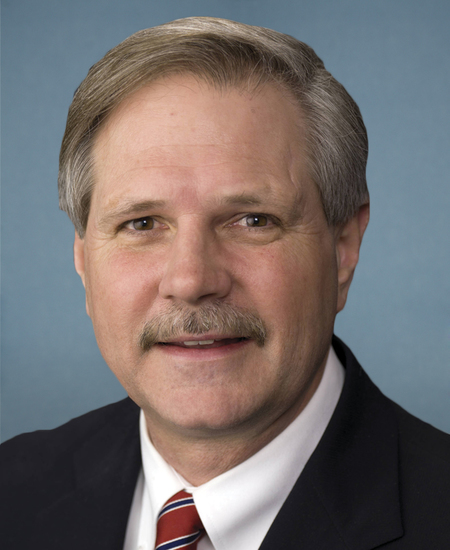
This resolution offers the condolences of the Senate regarding the death of Senator David Henry Gambrell and honors his life and legacy.
Sponsored bills
Accelerating Access to Critical Therapies for ALS Act This bill establishes grant programs to address neurodegenerative diseases, such as amyotrophic lateral sclerosis (also known as ALS or Lou Gehrig's disease), and contains other related provisions. The Department of Health and Human Services (HHS) shall award grants to eligible entities to facilitate patients' access to investigational drugs that diagnose or treat ALS. The Food and Drug Administration (FDA) shall award grants to public and private entities to cover the costs of research and development of drugs that diagnose or treat ALS and other severely debilitating neurodegenerative diseases. HHS shall also establish the Public-Private Partnership for Neurodegenerative Diseases between the National Institutes of Health, the FDA, and at least one eligible entity (generally, an institution of higher education or a nonprofit organization). The partnership shall support the development and regulatory review of drugs that address ALS and other rare neurodegenerative diseases. The FDA shall publish on its website a five-year action plan for fostering the development of drugs that improve or extend the lives of people living with rare neurodegenerative diseases.
Protecting Our Well-being by Expanding Russian Sanctions Act or the POWERS Act This bill expands existing sanctions against foreign persons engaged in certain activities related to the Nord Stream 2 and TurkStream pipelines, two Russian pipelines that were constructed to supply natural gas to Europe. Currently, these sanctions apply to foreign persons that (1) provided pipe-laying vessels for the construction of either pipeline, (2) facilitated certain transactions for such vessels, (3) provided certain underwriting services or insurance for such vessels, or (4) provided certain services for such vessels or Nord Stream 2. Under this bill, these sanctions must also apply to any foreign person that engaged in any transaction with such sanctioned persons. The bill also reinstates any sanctions that were previously waived with respect to Nord Stream 2 AG (the company established to construct and operate the pipeline) or any of its corporate officers. Such reinstated sanctions may not be waived except by an act of Congress.
Don't Weaponize the IRS Act This bill codifies regulations promulgated by the Trump Administration exempting certain tax-exempt organizations from specified reporting requirements. Specifically the bill increases from $5,000 to $50,000 the gross receipts threshold used to determine the eligibility of tax-exempt organizations for the exemption from certain disclosure and reporting requirements; expands the definition of organization to include tax-exempt charitable organizations and organizations with no significant activities relating to lobbying, political activity, and the operation of a trade or business; exempts from disclosure the names and addresses of contributors to an organization in its annual informational return; and extends exemptions from reporting requirements to political action committees (i.e., 527 organizations).
This resolution affirms U.S. support for Israel's right to peace and security as well as its right to defend itself and its civilians against terror.
Assisting Narcotics and Trafficking officers in Interdicting Drugs Act or the ANTI-Drugs Act This bill provides statutory authorization for the Operation Stonegarden grant program within the Department of Homeland Security. Through the program, the Federal Emergency Management Agency shall provide grants for enhancing border security to law enforcement agencies that are (1) in a state with an international land or maritime border, and (2) involved in an active U.S. Customs and Border Protection operation coordinated through the Border Patrol. The bill also reauthorizes through FY2026 (1) the High Intensity Drug Trafficking Areas Program, which provides federal assistance to state and local enforcement agencies in areas deemed as critical drug trafficking regions; and (2) the Community Oriented Policing Services program within the Department of Justice, which provides grants for various law enforcement-related purposes.
Postal Service Reform Act of 2021 This bill addresses the finances and operations of the U.S. Postal Service (USPS). The bill requires the Office of Personnel Management to establish, within the Federal Employees Health Benefits Program, the Postal Service Health Benefits Program for USPS employees and retirees and provides for coordinated enrollment of retirees under this program and Medicare. The bill repeals the requirement that the USPS annually prepay future retirement health benefits. Additionally, the USPS may establish a program to enter into agreements with an agency of any state government, local government, or tribal government, and with other government agencies, to provide certain nonpostal products and services that reasonably contribute to the costs of the USPS and meet other specified criteria. The USPS must develop and maintain a publicly available dashboard to track service performance and must report regularly on its operations and financial condition. The bill requires mail delivery to occur at least six days a week. The Postal Regulatory Commission must annually submit to the USPS a budget of its expenses. It must also conduct a study to identify the causes and effects of postal inefficiencies relating to flats (e.g., large envelopes). The USPS Office of Inspector General shall perform oversight of the Postal Regulatory Commission.

Concentrating on High-value Alzheimer's Needs to Get to an End (CHANGE) Act of 2021 This bill modifies the requirements under Medicare for diagnosing and treating Alzheimer's disease and other cognitive impairments in older adults. Specifically, the bill expands the cognitive impairment detection benefit during annual wellness visits to require the use of validated detection tools and documentation of the results in the patient's medical record. Further, when a cognitive impairment is detected, the patient must be referred to an appropriate diagnostic service provider and other specified supports. Additionally, the Centers for Medicare & Medicaid Services must implement Medicare policies that increase the identification and response to patients' Alzheimer's disease risk factors and incentivize providers to utilize high-quality cognitive impairment diagnosis practices.
Rural Jobs Act This bill allocates an additional $500 million in 2022 and 2023 for new markets tax credit investments in the Rural Jobs Zone (an area comprised of low-income communities with populations not greater than 50,000 that are not adjacent to an urbanized area). The bill also requires that at least 25% of such investments be made in areas that are persistent poverty counties, high migration rural counties, or both.
This resolution designates the week of May 9-May 15, 2021, as National Police Week.