Maddy summaryThe Plug Offshore Wells Act requires the Secretary of the Interior to submit an annual report to Congress and the public detailing the status of decommissioning offshore oil and gas wells, platforms, and pipelines. This report must include data on the number of decommissioning applications received, wells left in place versus removed, pipeline lengths decommissioned, and enforcement actions taken by the Bureau of Safety and Environmental Enforcement. The law applies to the Department of the Interior and affects the oversight of offshore energy infrastructure cleanup. The reporting requirement begins two years after the bill is enacted and continues annually thereafter.
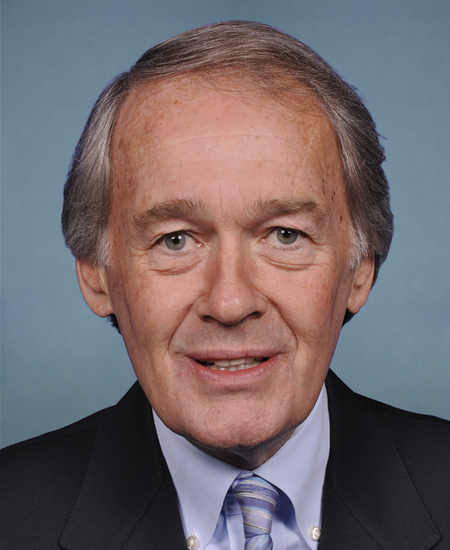
Sen. Edward J. Markey
Sponsored bills
Older Americans Act Reauthorization Act of 2025 This bill reauthorizes through FY2030, modifies, and establishes programs under the Older Americans Act, which supports social services and activities for individuals aged 60 years or older. Reauthorized programs and activities include the national eldercare locator service; regional aging and disability resource centers; grants to support counseling and assistance on pensions and other retirement benefits; grants to support home-delivered nutrition services (sometimes referred to as meals on wheels programs); programs to facilitate the delivery of supportive services to tribal organizations; and programs to prevent elder abuse, neglect, and exploitation. The bill also modifies existing programs for older individuals, including by explicitly permitting states to use certain grant funds to make carryout meals available at congregate meal sites or community locations. (Some providers began offering carryout meals to seniors in response to the COVID-19 pandemic.) Further, the bill permits the Administration on Aging to establish and operate, through grants to or contracts with eligible entities, a national resource center to support growth of the direct care workforce. The center’s activities may include the provision of training and technical assistance and the promotion of strategies to recruit and retain direct care workers. Finally, the bill establishes or reconvenes certain advisory groups, including (1) an advisory committee to provide guidance regarding the needs of older Native Americans and the implementation of related programs, and (2) a White House Conference on Aging to recommend improvements to federal programs that serve older individuals.

Maddy summaryThe Good Jobs for Good Airports Act establishes new federal standards to ensure that workers at small, medium, and large hub airports receive a living wage and adequate health benefits. It defines "covered service workers" to include employees in roles such as baggage handling, passenger assistance, security, ticketing, and concession services, regardless of whether they are directly hired by the airport or work for a contractor. Under the bill, employers must pay these workers at least the higher of the federal Service Contract Act wage rates or applicable state and local minimum wages, and they must provide similar fringe benefits. To enforce these rules, the Secretary of Labor and the Secretary of Transportation will have the authority to investigate violations, issue penalties, and require employers to submit monthly compliance certifications. Additionally, the law allows private individuals to file lawsuits against non-compliant employers and mandates annual reports to Congress on the implementation of these labor standards.
Maddy summaryThe Water Emergency and Technical Assistance Act of 2026 establishes a funding mechanism to help states and water treatment facilities respond to emergencies that pose a significant danger to public health, such as sewer overflows or cybersecurity incidents. Under this bill, the Environmental Protection Agency Administrator can provide grants and technical assistance for activities that prevent or mitigate health risks but would be too costly for ratepayers to fund on their own. The legislation authorizes $50 million annually from fiscal years 2027 through 2031 to support these emergency efforts and also increases the existing funding for drinking water emergencies during the same period.
Maddy summaryThis joint resolution seeks to formally disapprove a specific rule issued by the Centers for Medicare & Medicaid Services regarding the Affordable Care Act and the Basic Health Program for 2027. If passed, the measure would nullify the rule, preventing it from taking legal effect. The bill directly impacts the administration of healthcare benefits and payment parameters for the upcoming year. It is sponsored by a group of Democratic senators and is intended to halt the implementation of the agency's proposed changes.
Maddy summaryThis Senate resolution commemorates the upcoming 250th anniversary of the United States while reaffirming a commitment to liberty and equality for all immigrant communities. It does not create new laws or change specific policies but instead expresses the Senate's support for expanding programs that help immigrants overcome barriers such as language difficulties and limited access to jobs or legal services. The text encourages collaboration with community organizations to ensure integration efforts are effective and urges government bodies at all levels to invest in initiatives that promote equity and inclusion. Ultimately, the resolution serves as a formal statement celebrating the contributions of immigrants and calling for a united future based on shared democratic ideals.
Maddy summaryThis Senate resolution honors the 27th anniversary of the Supreme Court's Olmstead v. L.C. decision, which established that states must offer community-based services to individuals with disabilities rather than forcing them into institutions. The bill affirms the legal requirement that people with disabilities should live in the most integrated settings possible and salutes those who have expanded home and community support services. It also condemns a recent Department of Justice opinion that challenges this integration mandate and calls on the department to rescind that opinion. Additionally, the resolution criticizes cuts to the Medicaid program and urges Congress to restore funding to protect the health and independence of people with disabilities.
Maddy summaryThis Senate resolution formally recognizes June 2026 as LGBTQ Pride Month to honor the history, contributions, and ongoing struggles of lesbian, gay, bisexual, transgender, and queer individuals in the United States. The document outlines the community's achievements in civil rights and public service while highlighting persistent challenges such as discrimination in employment and housing, as well as hate crimes. It also acknowledges the global context of LGBTQ rights, noting both international progress and the persecution faced by individuals in various countries. Ultimately, the resolution expresses support for equal treatment and encourages the public to use the month to learn about and celebrate the LGBTQ community.
Maddy summaryThe Modernizing Opioid Treatment Access Act 2.0 of 2026 allows licensed addiction medicine specialists to prescribe methadone for opioid use disorder to be dispensed directly through pharmacies, rather than requiring patients to visit traditional treatment clinics. Under this bill, these practitioners must use electronic prescribing and can only dispense liquid or dispersible tablet formulations, while pharmacies do not need separate registration to handle these prescriptions. The law also permits telemedicine for maintenance or detoxification treatment and requires doctors to obtain informed consent from patients regarding how privacy protections differ between clinic and pharmacy settings. Additionally, the Attorney General can revoke a doctor's registration if a state requests it, and the Drug Enforcement Administration must report annually on the number of registered providers and pharmacies involved in the program.
Maddy summaryThe STOP Frontovers Act of 2026 directs the Secretary of Transportation to create a new federal safety standard for motor vehicles designed to prevent low-speed accidents where a driver strikes a person or object in their blind spot while moving forward. To achieve this, the bill mandates that vehicles be equipped with advanced detection systems capable of identifying pedestrians, cyclists, and other vulnerable road users, alongside driver alerts and active braking or steering interventions. Manufacturers would be required to install these crash avoidance technologies in new passenger vehicles within two years of the final rule taking effect, with a potential staggered rollout based on vehicle type. Additionally, the law requires the National Highway Traffic Safety Administration to update its data tracking systems to specifically record and report incidents classified as frontovers and backovers.