

Maddy summaryS 2316, the Cooper Davis and Devin Norring Act, requires electronic communication service providers and remote computing services to report to the Attorney General when they have actual knowledge of certain drug-related crimes involving fentanyl, methamphetamine, counterfeit prescription drugs, or unauthorized prescription medications. Providers must submit detailed reports within 60 days, including account information and relevant data about the crime, but not the content of communications. The bill imposes civil penalties of up to $190,000 for failing to report and $100,000 for submitting false reports, while protecting providers from being required to monitor content or scan for violations. It exempts broadband internet and text messaging service providers from these requirements and mandates annual reports from the Attorney General on the number and outcomes of submitted reports. The law aims to improve law enforcement's ability to address drug trafficking while maintaining privacy protections for users.
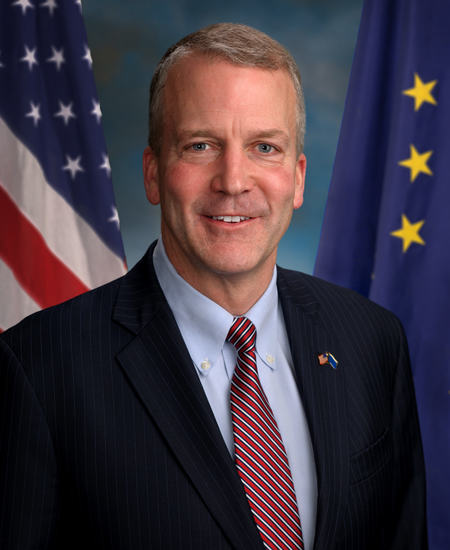
Sen. Dan Sullivan
Sponsored bills
Halt All Lethal Trafficking of Fentanyl Act or the HALT Fentanyl Act This act permanently places fentanyl-related substances as a class into schedule I of the Controlled Substances Act. A schedule I controlled substance is a drug, substance, or chemical that has a high potential for abuse; has no currently accepted medical value; and is subject to regulatory controls and administrative, civil, and criminal penalties under the Controlled Substances Act. Under the act, offenses involving fentanyl-related substances are triggered by the same quantity thresholds and subject to the same penalties as offenses involving fentanyl analogues (e.g., offenses involving 100 grams or more trigger a 10-year mandatory minimum prison term). Additionally, the act establishes a new, alternative registration process for certain schedule I research. The act also makes several other changes to registration requirements for conducting research with controlled substances, including permitting a single registration for related research sites in certain circumstances, waiving the requirement for a new inspection in certain situations, and allowing a registered researcher to perform certain manufacturing activities with small quantities of a substance without obtaining a manufacturing registration. Finally, the act expresses the sense that Congress agrees with the interpretation of the Controlled Substances Act in United States v. McCray , a 2018 case decided by the U.S. District Court for the Western District of New York. In that case, the court held that butyryl fentanyl, a controlled substance, can be considered an analogue of fentanyl even though, under the Controlled Substances Act, the term controlled substance analogue specifically excludes a controlled substance.
Maddy summarySRES 322 designates June 2025 as "National Post-Traumatic Stress Awareness Month" and June 27, 2025, as "National Post-Traumatic Stress Awareness Day" to raise public awareness about post-traumatic stress, particularly among veterans and military personnel. The resolution supports efforts by the Department of Veterans Affairs and Department of Defense to educate about symptoms, treatment, and stigma reduction, while encouraging cultural change and appropriate care. This symbolic gesture has no legal effect or funding implications but aims to reduce stigma and promote mental health support for those affected.
Maddy summaryThis Senate resolution (SRES 283) designates July 6, 2025 - the 90th birthday of the 14th Dalai Lama - as "A Day of Compassion." It affirms U.S. support for the Tibetan people’s human rights, including their distinct religious, cultural, linguistic, and historical identity. The resolution references the 2020 Tibetan Policy and Support Act, emphasizing that decisions about Tibetan Buddhist leadership (including future Dalai Lamas) must be determined by religious authorities within Tibetan Buddhism, not by the Chinese government. As a ceremonial resolution, it expresses symbolic support but does not create new legal obligations.
Maddy summaryThis bill authorizes the minting of commemorative coins for the 2028 Los Angeles Olympic and Paralympic Games and the 2034 Salt Lake City Olympic and Paralympic Winter Games. It specifies four coin types ($5 gold, $1 silver, half-dollar, and proof silver $1) with defined quantities and designs reflecting U.S. athletic participation. A surcharge on each coin sale (e.g., $35 for $5 coins) funds the respective Olympic committees' legacy programs, including youth sports initiatives. The coins are legal tender but intended solely for commemoration, with surcharges directed to the organizing committees after covering minting costs.
Maddy summaryThis resolution expresses the U.S. Senate's support for designating July 10, 2025, as Journeyman Lineworkers Recognition Day. It honors journeyman lineworkers who maintain the nation’s power grid 24/7, restore electricity during disasters, and work in hazardous conditions. The resolution specifically recognizes the 129th anniversary of Henry Miller, the first president of the International Brotherhood of Electrical Workers, who died while restoring power in 1901. The Senate encourages the public to observe this day to reflect on lineworkers’ contributions and sacrifices. (Note: This is a symbolic resolution with no legal force or funding impact.)
Maddy summaryS 2229, the United States Foreign Service Commemorative Coin Act, authorizes the minting of three commemorative coins to honor the 100th anniversary of the U.S. Foreign Service (established by the 1924 Rogers Act). It specifies $5 gold coins (max 50,000), $1 silver coins (max 400,000), and half-dollar coins (max 750,000) to be issued in 2029, featuring designs symbolizing U.S. diplomacy. A surcharge from each coin sale ($35 for gold, $10 for silver, $5 for half-dollar) will fund the Association for Diplomatic Studies and Training to preserve diplomatic history through oral histories and other programs. The coins are legal tender and will be sold at face value plus surcharge and production costs, with all funds going directly to support the Association's work.
Maddy summaryThis bill reauthorizes two existing federal diabetes programs through 2027. It provides $160 million annually for fiscal years 2026 and 2027 for the Special Diabetes Program for Type I Diabetes (serving people with Type I diabetes) and the Special Diabetes Program for Indians (serving Native American communities through Indian Health Services). A final $40 million is allocated for October-December 2027 for both programs, with all funds remaining available until expended. The bill extends current funding levels without changing program eligibility or structure.
Maddy summaryThis bill requires military counselors at U.S. installations to receive training on state foster care rules and resources, designating them as "foster care liaisons" to assist military families. It mandates that Military OneSource, a support service for military families, include a dedicated feature for accessing foster care information and resources by state. The Defense Secretary must also collaborate with the Administration for Children and Families to develop training materials and gather foster care resources for military families. These changes directly affect military families stationed at U.S. bases who may need foster care support, aiming to simplify access to state-specific foster care systems.
Maddy summaryThis Senate resolution (SRES 308) formally honors Frederick W. Smith, founder of FedEx, for his military service (including combat in Vietnam), pioneering business leadership, and dedication to Memphis, Tennessee. It recognizes his role in revolutionizing global logistics and his community contributions through FedEx's operations and philanthropy. The resolution directs the Senate to transmit a copy to his family and share it with the House of Representatives. As a commemorative resolution, it has no policy impact or direct effect on constituents.