

Maddy summaryThis resolution commemorates the one-year anniversary of the July 13, 2024, attempted assassination of President Donald J. Trump in Butler, Pennsylvania. It condemns the attack and other threats against political officials, honors victims Corey D. Comperatore (who died shielding his family), David Dutch, and James Copenhaver (who were injured), and expresses gratitude to first responders. The resolution also condemns incitement of violence against elected officials and calls for unity against political violence. As a symbolic gesture, it does not create new laws or policies but formally states the Senate’s position.
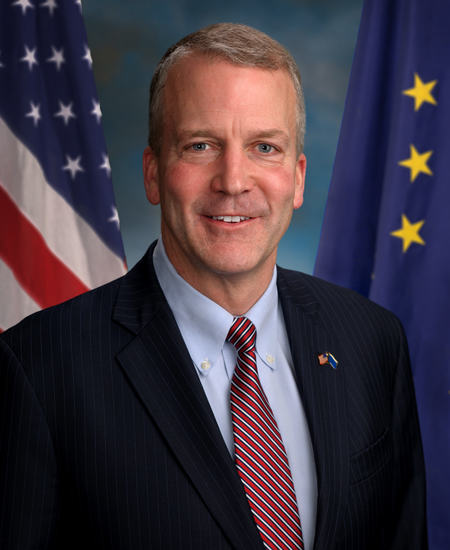
Sen. Dan Sullivan
Sponsored bills
Maddy summaryThis Senate resolution designates July 2025 as "American Grown Flower and Foliage Month" to recognize domestic flower and foliage producers. It does not create new laws or funding but encourages consumers to support U.S.-grown floral products through the Certified American Grown program. The resolution highlights that domestic growers support hundreds of farms, thousands of small businesses, and tens of thousands of jobs, while noting only 20% of flowers sold in the U.S. are domestically grown. It urges the public to prioritize American-grown products for holidays and special occasions. This is a symbolic designation with no binding policy changes.
Maddy summaryThis bill amends the Bank Holding Company Act to require a minimum 15-year holding period for merchant banking investments. Banks would need to hold these investments - where they make equity stakes in non-financial companies - for at least 15 years before selling, applying to both new investments and existing ones held on the bill's enactment date. The change directly affects banks engaged in merchant banking activities by altering the regulatory timeframe for holding such investments. It modifies specific provisions of the Bank Holding Company Act without creating new programs or altering eligibility.
Maddy summaryS 2669 requires the Secretary of Defense to create and implement a strategy strengthening military cooperation with key Indo-Pacific allies (Japan, South Korea, Philippines, Australia) to deter regional aggression. The strategy must expand joint military access, improve command coordination through existing hubs (like the Philippines' Combined Coordination Center), enhance intelligence sharing, and increase joint exercises across the region. The Department of Defense must submit the written strategy within 180 days of the bill's enactment, detailing needed funding changes and resources. An interim report on implementation progress is due by March 15, 2027. This bill directly affects U.S. military operations and partnerships with these four nations in the Indo-Pacific region.
Maddy summaryThe Protecting Small Business Competitions Act of 2025 requires federal agencies to reserve certain government contracts for small businesses. Specifically, for contracts, task orders, or delivery orders exceeding the simplified acquisition threshold, contracting officers must reserve the award for small businesses if they reasonably expect at least two responsible small business offers and can award at a fair market price. This rule directly affects federal procurement decisions and small business contractors competing for government work. It changes how agencies evaluate competition in purchasing goods and services above a set spending threshold.
Maddy summaryThis resolution designates August 16, 2025, as "National Airborne Day" to honor the history of U.S. airborne forces. It recognizes the first official U.S. Army parachute jump on August 16, 1940, and acknowledges the service of airborne units across multiple conflicts. The resolution calls on the American public to observe the day with appropriate programs and ceremonies. It does not create new laws or affect specific groups, as it is a symbolic recognition. The designation applies to the entire country and encourages public acknowledgment of airborne forces' legacy.
Maddy summaryThis bill prohibits the Small Business Administration (SBA) from denying financial assistance - such as loans or guarantees - to firearm-related businesses solely based on their industry. It directly affects firearm entities (manufacturers, sellers, and distributors), firearm entity affiliates (like shooting ranges), and firearm trade associations by requiring the SBA to treat them equally under existing programs. The key provision bans SBA policies that discriminate against these applicants, ensuring they can access standard SBA support without industry-based barriers. The bill does not create new funding but mandates equal treatment for eligible applicants already covered by SBA law.
Maddy summaryThis bill extends funding authorization for the National Sea Grant College Program through fiscal years 2025 to 2031, replacing the previous authorization period of 2021-2025. It directly affects the program’s participating universities and coastal research institutions that receive federal funding for ocean and coastal science, education, and community resilience projects. The key change updates the fiscal year references in the law to ensure continued program operations without altering the program’s scope or funding levels. This is a routine reauthorization to maintain existing program support, not a new policy.
Maddy summaryThis bill modernizes NOAA Weather Radio, a nationwide network that broadcasts weather alerts 24/7. It requires expanding coverage to rural and underserved areas lacking reliable internet or cell service, including high-risk flood zones and federal lands, while improving system resilience during emergencies. Key provisions include upgrading to internet-based broadcasting, enabling more precise location-based warnings, adding satellite backup capabilities, and enhancing accessibility for communities without mobile broadband. The changes directly affect public safety by improving access to critical weather alerts for millions in remote or vulnerable communities.
Maddy summaryThe Uyghur Genocide Accountability and Sanctions Act of 2025 expands U.S. sanctions against Chinese entities and individuals involved in human rights abuses against Uyghurs and other ethnic groups in Xinjiang, including forced labor, forced sterilization, and forced separation of children. It requires the U.S. government to deny entry to those complicit in forced abortions or sterilizations, provides physical and psychological support for victims outside China, and mandates documentation of atrocities through evidence collection and witness protection. The bill prohibits U.S. government contracts with entities linked to forced labor, requires a strategy to counter Chinese propaganda denying these abuses, and compiles information on detained family members of U.S. citizens in Xinjiang. Additionally, it includes seafood procurement restrictions to avoid products potentially made with forced labor.