

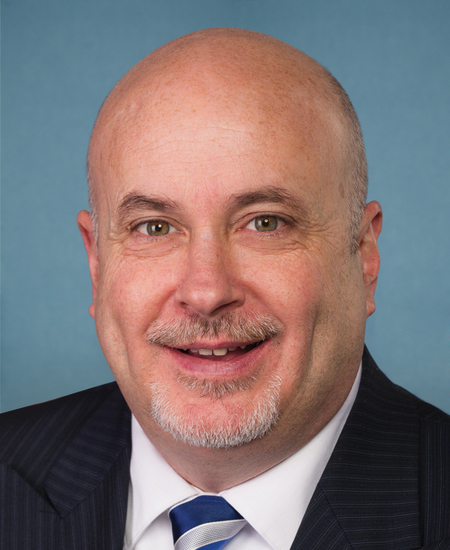
Photo of Mark Pocan
D United States House · District 2 · Wisconsin On the 2026 ballot

Rep. Mark Pocan

Compare
Total votes
2,818
all sessions
Attendance
97%
76 missed
Near the chamber average
With party
97%
of cast votes
Near the chamber average
Bipartisan score
2%
crosses aisle rarely
Near the chamber average
Sponsored
1,969
bills & resolutions
Higher than 88% of chamber peers
Committees
4
assignments
1,969 bills and resolutions

Sponsored bills

Total
1,969
Primary
71
Co-sponsor
1,898
This page
1,969
matching current filters
Co-sponsor HR 841
In committee · Utah House · Co-sponsor
Hemp and Hemp-Derived CBD Consumer Protection and Market Stabilization Act of 2021

Hemp and Hemp-Derived CBD Consumer Protection and Market Stabilization Act of 2021 This bill allows the use of hemp, cannabidiol (i.e., CBD) derived from hemp, or any other ingredient derived from hemp in a dietary supplement, provided that the supplement meets other applicable requirements. (Currently, the Food and Drug Administration's position is that CBD products may not be sold as dietary supplements.)

In committee Feb 5, 2021 1 co-sponsor
Co-sponsor HRES 100
In committee · Utah House · Co-sponsor
Calling on the President of the United States to take executive action to broadly cancel Federal student loan debt.

This resolution calls on the President to take executive action to cancel up to $50,000 in federal student loan debt for borrowers. Further, it encourages the President to (1) ensure that borrowers have no tax liability from the debt cancellation, (2) ensure that the debt cancellation helps close racial wealth gaps, and (3) pause student loan payments and interest accumulation on federal student loans for the duration of the COVID-19 (i.e., coronavirus disease 2019) pandemic.

In committee Feb 4, 2021 1 co-sponsor
Co-sponsor HR 846
In committee · Utah House · Co-sponsor
COVID–19 Whistleblower Protection Act

COVID-19 Whistleblower Protection Act This bill establishes whistleblower protections for government contractors and private sector workers who may witness waste, fraud, or abuse or be victims of misconduct with respect to a COVID-19 (i.e., coronavirus disease 2019) pandemic-related program, project, or activity. Specifically, employers may not discharge, demote, or otherwise discriminate against such protected individuals who disclose information concerning fraud, misuse, or other misconduct related to COVID-19 program funds. A protected individual may submit to the Department of Labor a complaint alleging a violation of these protections and Labor may adjudicate such complaints and award relief in accordance with the Internal Revenue Service whistleblower procedures.

In committee Feb 4, 2021 1 co-sponsor
Co-sponsor HR 804
In committee · Utah House · Co-sponsor
FAMILY Act

Family and Medical Insurance Leave Act or the FAMILY Act This bill entitles every employee to a family and medical leave insurance (FMLI) monthly benefit payment of two-thirds of the employee's regular pay, limited to a maximum of $4,000, for not more than 60 days of qualified caregiving. The bill establishes the Office of Paid Family and Medical Leave within the Social Security Administration to administer the FMLI program. An FMLI benefit payment must be coordinated with any periodic benefits received under a state or local temporary disability insurance or family leave program. The bill imposes a tax on employers, employees, and self-employed individuals to fund FMLI benefits. It also establishes the Federal Family and Medical Leave Insurance Trust Fund to hold tax revenues.

In committee Feb 4, 2021 1 co-sponsor
Co-sponsor HR 805
In committee · Utah House · Co-sponsor
Layoff Prevention Act of 2021

Layoff Prevention Act of 2021 This bill extends temporary funding to reimburse states for making short-time compensation (STC) payments under existing or new STC programs for weeks of unemployment ending on or before five years and six months after enactment of this bill. (STC, also known as work sharing, is a program that provides prorated unemployment compensation to workers whose hours have been reduced in lieu of a layoff.) Under current law, this reimbursement is available for weeks of unemployment ending on or before September 6, 2021. The bill also extends funding to support STC payments by states that do not have STC programs under state law through 2 years and 13 weeks after enactment of this bill. Under current law, this assistance applies to weeks of unemployment ending on or before September 6, 2021. Finally, the bill increases funding to the Department of Labor for awarding grants to states to (1) implement, or improve administration of, STC programs; or (2) promote, and enroll employers in, STC programs. In addition, the bill modifies the formula used to allocate such grants. Labor may not award a grant with respect to an application submitted after December 31, 2026. Such changes are retroactive to March 27, 2020.

In committee Feb 4, 2021 1 co-sponsor
Co-sponsor HR 849
In committee · Utah House · Co-sponsor
Scientific Integrity Act

Scientific Integrity Act This bill revises provisions regarding the release of scientific research results by federal agencies. Each agency that funds, conducts, or oversees scientific research must (1) adopt and enforce a scientific integrity policy that includes requirements such as that scientific conclusions are not based on political considerations, and (2) submit such policy to the Office of Science and Technology Policy (OSTP) for approval. Each agency must make such policy available to the public and submit such policy to Congress. Agencies and the OSTP must periodically review the policies. The Government Accountability Office shall review implementation of the policies. Each agency shall (1) appoint a Scientific Integrity Officer, (2) establish a process for dispute resolution consistent with the scientific integrity policy, and (3) establish a specified training program for current and new employees.

In committee Feb 4, 2021 1 co-sponsor
Co-sponsor HR 816
In committee · Utah House · Co-sponsor
Restoring Communities Left Behind Act

Restoring Communities Left Behind Act This bill directs the Department of Housing and Urban Development to establish a grant program for local partnerships to carry out neighborhood revitalization support activities in economically distressed areas. Eligible activities include weatherization and energy efficiency improvements; housing accessibility improvements for seniors and persons with disabilities; purchasing delinquent mortgages; purchasing and developing vacant or distressed properties to create affordable rental housing and for other purposes; and improving parks, sidewalks, and street lighting.

In committee Feb 4, 2021 1 co-sponsor
Co-sponsor HR 508
In committee · Utah House · Co-sponsor
SAFE Streets Act

Safe And Friendly for the Environment Streets Act or the SAFE Streets Act This bill revises the Highway Safety Improvement Program to create special rules for vulnerable road users. The bill defines vulnerable road user as a nonmotorist such as a pedestrian, pedalcylcist, bicyclist, other cyclist, or person on personal conveyance. Specifically, the bill requires states and metropolitan planning organizations (MPOs) with above the median rate of vulnerable road user fatalities and serious injuries to dedicate at least 75% of funds under the program for projects to improve safety for such users, and states and MPOs to create vulnerable road user safety assessments that include locations and corridors where serious injuries and fatalities occur and strategies to reduce safety risks for such users in the corridors.

In committee Feb 4, 2021 1 co-sponsor
Co-sponsor HR 463
In committee · Utah House · Co-sponsor
Transportation Alternatives Enhancements Act

Transportation Alternatives Enhancements Act This bill revises the surface transportation block grant program (Transportation Alternatives Program) of the Department of Transportation (DOT). The bill requires DOT to set aside 10% of apportioned funds under the program each fiscal year for states, and allows states to allocate funds to counties, metropolitan planning organizations (MPOs), regional transportation planning organizations, and local governments. Funds may be used for certain projects or activities, including the construction, planning, and design of infrastructure-related projects and systems that will provide safe routes for nondrivers, such as children, older adults, and individuals with disabilities, to access daily needs. MPOs that serve an urbanized area with a population of 200,000 or fewer are eligible for funding under the program. The bill also adjusts funding limits for states to improve the ability of applicants to access funding in an efficient and expeditious manner.

In committee Feb 4, 2021 1 co-sponsor
Co-sponsor HR 369
In committee Feb 4, 2021 1 co-sponsor
Showing 1,911 to 1,920 of 1,969 bills