

For the People Act of 2021 This bill addresses voter access, election integrity and security, campaign finance, and ethics for the three branches of government. Specifically, the bill expands voter registration (e.g., automatic and same-day registration) and voting access (e.g., vote-by-mail and early voting). It also limits removing voters from voter rolls. The bill requires states to establish independent redistricting commissions to carry out congressional redistricting. Additionally, the bill sets forth provisions related to election security, including sharing intelligence information with state election officials, supporting states in securing their election systems, developing a national strategy to protect U.S. democratic institutions, establishing in the legislative branch the National Commission to Protect United States Democratic Institutions, and other provisions to improve the cybersecurity of election systems. Further, the bill addresses campaign finance, including by expanding the prohibition on campaign spending by foreign nationals, requiring additional disclosure of campaign-related fundraising and spending, requiring additional disclaimers regarding certain political advertising, and establishing an alternative campaign funding system for certain federal offices. The bill addresses ethics in all three branches of government, including by requiring a code of conduct for Supreme Court Justices, prohibiting Members of the House from serving on the board of a for-profit entity, and establishing additional conflict-of-interest and ethics provisions for federal employees and the White House. The bill requires the President, the Vice President, and certain candidates for those offices to disclose 10 years of tax returns.
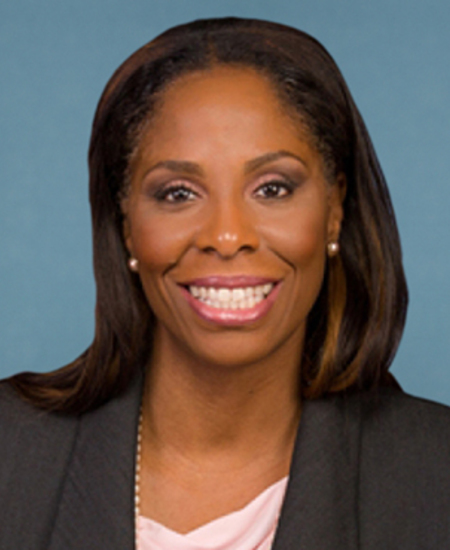
Rep. Stacey E. Plaskett
Sponsored bills
Farm to School Act of 20 21 This bill modifies and expands the Department of Agriculture's (USDA's) Farm to School Program. The program currently provides grants and technical assistance to schools, state and local agencies, Indian tribal organizations, agricultural producers, and nonprofit entities to improve access to local foods in schools. Among other things, the bill reauthorizes the program through FY2027; permits USDA to provide land-grant colleges and universities with grants, research, evaluation, and technical assistance under the program; expands the purposes for grants awarded under the program to include implementing educational activities relating to agriculture, nutrition, or food; requires USDA to provide technical assistance, research, and information to increase awareness of and participation in farm to school programs among agricultural producers, including beginning, veteran, and socially disadvantaged farmers; directs USDA to seek to improve local food procurement and distribution options for agricultural producers and eligible institutions; authorizes USDA to fund projects that include innovative approaches to aggregation, processing, transportation, and distribution; establishes new limitations on the amount and duration of grants; and limits funds that may be used for administrative costs.
Donald Payne Sr. Colorectal Cancer Detection Act of 2021 This bill provides for Medicare coverage and payment, subject to specified frequency limits, of certain colorectal cancer screening blood-based tests.
George Floyd Justice in Policing Act of 2021 This bill addresses a wide range of policies and issues regarding policing practices and law enforcement accountability. It increases accountability for law enforcement misconduct, restricts the use of certain policing practices, enhances transparency and data collection, and establishes best practices and training requirements. The bill enhances existing enforcement mechanisms to remedy violations by law enforcement. Among other things, it does the following: lowers the criminal intent standard—from willful to knowing or reckless—to convict a law enforcement officer for misconduct in a federal prosecution, limits qualified immunity as a defense to liability in a private civil action against a law enforcement officer, and grants administrative subpoena power to the Department of Justice (DOJ) in pattern-or-practice investigations. It establishes a framework to prevent and remedy racial profiling by law enforcement at the federal, state, and local levels. It also limits the unnecessary use of force and restricts the use of no-knock warrants, chokeholds, and carotid holds. The bill creates a national registry—the National Police Misconduct Registry—to compile data on complaints and records of police misconduct. It also establishes new reporting requirements, including on the use of force, officer misconduct, and routine policing practices (e.g., stops and searches). Finally, it directs DOJ to create uniform accreditation standards for law enforcement agencies and requires law enforcement officers to complete training on racial profiling, implicit bias, and the duty to intervene when another officer uses excessive force.
Capitol Remembrance Act This bill requires the Architect of the Capitol (AOC) to design and install in a prominent location in the U.S. Capitol a permanent exhibit that depicts the January 6, 2021, attack on the Capitol. To the extent possible, the AOC must preserve property that was damaged during the attack and include it in the exhibit. The AOC must also include (1) existing photographic records relating to the attack; and (2) a plaque to honor the U.S. Capitol Police and other law enforcement agencies that protected the Capitol, the individuals who died or sustained injuries to protect the Capitol, and the staff who helped restore the Capitol complex after the attack.
Treat and Reduce Obesity Act of 2021 This bill expands Medicare coverage of intensive behavioral therapy for obesity. Specifically, the bill allows coverage for therapy that is provided by (1) a physician who is not a primary care physician; or (2) other health care providers (e.g., physician assistants and nurse practitioners) and approved counseling programs, if provided upon a referral from, and in coordination with, a physician or primary care practitioner. Currently, such therapy is covered only if provided by a primary care practitioner. The bill also allows coverage under Medicare's prescription drug benefit of drugs used for the treatment of obesity or for weight loss management for individuals who are overweight.
Alzheimer's Caregiver Support Act This bill authorizes grants to expand training and support services for families and caregivers of individuals living with Alzheimer's disease or a related dementia. The Department of Health and Human Services may award these grants to community organizations and health care and social service providers.
Territorial Tax Parity Act of 2021 This bill modifies the income source rules involving U.S. possessions, including Guam, American Samoa, the Northern Mariana Islands, Puerto Rico, and the Virgin Islands. Under current law, income is not considered to be possession source income if it is treated as income (1) from sources within the United States, or (2) effectively connected with the conduct of a trade or business within the United States. The bill amends this rule to specify that it applies to the extent that the income is attributable to an office or fixed place of business within the United States. The bill also modifies the income source rules that apply to certain personal property sales in the Virgin Islands.
This bill sets forth a tax rule with respect to certain bona fide residents of the U.S. Virgin Islands who are shareholders of corporations organized under the laws of the Virgin Islands. It provides that such residents shall not be treated as U.S. persons for purposes of determining inclusions in gross income with respect to such corporations.
Territories College Access Act This bill establishes a grant program to cover the difference between in-state and out-of-state tuition and fees for students who are residents of an outlying area (i.e., American Samoa, the Northern Mariana Islands, Guam, or the Virgin Islands) and who attend a public institution of higher education located in a state, the District of Columbia, or Puerto Rico. A student on whose behalf a grant is made must maintain full-time employment within the outlying area for at least two years. Further, a student who completes less than the required two years of employment must repay the grant, or the grant must be treated as a loan that is subject to repayment. Lastly, the Government Accountability Office must report on the program's effectiveness in expanding educational opportunities for these students.