Maddy summaryThis bill increases federal student loan limits for graduate and professional students. Starting July 1, 2026, it sets a $50,000 annual limit and a $200,000 total aggregate limit (beyond undergraduate borrowing) for unsubsidized Federal Direct Stafford loans. These changes directly affect graduate and professional students pursuing advanced degrees who rely on federal loans for education costs. The provisions aim to provide higher borrowing capacity for these students' educational expenses under the Higher Education Act.
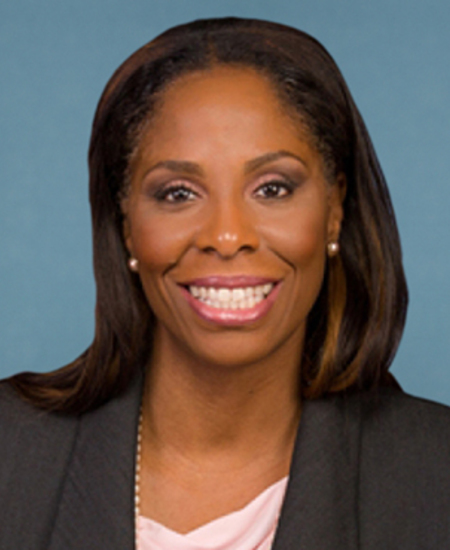
Rep. Stacey E. Plaskett
Sponsored bills
Territories Health Equity Act of 2025 This bill alters provisions relating to the treatment of U.S. territories under Medicaid, Medicare, and Medicare Advantage. For example, the bill eliminates Medicaid funding limitations for U.S. territories beginning in FY2026, exempts an individual from late-enrollment penalties for Medicare medical services if the individual resided in Puerto Rico as of the date of eligibility and the individual enrolls within five years of such date, and establishes minimum criteria for certain elements used in Medicare Advantage payment calculations for areas within U.S. territories. The bill also allows residents of U.S. territories who are unable to obtain health insurance through their employer or a health insurance exchange to instead obtain coverage that is at least as broad as the coverage available to Members of Congress and their staff through the District of Columbia exchange.
Maddy summaryThe Expanding Cybersecurity Workforce Act of 2025 establishes a new program under CISA to promote cybersecurity careers to underrepresented groups, including racial and ethnic minorities, veterans, formerly incarcerated individuals, people with disabilities, older adults (40+), and those from low-income or nontraditional educational backgrounds (like community colleges or HBCUs). The program requires CISA to tailor outreach to regional needs, partner with schools, unions, and community organizations, and report annually on workforce impact. It authorizes $20 million annually for fiscal years 2026-2031 to support these efforts, aiming to diversify the cybersecurity workforce through targeted recruitment and training.
Maddy summaryThis bill creates several tax credits to increase housing affordability for individuals and families. It establishes a first-time homebuyer credit of up to $25,000 (or $50,000 for first-generation homebuyers) for purchasing a principal residence, with income limits based on household size. It also creates a starter home construction credit for building homes under 1,200 square feet priced below 80% of local median home prices, and a renter tax credit for tenants paying more than 30% of their income in rent. Additionally, it provides a credit for converting non-residential buildings to affordable housing that meets specific income and rent restrictions. The bill includes provisions for inflation adjustments and reporting requirements for these tax credits.
Maddy summaryThis bill amends federal law to allow the U.S. Virgin Islands and Puerto Rico to issue commercial driver's licenses (CDLs), which they were previously ineligible to do under Title 49 of the U.S. Code. It directly affects commercial drivers in these territories by granting them eligibility to obtain CDLs, aligning their licensing with mainland U.S. requirements. Key provisions include adding the territories to the definition of eligible jurisdictions, creating a 5-year grace period to avoid federal funding penalties for non-compliance during implementation, and requiring the Federal Motor Carrier Safety Administration to collaborate with the territories on full compliance. The change removes a barrier for commercial drivers in these regions while providing time to meet federal standards.
Student Compensation and Opportunity through Rights and Endorsements Act or the SCORE Act This bill provides a framework for the compensation of student athletes for the use of their name, image, or likeness (NIL). This includes addressing certain elements of the court approved agreement to settle the In re College Athlete NIL Litigation (i.e., House settlement ). Specifically, the bill statutorily prohibits institutions, conferences, or interstate intercollegiate athletic associations (e.g., the National Collegiate Athletic Association (NCAA)) from restricting the ability of a student athlete to enter an NIL agreement. The bill also requires institutions of higher education that generate $20 million or more in annual revenue from the institution's intercollegiate athletics activities to (1) provide counseling and medical benefits to student athletes, and (2) establish and maintain at least 16 varsity sports teams. Further, the bill authorizes interstate intercollegiate athletic associations to establish rules with respect to athletic eligibility, transfers, recruitment, and the disclosure of NIL agreements. Under the bill, student athletes may not be considered employees of an institution, conference, or interstate intercollegiate athletic association. The bill also preempts state laws with respect to compensation, payments, benefits, employment status, eligibility, and academic standards applicable to student athletes. Compliance with the provisions of this bill is considered lawful under federal and state antitrust laws.

Maddy summaryHR 6181, the John Lewis Every Child Deserves a Family Act, prohibits child welfare agencies receiving federal funds from discriminating against children, youth, or prospective foster/adoptive parents based on religion, sex (including sexual orientation and gender identity), or marital status. It directly affects LGBTQ youth in foster care - overrepresented at 30% of the system - who face higher risks of trauma, group home placements, and suicide attempts compared to non-LGBTQ peers. Key provisions require agencies to collect data on sexual orientation and gender identity, establish a National Resource Center for LGBTQ youth support, provide cultural competency training, and eliminate discriminatory practices. The law aims to improve safety, permanency, and placement stability by expanding access to family-based care and ensuring equitable services for all children in the system.
Maddy summaryThis bill extends the health insurance premium tax credit program for tax years after 2025, allowing individuals with household incomes above 400% of the federal poverty line to continue receiving subsidies. It modifies the calculation method for these credits to temporarily extend eligibility beyond the current threshold, with the extension date determined by the Secretary of the Treasury based on budget estimates. The bill also includes a separate provision rescinding unobligated funds for U.S. assistance to Argentina, though this is unrelated to healthcare. The changes directly affect millions of Americans who rely on federal subsidies to afford health insurance coverage through marketplaces.
Maddy summaryThe Farm to School Act of 2025 updates federal programs to connect schools and early childhood programs with local farms. It expands eligibility to include more institutions (beyond just schools) and requires projects to include activities like planting gardens, buying from nearby farmers, or teaching about food/nutrition. The bill increases annual funding to $10 million and sets a $500,000 cap per grant, while prioritizing projects serving socially disadvantaged communities and incorporating tribal foods and traditional practices. It also mandates a review every three years to identify and address barriers for small farmers, tribal producers, and schools trying to implement these programs.
Maddy summaryThis bill requires all new passenger vehicles manufactured for sale in the U.S. to include AM radio as standard equipment (not an optional add-on) by 2027-2028, depending on manufacturer size. It mandates that AM radio receivers must be easily accessible to drivers and allows compliance through digital AM broadcast technology. During a transition period, manufacturers must clearly label vehicles without AM radio but cannot charge extra for this feature. The bill also mandates a GAO study on AM radio's role in emergency alerts and includes a 10-year sunset provision for the rule. It preempts state laws regarding AM radio access in vehicles.