

Maddy summaryThe DRIVE Act of 2025 requires the Department of Veterans Affairs (VA) to set mileage reimbursement rates for veterans at the federal government's current standard rate for employees using personal vehicles on official business, replacing the previous fixed rate of 41.5 cents per mile. It also mandates that the VA process and pay these reimbursements within 90 days of a veteran's valid request. This directly affects veterans who travel for VA medical appointments or services using their personal vehicles. The bill aligns veteran travel reimbursements with federal employee standards and ensures timely payments.
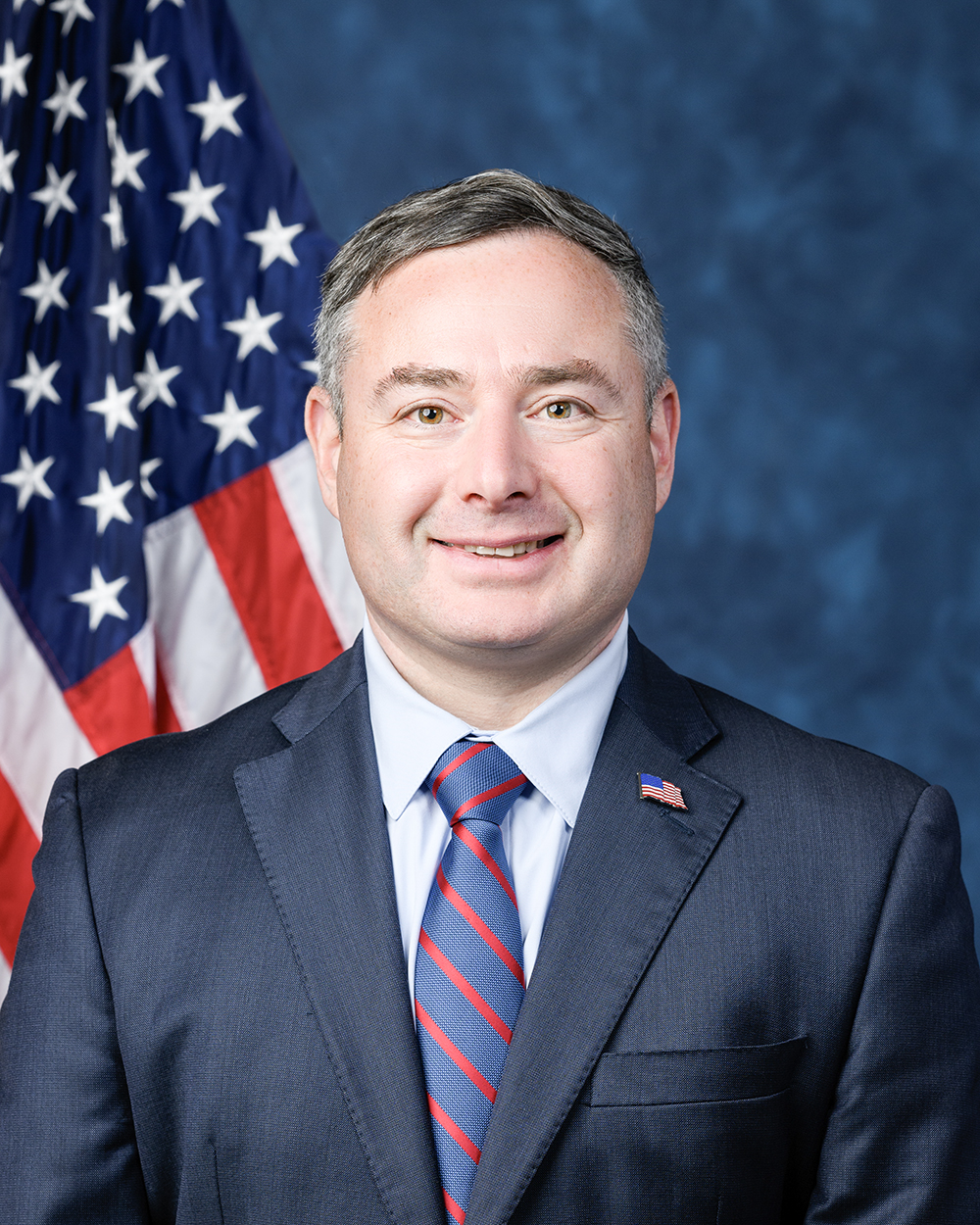
Rep. Eugene Simon Vindman
Sponsored bills
Maddy summaryHR 2850, the Youth Sports Facilities Act of 2025, amends the Public Works and Economic Development Act of 1965 to expand eligibility for federal grants to include youth sports facilities. It specifically requires these facilities to address sedentary lifestyles and obesity, prioritize low-income rural youth in underserved communities, and serve children lacking access to physical education spaces or living in areas with high opioid use or violence. The bill mandates that grant-funded projects must benefit highly rural communities with limited tax revenue and support economic development through youth sports infrastructure. It directly affects communities and children in rural, underserved, or high-risk areas by directing federal funding toward building or improving local sports facilities. The key mechanism is modifying existing grant criteria to prioritize these specific community needs through new eligibility requirements.
Maddy summaryThe Housing Supply Frameworks Act (HR 2840) directs the Department of Housing and Urban Development (HUD) to create federal guidelines and best practices for state and local governments to reform zoning rules that restrict housing supply. It focuses on practical changes like reducing parking minimums, allowing more housing types (e.g., duplexes, accessory dwellings), streamlining approval processes, and increasing density near transit - aiming to address a nationwide housing shortage affecting cost-burdened households. The guidelines, developed with public input from planners, developers, and community groups, are intended to help states and localities voluntarily adopt reforms that increase housing availability across income levels. States and localities that adopt these recommendations must report progress to Congress within five years, though the bill does not mandate specific changes or provide direct housing construction funds.
Maddy summaryHR 2830, the Public Safety Officer Concussion and Traumatic Brain Injury Health Act of 2025, requires the CDC to collect and publicly share data on concussions and traumatic brain injuries (TBIs) affecting public safety officers (including firefighters, police, and emergency responders). The bill directs the CDC to update its website and develop outreach materials to share this information with medical professionals, public safety employers, mental health providers, patients/families, and researchers. Key provisions include compiling evidence-based practices for diagnosis, treatment, and prevention, and consulting with affected groups to ensure the information meets their needs. This bill creates a centralized information resource but does not mandate new treatments or funding for specific programs.
Promoting Affordable Childcare for Everyone Act or the PACE Act This bill increases and makes refundable the tax credit for qualified child and dependent care expenses. The bill also increases the exclusion from gross income for employer-provided child and dependent care benefits. Under current law, a nonrefundable tax credit is allowed for up to 35% (maximum tax credit percentage) of qualified child and dependent care expenses incurred by an individual to work or look for work, up to a maximum amount. The percentage of such expenses allowed as a tax credit may be reduced, but not below 20% (minimum tax credit percentage), based on an individual’s adjusted gross income. The bill generally increases the tax credit for qualified child and dependent care expenses by increasing the maximum tax credit percentage to 50%, increasing the minimum tax credit percentage to 35%, and adjusting the maximum credit amounts annually for inflation. The bill also makes the tax credit for qualified child and dependent care expenses refundable. Finally, the bill increases and adjusts for inflation the amount that may be excluded from gross income for employer-sponsored child and dependent care benefits (e.g., dependent care flexible spending arrangements) to $7,500 (from $5,000).
Maddy summaryThis bill repeals a restriction that previously prevented individuals from rolling over funds directly from their Individual Retirement Accounts (IRAs) to donor-advised funds (DAFs) for charitable giving. It directly affects IRA account holders who wish to make tax-advantaged charitable contributions through DAFs. The key provision amends the Internal Revenue Code to remove the specific language barring such rollovers, allowing these transfers to occur without triggering taxable distributions. The change becomes effective after the bill's enactment, streamlining a pathway for donors to support charities via DAFs using IRA assets.
Maddy summaryHR 2879, the Prison Staffing Reform Act of 2025, requires the Bureau of Prisons to conduct a comprehensive external review of understaffing within 180 days of enactment. The review, to be done with input from prison unions, civil rights groups, and recidivism reduction organizations, must identify staffing impacts on inmate access to medical care, programming, safety, and staff working conditions. It mandates the Bureau to develop specific staffing guidelines (including officer-to-inmate ratios per unit and non-correctional staff needs) and a 3-year implementation plan to fill vacancies and reduce mandated overtime. The plan must address issues like medical care wait times, security risks, and staff health, with annual progress reports to Congress and the prison union. This bill directly affects over 35,000 Bureau of Prisons employees and the nearly 121,000 individuals in federal custody nationwide.
Maddy summaryThe Pursuing Equity in Mental Health Act (HR 2904) aims to reduce mental health disparities affecting racial and ethnic minority groups by modifying federal grant programs, requiring research on disparities, and funding targeted initiatives. It directs the Health and Human Services Secretary to prioritize grants for community health organizations serving minority populations, mandates a National Institutes of Health study on mental health research gaps in these groups, and establishes training programs for health professionals to address cultural competency in mental health care. The bill also requires a public outreach strategy developed with community input to reduce stigma and improve access to culturally appropriate care, alongside $20 million annually (2026-2031) for this effort. Additional funding includes $150 million yearly for NIH mental health research and $750 million yearly for the National Institute on Minority Health.
Maddy summaryThis bill amends the Wild Free-Roaming Horses and Burros Act to change how the Bureau of Land Management manages horse and burro populations. It requires using fertility control vaccines as the first priority method for population management, replacing previous steps. Crucially, it directs the Secretary to prioritize recruiting and training military veterans for these fertility control tasks, including through the PZP applicator certification program, with veterans receiving appropriate compensation. This directly affects wild horse and burro populations through new management methods and military veterans through new training and contracting opportunities under the program.
Maddy summaryHR 2812, the Youth Lead Act, amends an existing agricultural act to allocate $5 million annually for youth organizations from fiscal years 2026 through 2030. This funding is specifically designated for youth organizations under the amended section of the Agricultural Research, Extension, and Education Reform Act of 1998. The bill does not create new eligibility rules or define "youth organizations," but directs existing federal funds toward this purpose. It directly affects qualifying youth organizations that receive these annual grants. The provision is a straightforward funding mechanism with no other substantive policy changes.