

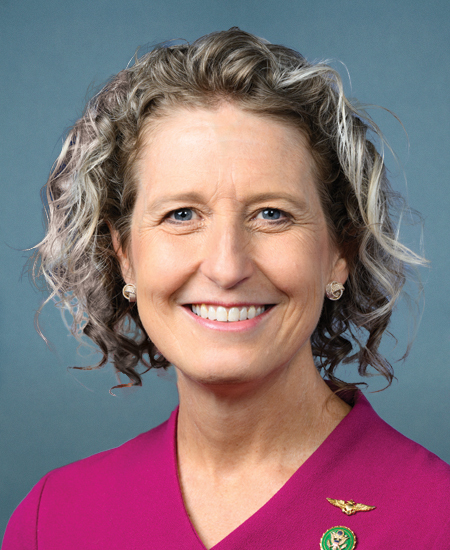
Photo of Jennifer A. Kiggans
R United States House · District 2 · Virginia On the 2026 ballot

Rep. Jennifer A. Kiggans

Compare
Total votes
1,860
all sessions
Attendance
98%
42 missed
Near the chamber average
With party
89%
of cast votes
Near the chamber average
Bipartisan score
6%
crosses aisle rarely
Near the chamber average
Sponsored
778
bills & resolutions
Higher than 78% of chamber peers
Committees
10
assignments
778 bills and resolutions

Sponsored bills

Total
778
Primary
78
Co-sponsor
700
This page
778
matching current filters
Co-sponsor HR 2559
In committee · Utah House · Co-sponsor
Strengthening Community Care Act of 2023

Maddy summaryHR 2559, the Strengthening Community Care Act of 2023, extends funding deadlines for two key healthcare programs. It amends the Affordable Care Act to extend the authorization period for Community Health Centers and the National Health Service Corps from 2023 to 2028. This change directly affects these programs, ensuring their continued operation and funding stability through 2028. The bill makes no changes to program eligibility or services, only prolonging the existing funding authorization period.

In committee Apr 21, 2023 1 co-sponsor
Co-sponsor HR 2743
In committee · Utah House · Co-sponsor
Fair Access to Banking Act

Maddy summaryHR 2743 prohibits large financial institutions (over $100 billion in assets) from denying banking services to lawful businesses based on subjective political reasons, industry type, or reputational concerns. It requires these institutions to use objective, risk-based assessments for service decisions and provide written justifications for denials. The law applies to banks, credit unions, and payment networks, with civil penalties for violations including fines up to $10,000 per incident. It specifically ensures businesses operating legally under federal law receive fair access to financial services without discrimination. The bill mandates that denials be based on documented risk factors, not political bias or category-based exclusion.

In committee Apr 20, 2023 1 co-sponsor
Co-sponsor HR 2673
In committee · Utah House · Co-sponsor
American Innovation and R&D Competitiveness Act of 2023

American Innovation and R&D Competitiveness Act of 2023 This bill eliminates the five-year amortization requirement for research and experimental expenditures, thus allowing continued expensing of such expenditures in the taxable years in which they are incurred.

In committee Apr 20, 2023 1 co-sponsor
Co-sponsor HR 2711
In committee · Utah House · Co-sponsor
SAYFE Act

Maddy summaryHR 2711, the SAYFE Act, requires annual sexual abuse prevention training for all students enrolled in Junior Reserve Officers' Training Corps (JROTC) programs. The training, delivered by an external entity (not JROTC instructors), must be age-appropriate, evidence-based, and cover topics like grooming, cyberbullying, appropriate adult-student interactions, and digital abuse. It also mandates providing students with local resource contacts for reporting abuse or accessing support. The Secretary of Defense must establish metrics to evaluate the training's effectiveness. This bill directly affects JROTC students in all participating schools.

In committee Apr 19, 2023 1 co-sponsor
Co-sponsor HR 2693
In committee · Utah House · Co-sponsor
Pay Our Coast Guard Parity Act of 2023

Maddy summaryHR 2693, the Pay Our Coast Guard Parity Act of 2023, ensures Coast Guard members, civilian staff, and qualifying contractors receive pay and benefits during specific funding gaps. It requires Congress to appropriate funds for Coast Guard personnel pay, allowances, and key benefits (like death gratuities and housing allowances) if a Coast Guard-specific funding lapse occurs - when Coast Guard funding isn’t approved before a fiscal year starts but Department of Defense funding is. The bill mandates these payments continue until a full appropriation is enacted or for up to two weeks after the lapse begins, with costs charged to future appropriations. This addresses a gap in funding continuity for Coast Guard personnel during government shutdowns affecting only the Coast Guard.

In committee Apr 19, 2023 1 co-sponsor
Co-sponsor HR 1378
In committee · Utah House · Co-sponsor
Veterans’ Appeals Backlog Improvement Act

Maddy summaryHR 1378, the Veterans’ Appeals Backlog Improvement Act, establishes two new programs to improve staffing at the Department of Veterans Affairs (VA) for processing veterans' appeals. It creates a competitive internship program for ABA-accredited law students to gain experience with the Board of Veterans' Appeals, and a nine-year pilot program to recruit and retain entry-level attorneys through student loan repayment benefits and structured professional development, including mentorship and rotational assignments. The bill requires the VA to report on improving telehearings access within 180 days, including recommendations for reimbursing travel costs and testing new methods for remote hearings. These provisions aim to reduce the appeals backlog by strengthening the VA’s legal workforce, directly affecting VA recruitment and retention of legal professionals.

In committee Apr 19, 2023 1 co-sponsor
Co-sponsor HR 2678
In committee · Utah House · Co-sponsor
Ending Trading and Holdings in Congressional Stocks (ETHICS) Act

Maddy summaryHR 2678, the Ending Trading and Holdings in Congressional Stocks (ETHICS) Act, prohibits Members of Congress, their spouses, and dependent children from owning or trading most stocks, commodities, and derivatives (defined as "covered investments"). The bill requires existing investments to be divested or placed in qualified blind trusts within 120 days, with exemptions for diversified funds, government bonds, and certain small business investments. It establishes civil penalties of $500 per violation or 10% of the investment value for noncompliance and mandates online public disclosure of financial information to increase transparency. The law applies to congressional staff beginning January 31, 2023, for new terms of service.

In committee Apr 18, 2023 1 co-sponsor
Primary HR 1635
In committee · Utah House · Lead sponsor
To amend title 38, United States Code, to increase the amount of survivors' and dependents' educational assistance provided to an eligible individual pursuing a program of education at an institution in the Republic of the Philippines.

Maddy summaryHR 1635 increases the educational benefit amount available under the VA's survivors' and dependents' education program for individuals studying at institutions in the Republic of the Philippines. This bill specifically amends Section 3532 of Title 38, U.S. Code, to provide higher financial assistance to eligible veterans' survivors and dependents pursuing education in the Philippines. The change directly affects qualifying veterans' families who choose to enroll in educational programs within the Philippines.

In committee Apr 18, 2023 0 co-sponsors
Co-sponsor HR 2662
In committee · Utah House · Co-sponsor
Collegiate Housing and Infrastructure Act of 2023

Maddy summaryThis bill amends tax law to allow charitable organizations to fund collegiate housing projects without losing their tax-exempt status. Specifically, it permits 501(c)(3) charities to make grants for building, improving, or maintaining housing properties where full-time students live, as long as the housing is connected to a college or university. Grants cannot fund fitness facilities, and the bill clarifies that housing must primarily serve students (not incidental social activities). It directly affects charitable organizations and universities seeking tax-qualified funding for student housing infrastructure.

In committee Apr 17, 2023 1 co-sponsor
Co-sponsor HR 2630
In committee · Utah House · Co-sponsor
Safe Step Act

Maddy summaryHR 2630, the Safe Step Act, requires group health plans and health insurance issuers to establish a clear, transparent process for patients or their doctors to request exceptions to medication step therapy protocols. These protocols typically force patients to try cheaper drugs first before covering more expensive alternatives. The bill mandates that plans must approve exceptions when prior treatments failed, delay would cause serious harm, a treatment is unsafe, or a patient is stable on a previously approved drug, with strict 72-hour (or 24-hour in emergencies) decision timelines. It also requires plans to publish the exception process online and limit documentation requests to only necessary medical information. This law directly affects health insurers, employers offering health plans, and patients using step therapy for prescription drugs.

In committee Apr 13, 2023 1 co-sponsor
Showing 731 to 740 of 778 bills
Previous 1 73 74 75 78 Next