

In committee Aug 27, 2026
0 co-sponsors
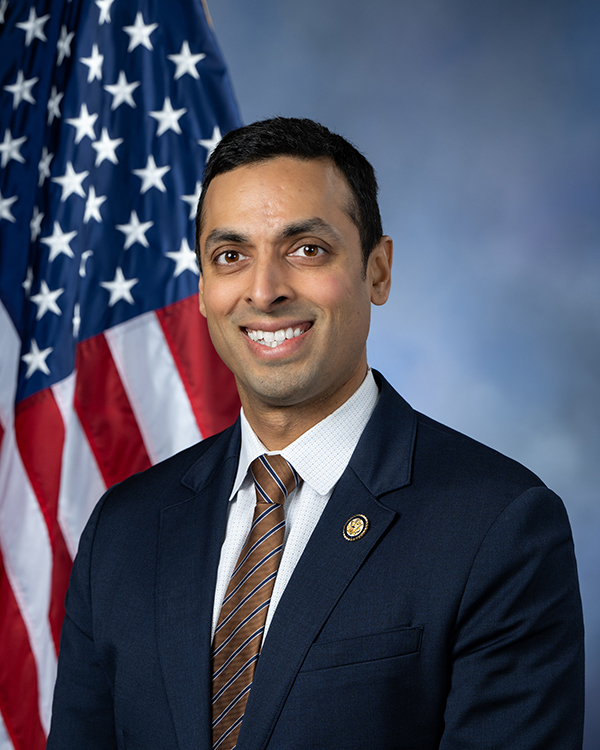
Rep. Suhas Subramanyam
Total votes
650
all sessions
Attendance
100%
2 missed
Higher than 90% of chamber peers
With party
96%
of cast votes
Near the chamber average
Bipartisan score
2%
crosses aisle rarely
Near the chamber average
Sponsored
426
bills & resolutions
Near the chamber average
Committees
8
assignments
426 bills and resolutions
Sponsored bills
Total
426
Primary
43
Co-sponsor
383
This page
426
matching current filters
Lindsey O. Graham Sanctioning Russia and Iran Act of 2026
Maddy summaryHR 5334, the SEED Act of 2025, expands the existing educator expense deduction under federal tax law to explicitly include early childhood educators. It revises the Internal Revenue Code to cover expenses for "early childhood educators" and broadens the educational levels affected to include "pre-kindergarten through grade 12." This change allows early childhood educators (such as preschool teachers) to deduct work-related expenses like classroom supplies and professional development costs, which they previously could not claim under the existing deduction for "kindergarten through grade 12" teachers. The amendment applies to expenses incurred in taxable years beginning after December 31, 2024.
Budget & TaxesSupports Budget & TaxesExpands tax deduction for early childhood educators, providing tax relief for lower/middle-income educators under IRS code, aligning with support indicators for tax relief.
EducationSupports EducationExpands tax deduction for early childhood educators' work expenses, directly supporting teachers by reducing out-of-pocket costs for supplies and professional development.
Labor & EmploymentSupports Labor & EmploymentBill expands tax deductions for early childhood educators, supporting worker benefits and financial relief for educators.
Passed Aug 10, 2026
1 co-sponsor
To designate the facility of the United States Postal Service located at 10660 Page Avenue in Fairfax, Virginia, as the "Congressman Gerald E. Connolly Post Office Building".
Maddy summaryHR 6332 designates the United States Postal Service facility at 10660 Page Avenue in Fairfax, Virginia, as the "Congressman Gerald E. Connolly Post Office Building." This bill updates all official references in federal documents, maps, and records to use the new name for this specific post office location. It does not create new policies or affect any services; it solely changes the building's official designation to honor Congressman Gerald E. Connolly. The change applies to all federal materials referencing the facility.
Passed Aug 6, 2026
1 co-sponsor
To designate the facility of the United States Postal Service located at 12109 New Kent Highway in New Kent, Virginia, as the Patricia Paige Post Office.
Maddy summaryThis bill (HR 6317) is a procedural naming resolution. It designates the U.S. Postal Service facility at 12109 New Kent Highway in New Kent, Virginia, as the "Patricia Paige Post Office." The bill updates all official U.S. government references (including laws, maps, and documents) to use the new name for this specific post office location. It does not change postal services or create new policies - it only changes the facility's official name.
Passed Aug 6, 2026
1 co-sponsor
To designate the facility of the United States Postal Service located at 46164 Westlake Drive in Sterling, Virginia, as the Firefighter Trevor Brown Post Office Building.
Maddy summaryThis bill renames a U.S. Postal Service facility at 46164 Westlake Drive in Sterling, Virginia, as the "Firefighter Trevor Brown Post Office Building" to honor Firefighter Trevor Brown. It requires all future federal references to that specific location to use the new name. The bill affects only the postal facility's official designation and has no policy or funding provisions. (Procedural naming resolution, 2 sentences)
Passed Aug 6, 2026
0 co-sponsors
Data Center Resource Disclosure Act
Maddy summaryThe Data Center Resource Disclosure Act requires operators of data centers in the United States to voluntarily report their annual energy and water usage to the Assistant Secretary of Commerce. These operators must submit the data within 180 days of the law's enactment and every year thereafter. The government will then publish the results on an interactive map, identify facilities that did not provide information, and share feedback from public interest groups. Additionally, the Assistant Secretary must coordinate with other federal agencies and submit a report to Congress with recommendations for improving data center transparency.
EnergySupports EnergyBill promotes energy efficiency and transparency by requiring data centers to disclose energy usage, aiding in resource management and conservation efforts.
EnvironmentSupports EnvironmentBill mandates disclosure of energy and water usage, promoting transparency and accountability for resource consumption in data centers.
In committee Jul 30, 2026
1 co-sponsor
Defending Our Energy and Water Act
Maddy summaryThe Defending Our Energy and Water Act directs the Administrator of the Office of Electronic Government to update minimum requirements for new federal data centers, mandating the use of the most water-efficient cooling systems. This update must be completed within 180 days of the bill's enactment. Additionally, the legislation extends a previous deadline for reviewing data center standards from 2026 to 2031 and requires the Department of Defense to identify and integrate water efficiency technologies to protect water resources. These changes apply specifically to federal data centers and aim to minimize their operational impact on water supplies.
EnergySupports EnergyBill mandates water-efficient cooling for federal data centers, directly advancing energy efficiency and reducing resource consumption.
EnvironmentSupports EnvironmentBill mandates water-efficient cooling systems for federal data centers, directly conserving water resources and reducing environmental impact.
TechnologySupports TechnologyBill mandates water-efficient cooling systems for federal data centers, promoting sustainable technology infrastructure and operational efficiency.
In committee Jul 30, 2026
1 co-sponsor
FRONTIER Act
Maddy summaryThe FRONTIER Act establishes a regulatory framework for the largest artificial intelligence developers to manage and disclose risks associated with their most powerful models, known as "frontier models." It requires companies meeting specific revenue and spending thresholds to create public safety frameworks, undergo independent third-party audits, and report incidents or potential harms to the Department of Commerce. The bill also creates a system where the Secretary of Commerce can issue emergency orders to suspend or restrict model development if an imminent catastrophic risk is identified. Additionally, the legislation preempts state laws that impose new obligations on AI developers regarding risk transparency, auditing, and incident reporting to ensure a uniform national approach.
In committee Jul 23, 2026
1 co-sponsor
Protecting Childcare from Private Equity Act
Maddy summaryThe Protecting Childcare from Private Equity Act requires the Securities and Exchange Commission to collect and report data on private funds that own or control childcare providers. It restricts these large private funds from selling their interests in childcare entities or taking dividends for four years after they first gain control. Additionally, the bill mandates a study by the Comptroller General to examine how private equity ownership affects childcare quality, availability, costs, and employee wages. These measures specifically target private funds with over $150 million in assets that operate childcare at more than 25 locations.
In committee Jul 22, 2026
1 co-sponsor
Pardon Transparency and Accountability Act of 2026
Maddy summaryThe Pardon Transparency and Accountability Act of 2026 requires the President to publicly explain the reasons for any pardon, commutation, reprieve, or fine remission in the Federal Register and on the official White House website. It also mandates that the Pardon Attorney prepare a Justice Impact Statement within 30 days, which must include victim statements and input from law enforcement officials regarding the potential impact on ongoing investigations. Additionally, the bill expands lobbying disclosure rules to require immediate registration and reporting for any lobbying efforts related to seeking executive clemency, regardless of the amount of money involved. Finally, the Pardon Attorney will conduct annual studies on how well the government follows these new transparency requirements and report the findings to Congress.
In committee Jul 22, 2026
1 co-sponsor
Ask Maddy
·
AI policy assistant
Ask Maddy about Suhas Subramanyam
Scope: utah
Hi! I can help you understand Suhas Subramanyam's legislative record. What would you like to know?
Try one of these
i
Maddy answers using official bill text and legislative records. Always verify before sharing.
Sources cited inline