

Maddy summaryThis bill, titled the Stop Unemployment Fraud Act, requires states to verify the identity of unemployment compensation claimants using government-issued IDs and supporting documents like utility bills or lease agreements. It mandates that states use data-matching systems to cross-check claimant information against employment records, new hire directories, and databases of incarcerated or deceased individuals to detect and prevent fraud. The legislation also prohibits relying solely on a claimant's self-attestation to prove eligibility and strengthens work search requirements by mandating that claimants maintain and submit weekly records of job search activities. Additionally, the bill allows states to use up to 5% of recovered overpayments or collected contributions to fund fraud prevention efforts, technology modernization, and proper employment classification programs.
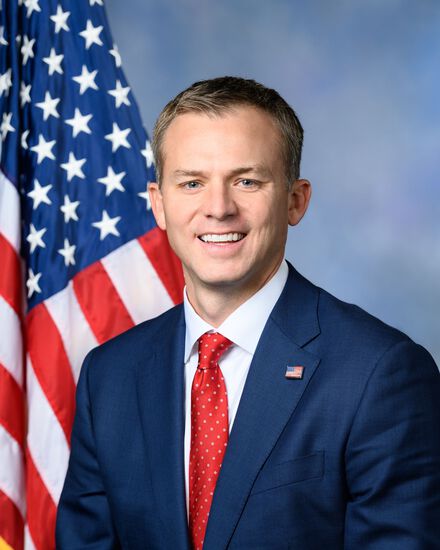
Rep. Blake D. Moore
Sponsored bills
Maddy summaryH.J. Res. 151 seeks to block a Bureau of Land Management (BLM) rule that established management guidelines for Utah's Grand Staircase-Escalante National Monument. The resolution, introduced in March 2026, uses the Congressional Review Act to request Congress disapprove the rule, which was issued in January 2025 and submitted for review. If enacted, the resolution would prevent the rule from taking effect, meaning the BLM would not be required to follow the specific management plan outlined in that rule. This action directly affects the monument's management, as the rule governed activities like land use and conservation within the protected area.
Maddy summaryHR 7739, the Rural Emergency Response Support Act, amends the Fair Labor Standards Act to exempt rural employers of emergency medical technicians (EMTs) and paramedics from standard overtime requirements. It specifically applies to public agencies (like counties or towns) with fewer than 100,000 residents and private entities contracted by them. The key provision removes these employers from FLSA overtime violations when employing EMTs or paramedics, easing compliance for small rural emergency response teams. This directly affects rural EMS providers in smaller communities by allowing flexibility in scheduling without triggering overtime pay obligations under current law.
Maddy summaryHR 7681, the "HSA’s For All Act," would expand eligibility for Health Savings Accounts (HSAs) by allowing individuals enrolled in any qualified health plan - not just high-deductible plans - to contribute to an HSA. It directly affects people covered by Affordable Care Act marketplace plans or employer group health plans, removing the current requirement for a high-deductible health plan (HDHP) to qualify. The bill amends tax code definitions to replace "high-deductible health plan" with "covered health plan" throughout relevant sections, simplifying eligibility rules. This change would take effect for tax years beginning after December 31, 2026.
Maddy summaryThis bill increases the annual stipend for books, supplies, and educational materials under the Post-9/11 GI Bill from $1,000 to $1,400, effective immediately. It also establishes a new automatic annual adjustment starting in fiscal year 2026, tying stipend increases to inflation using the Consumer Price Index (CPI). Specifically, the stipend will rise each year by the percentage difference between the current CPI and the previous year’s CPI. This directly affects veterans using the Post-9/11 Educational Assistance Program for their education expenses.
Protection of Women in Olympic and Amateur Sports Act This bill requires certified national governing bodies (NGBs) of amateur sports (e.g., USA Gymnastics) to prohibit a person whose sex is male from participating in an amateur athletic competition that is designated for females, women, or girls. Under the bill, male means an individual who has, had, will have—or would have, but for a developmental or genetic anomaly or historical accident—the reproductive system that at some point produces, transports, and utilizes sperm for fertilization.
Maddy summaryThis bill transfers approximately 295.89 acres of National Forest System land in Utah's Uinta-Wasatch-Cache National Forest to the city of Fruit Heights, Utah. The land, depicted on a specific map, will be conveyed via quitclaim deed with no payment required. The city must use the land solely for public purposes, and the Secretary of Agriculture retains a reservation for the Bonneville Shoreline Trail easement. If the land is used inconsistently with public purposes, it will revert to the federal government.
Maddy summaryHR 7421, the SAFE Olympic Sports Act, requires national governing bodies for Olympic sports to maintain eligibility rules based on an athlete's biological sex as defined in the bill. It mandates that competitions must restrict participation to athletes whose sex at conception aligns with the event's category (e.g., female-only events for those biologically female). The bill defines "sex" as an immutable biological classification determined at conception, with specific biological criteria for male and female. This applies to Olympic, Paralympic, Pan-American, and other sanctioned amateur competitions, requiring governing bodies to continue sanctioning single-sex events they previously approved.
Maddy summaryThis bill modifies tax credit rules to help businesses recover after disasters. It allows businesses operating in designated disaster areas to treat certain unused tax credits (carryforwards) as transferrable credits against current tax liability, rather than letting them expire. Specifically, it applies to taxpayers making eligible expenditures for business operations in areas with a major disaster declaration after December 31, 2023, or a state-declared disaster meeting specific criteria. The change affects businesses in affected zones by providing immediate tax relief for qualifying expenses incurred within two years of the disaster declaration. It does not involve energy policy or new funding, but adjusts existing tax credit rules for disaster recovery.
Maddy summaryThis bill prohibits foreign governments and entities from providing any financial or in-kind benefits related to student athletes' name, image, and likeness (NIL) agreements. It directly affects colleges, athletic conferences, media distributors, and student athletes by banning foreign investment in college sports revenue streams - including media rights, sponsorships, and facility naming. Institutions must report foreign solicitations to federal agencies and face penalties under the International Emergency Economic Powers Act for violations. The law also requires schools to bar athletes who violate these rules from competing for one year and to annually inform athletes about the restrictions.