

Maddy summaryThe Millstone Act amends federal criminal laws to increase penalties for specific sexual offenses involving violence, exploitation, or minors. Directly affecting individuals charged with these crimes, the bill mandates that they face the possibility of the death penalty or life imprisonment alongside fines. Key provisions include expanding the death penalty for acts such as female genital mutilation, civil rights offenses involving sexual misconduct, sex trafficking of children, and the production or distribution of child pornography. By removing previous caps on sentencing, the legislation ensures that these serious violations can result in the most severe punishments allowed under federal law.
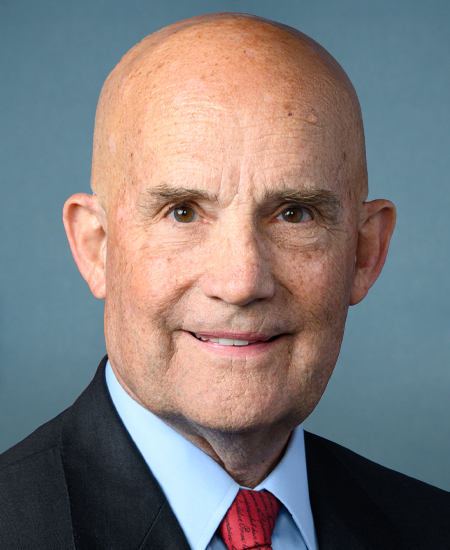
Rep. Keith Self
Sponsored bills
Maddy summaryThis resolution proposes to officially designate June as "Family Month" to highlight the importance of the traditional nuclear family. It also calls for the House of Representatives to stop recognizing Pride Month, which it argues has replaced the celebration of family values. The bill is sponsored by a group of representatives who believe that strengthening traditional marriage is essential for societal stability and population growth.
Maddy summaryThis bill, known as the Preventing International Surrogacy Exploitation Act, aims to stop foreign nationals from using U.S. surrogate mothers for commercial surrogacy arrangements. It would make any surrogacy contract void and unenforceable if the intended parents are foreign citizens or permanent residents, with a specific exception for married couples where at least one partner is a U.S. citizen or resident. Additionally, the law prohibits surrogacy brokers from facilitating these agreements and imposes criminal penalties, including fines and up to 10 years in prison, for those who knowingly or recklessly assist in such contracts. Children born through these invalid agreements would have their custody determined by the state where the surrogate lives, focusing on the child's best interests rather than the contract. Finally, the bill prevents foreign parents from using their U.S.-born children to gain immigration benefits or rights under U.S. immigration laws.
Maddy summaryThe Protecting Kids from Creeps Act prohibits surrogacy agencies, their employees, and sex offenders from participating in surrogacy agreements, directly affecting fertility clinics, staff, and individuals required to register as sex offenders. The bill mandates severe criminal penalties, including fines and prison sentences of at least 10 to 20 years, for knowingly or recklessly facilitating such agreements, while also stripping convicted agencies of their tax-exempt status and eligibility for federal grants. Any surrogacy agreement formed in violation of these rules is declared legally void and unenforceable, meaning it cannot be used to establish parental rights. In cases where a child is born from an illegal agreement, custody decisions will be made solely based on the best interests of the child under the laws of the state where the surrogate lives, ignoring any prior contracts. Additionally, the Attorney General can pursue civil penalties equal to the compensation received or offered for prohibited conduct.
Maddy summaryThe Merit Restoration Act prohibits federal research agencies and grant recipients from using specific diversity, equity, and inclusion practices in their work. This law targets requirements that mandate employees or researchers sign statements or complete training asserting that certain races, sexes, or national origins are inherently superior or inferior. If a recipient is found to have violated these rules, the agency must freeze their funding and may require them to repay any money used during the violation. The restrictions apply to grants awarded on or after the bill becomes law, affecting scientific and medical research funded by the federal government.
Maddy summaryThis bill, titled the Deport the Terrorists Act of 2026, aims to remove from the United States any naturalized citizen convicted of specific terrorism-related crimes. It directly affects individuals who have already become U.S. citizens by automatically revoking their citizenship and declaring their naturalization certificates void upon conviction of offenses such as using weapons of mass destruction or providing material support to terrorists. The law also designates these individuals as deportable aliens and requires the Department of Homeland Security to prioritize their removal from the country. By amending existing immigration laws, the bill ensures that courts have the authority to cancel citizenship immediately following a conviction for these designated offenses.
Maddy summaryHR 1041, the Veterans 2nd Amendment Protection Act, prevents the Department of Veterans Affairs (VA) from automatically sending veterans' personal information to the national background check system (NICS) solely because a court has appointed a fiduciary (like a guardian) to manage their benefits. This directly affects veterans who have a fiduciary appointed due to mental health or cognitive challenges but are not deemed a danger to themselves or others. The bill requires a court order finding the veteran poses a danger before any such information can be shared with the NICS. It changes VA procedures to block unnecessary barriers to firearm ownership for veterans who qualify for fiduciary support without a judicial determination of danger.
Maddy summaryHR 6764, the Veterans Affairs Advisory Committee Oversight Act of 2025, establishes four new advisory committees within the Department of Veterans Affairs to provide expert input on specific veteran needs. The bill creates a Veterans Health Advisory Committee focusing on prosthetics, mental health, and environmental exposures; a Veterans Economic Opportunity Committee addressing education and employment transitions; an Advisory Committee on Veterans Special Populations for underserved groups including women, tribal veterans, and those from outlying areas; and an Advisory Committee on Former Prisoners of War covering compensation and memorial affairs. Each committee must submit annual reports to VA leadership and Congress, with all committees set to terminate by September 30, 2028 unless renewed. The bill also terminates several existing advisory committees by September 30, 2026, streamlining the VA's advisory structure. This legislation does not create new benefits but establishes formal mechanisms for gathering expert input on existing VA programs.
Maddy summaryThis bill prohibits the issuance of religious worker visas to individuals holding specific high-ranking titles in Islam, including ayatollahs, grand ayatollahs, imams, grand imams, muftis, grand muftis, and shaykhas. The law directly affects foreign nationals seeking to enter the United States under the R visa category for religious work, effectively barring those with these designated titles from admission. By amending the Immigration and Nationality Act, the legislation creates a blanket restriction based solely on religious hierarchy rather than individual conduct or specific activities.
Maddy summaryHR 5625, the Cashless Bail Reporting Act, requires the Attorney General to publish and regularly update a public list of all states and local governments that allow cashless bail (release without requiring money bonds). This list must be available within 30 days of the bill's enactment and updated quarterly. The bill does not change existing bail laws but increases transparency by making it easier for the public to see where cashless bail is used. It directly affects individuals seeking information about bail practices in different jurisdictions. The key mechanism is a mandatory, publicly accessible database maintained by the federal government.