

Protect and Serve Act of 2021 This bill establishes a new criminal offense for knowingly assaulting a law enforcement officer and causing serious bodily injury (or attempting to do so) in circumstances that affect interstate commerce. It imposes criminal penalties—a prison term, a fine, or both—on a violator.
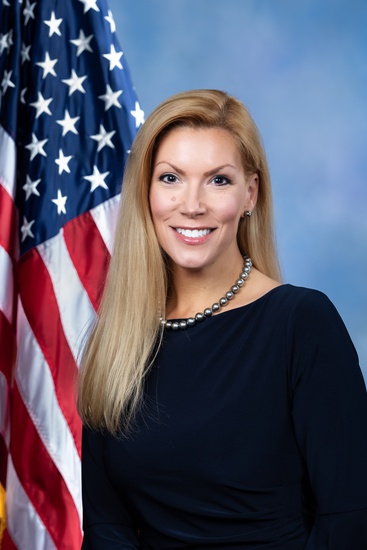
Rep. Beth Van Duyne
Sponsored bills
Maddy summaryHRES 779 is a symbolic resolution introduced in the U.S. House of Representatives on November 5, 2021. It expresses Congress’s disapproval of the Occupational Safety and Health Administration’s (OSHA) emergency temporary standard (ETS) requiring employers with over 100 workers to mandate COVID-19 vaccinations or weekly testing/mask-wearing. The resolution argues OSHA overstepped its authority by treating COVID-19 as a workplace-specific risk, despite Congress having delegated vaccine-related authority to other agencies like the FDA and CDC. As a non-binding resolution, it does not change any laws or enforceable requirements - it only states congressional opinion on the ETS.
Stop Vaccine Mandates Act This bill rescinds the executive order titled Ensuring Adequate COVID Safety Protocols for Federal Contractors and the executive order titled Requiring Coronavirus Disease 2019 Vaccination for Federal Employees , both published on September 9, 2021. The bill provides that these executive orders shall have no force or effect.
Our Veterans Earned It Act This bill prohibits members of the Armed Forces who refuse to receive a COVID-19 vaccination from being denied a federal benefit they are entitled to by reason of their service in the Armed Forces.
Transparency in Cybersecurity Initiatives for Small Contractors Act of 2021 This bill requires the Department of Defense to report on the effects of the Cybersecurity Maturity Model Certification framework on small business concerns.
Equal Treatment of Public Servants Act of 2021 This bill phases in a new funding formula for determining benefit amounts under the windfall elimination provision (WEP). The WEP reduces Social Security retirement and disability benefits for those who receive pensions for certain non-covered employment. The new formula adjusts an individual's total lifetime earnings based on the proportion of those earnings subject to Social Security payroll taxes. It applies to individuals who (1) become eligible for Social Security benefits after 2061, and (2) have earnings from non-covered service performed in a year after 1977. Beneficiaries who become eligible for benefits between 2023 and 2061 receive the higher of their benefit calculated under the existing WEP or the new formula. In addition, certain beneficiaries currently impacted by the WEP receive an additional payment. The Social Security Administration must include non-covered earnings in Social Security account statements and must study the feasibility of partnering with certain pension systems to address data sharing issues related to non-covered pensions.
This bill authorizes the Department of Homeland Security and the U.S. Army Corps of Engineers to transfer to Arizona, New Mexico, and Texas unused materials obtained for constructing a border wall in each respective state.
7(a) Loan Agent Oversight Act This bill requires the Small Business Administration (SBA) to submit an annual report containing specified information related to 7(a) loan agents. These agents provide fee-based referral and loan application services related to the SBA's 7(a) Program. Under the 7(a) Program, the SBA guarantees up to 80% of a private lender's loan to a small business borrower who cannot obtain credit elsewhere on reasonable terms and conditions. The required report must include (1) the number and type of agents assisting applicants for 7(a) loans, (2) the number of fraudulent loans made for which an applicant used the services of a 7(a) agent, and (3) the number and aggregate dollar value of referral fees paid to 7(a) agents.
Small Business 7(a) Loan Agent Transparency Act This bill provides oversight of 7(a) loan agents, including by requiring the Small Business Administration (SBA) to establish a registration system for such agents whereby certain data may be collected and by mandating that such agents register with the system and pay an annual registration fee. These agents provide referral and loan application services related to the SBA's 7(a) Program. Under the 7(a) Program, the SBA guarantees up to 80% of a private lender's loan to a small business borrower who cannot obtain credit elsewhere on reasonable terms and conditions.
Maddy summaryHRES 754 is a non-binding resolution expressing the House of Representatives' opposition to proposed "punitive natural gas taxes" on U.S. businesses, families, and workers. It cites claims that such taxes would raise average energy bills by 17%, reduce GDP by $9 billion, and eliminate 90,000 jobs, while disproportionately harming low-income households. The resolution argues that opposing these taxes supports U.S. energy security, national security, and continued leadership in reducing emissions through domestic natural gas production. As a procedural resolution, it does not create law but formally states the House's position against this policy approach.