

Maddy summaryHR 7355, the "Stopping Excessive Climate Reporting Act," prohibits public companies from being required under securities laws to disclose certain climate-related information. Specifically, it prevents issuers from having to report greenhouse gas emissions from their own operations (Scope 1 and 2) or their supply chains and consumers (Scope 3 emissions). The bill also removes requirements for independent certification of this emissions data. This directly affects publicly traded companies subject to securities regulations by eliminating these specific disclosure obligations.
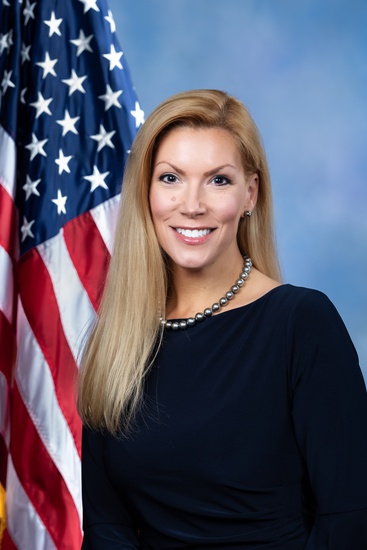
Rep. Beth Van Duyne
Sponsored bills
Small Business Regulatory Reduction Act This bill requires the Small Business Administration to ensure that for each fiscal year the cost to small businesses of the administration's rulemaking (including the modification or repeal of a rule) is not greater than zero. The administration also must report on any regulations issued by other federal agencies that have an impact on small businesses.
Reversing Every Vaccine Emergency Requirement and Stopping Employee OSHA Mandates Act or the REVERSE OSHA Mandates Act This bill limits the authority of the Occupational Safety and Health Administration (OSHA) to regulate workplace safety and health matters. Specifically, the bill repeals OSHA's authority to issue emergency temporary standards related to workplace safety and health. The bill further specifies that OSHA may not, under its authority to regulate workplace safety and health, require the administration of any drug, vaccine, or other biological product to an employee.
Unleashing American Energy Act This bill requires a minimum amount of oil and gas lease sales a year on certain submerged lands of the Outer Continental Shelf (OCS) and limits delays on federal oil and gas leases on such lands. Specifically, this bill requires the Department of the Interior to annually conduct a minimum of two region-wide oil and gas lease sales in each of the following regions of the OCS: (1) the Gulf of Mexico region in the Central Gulf of Mexico Planning Area and the Western Gulf of Mexico Planning Area, and (2) the Alaska region. In addition, the bill requires the President to obtain congressional approval before delaying federal oil and gas leases on the OCS.
Strategy to Secure Offshore Energy Act This bill modifies requirements for the National Outer Continental Shelf Oil and Gas Leasing Program, including by specifying that the program must be updated on a five-year basis and setting a minimum number of annual lease sales for the program.
Restore Onshore Energy Production Act This bill requires the Department of the Interior to immediately resume sales of oil and gas leases in accordance with applicable onshore mineral leasing laws and specifies a minimum number of sales that Interior must conduct in each state where there is land available for oil and gas leasing. The bill also prohibits the President from taking actions to cancel, delay, or otherwise impede federal processes related to energy mineral leasing without congressional approval.
Energy Permitting Certainty Act This bill requires the Department of the Interior to process applications for permits to drill under a valid oil or gas lease even if there are any pending civil actions, provided that the civil actions do not directly affect or involve the application or underlying lease.
Promoting Energy Independence and Transparency Act This bill requires the Department of the Interior to take certain actions related to parcels of land that have been nominated for future sales of onshore oil and gas leases and related drilling permits. Specifically, Interior must (1) report to Congress about the status of the parcels, (2) publish on its website information concerning expressions of interest in nominated parcels and drilling permits, and (3) issue certain pending applications for drilling permits within 30 days.
Securing American Energy and Investing in Resiliency Act This bill requires the Department of the Interior to conduct certain sales of oil and gas leases on the Outer Continental Shelf by a specified deadline.
Securing a Strong Retirement Act of 2022 This bill makes various changes with respect to employer-sponsored retirement plans, including providing for the automatic enrollment of employees in certain plans and increasing the age at which participants are required to begin receiving mandatory distributions.