

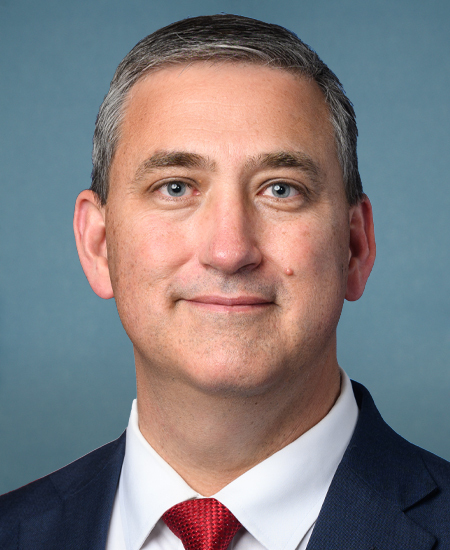
Photo of Nathaniel Moran
R United States House · District 1 · Texas On the 2026 ballot

Rep. Nathaniel Moran

Compare
Total votes
1,860
all sessions
Attendance
99%
19 missed
Near the chamber average
With party
95%
of cast votes
Higher than 96% of chamber peers
Bipartisan score
3%
crosses aisle rarely
Lower than 97% of chamber peers
Sponsored
518
bills & resolutions
Near the chamber average
Committees
5
assignments
518 bills and resolutions

Sponsored bills

Total
518
Primary
45
Co-sponsor
473
This page
518
matching current filters
Primary HR 7509
In committee · Utah House · Lead sponsor
Deterring Adversarial Access to Americans’ Data Act

Maddy summaryHR 7509, the *Deterring Adversarial Access to Americans’ Data Act*, modifies U.S. tax law to impose financial penalties on businesses using technology linked to "foreign adversaries." It directly affects companies that rely on specified foreign-controlled technology (like certain apps or services from designated countries) or are owned by "prohibited foreign entities." Key provisions deny tax benefits including bonus depreciation for such technology, block research expense deductions, adjust business interest deductions, and eliminate R&D credits for affected entities. These changes apply to tax returns filed after the law's effective date, one year post-enactment.

In committee Feb 11, 2026 0 co-sponsors
Co-sponsor HR 7357
In committee · Utah House · Co-sponsor
TSP Fiduciary Security Act of 2026

Maddy summaryThe TSP Fiduciary Security Act of 2026 requires the Thrift Savings Fund (TSP), which manages retirement savings for federal employees and uniformed service members, to avoid investments harming national security. It adds a new duty for the TSP's managing board to prevent investments from threatening U.S. national security, directing the Secretary of Labor to create regulations within one year to establish standards for TSP investments and voting rights. These regulations will presume investments in China-based entities, or those breaching government contracts involving critical defense technology, as non-compliant. The bill also explicitly prohibits TSP mutual funds from including investments in China-based companies or their subsidiaries. Additionally, it mandates annual congressional reports on TSP investment reviews and enforcement outcomes.

In committee Feb 4, 2026 1 co-sponsor
Co-sponsor HR 3699
In committee · Utah House · Co-sponsor
Energy Choice Act

Maddy summaryThis bill prevents state or local governments from banning or restricting energy connections (like installation, modification, or access) based on the type or source of energy, such as electricity, natural gas, or renewable fuels. It directly affects consumers choosing energy providers and energy companies seeking to offer services. The key provision prohibits local laws, regulations, or policies that limit energy services sold in interstate commerce, covering all energy types listed in the bill’s definitions. It does not create new programs but limits regulatory authority at the state or local level. The law aims to ensure open access to diverse energy sources without source-based restrictions.

In committee Feb 4, 2026 1 co-sponsor
Co-sponsor HR 4242
In committee · Utah House · Co-sponsor
Innovate Less Lethal to De-Escalate Tax Modernization Act

Maddy summaryThis bill exempts certain less-than-lethal projectile devices from federal sales taxes and National Firearms Act restrictions. It directly affects manufacturers, importers, and producers of these devices, which are defined as non-lethal tools (like rubber bullets or beanbag rounds) designed not to cause serious injury and unable to be easily converted to use standard firearm ammunition. Key mechanisms include a 90-day classification process for manufacturers seeking exemption, an annual public list of approved devices, and annual congressional reports on devices excluded from the exemption. The policy change applies to devices meeting specific safety criteria, such as projectile velocity limits and design features preventing misuse as conventional weapons.

In committee Feb 2, 2026 1 co-sponsor
Co-sponsor HR 7209
In committee · Utah House · Co-sponsor
TRAIN Act

Maddy summaryThe TRAIN Act (HR 7209) creates a new legal process allowing copyright owners to request court-issued subpoenas from AI developers. It directly affects copyright holders (like authors or artists) and developers of generative AI models (such as those creating text or image-generating systems). The bill requires developers to disclose records showing whether the copyright holder's specific works were used to train their AI model, but only for the copyright holder's own works - not others'. Developers must comply within a reasonable timeframe, and failure to do so creates a legal presumption they used the works. The process includes strict confidentiality rules and penalties for bad-faith requests, all under existing civil procedure rules.

In committee Jan 22, 2026 1 co-sponsor
Co-sponsor HR 7040
In committee · Utah House · Co-sponsor
SAFE KIDS Act

Maddy summaryThe SAFE KIDS Act would void surrogacy contracts between U.S. surrogates and foreign nationals from designated "foreign entities of concern" (nations listed under 10 U.S.C. §4872(f)(2)), except for married couples where at least one prospective parent is a U.S. citizen or lawful permanent resident. It prohibits surrogacy brokers from facilitating such contracts, imposing fines or up to one year in prison for knowingly arranging these agreements. If a contract is voided, custody decisions for the child would be determined by state courts based solely on the child’s best interests, disregarding the invalid agreement. The bill aims to address what Congress identifies as a national security threat involving exploitation of U.S. surrogacy laws and potential human trafficking.

In committee Jan 21, 2026 1 co-sponsor
Co-sponsor HR 6875
In committee · Utah House · Co-sponsor
AI OVERWATCH Act

Maddy summaryThe AI OVERWATCH Act requires U.S. exporters to obtain a license for sending certain high-performance integrated circuits (defined by specific technical specifications like processing power or bandwidth) to countries designated as "concerns," including China, Russia, Iran, and North Korea. Before approving such licenses, the Commerce Department must submit detailed certifications to Congress, including assurances the export won’t support military/intelligence capabilities of the recipient country and won’t harm U.S. semiconductor availability or AI leadership. The bill also creates an exemption for U.S. companies meeting strict security and ownership standards ("trusted United States persons") to export these chips to non-target countries without a license. Additionally, it mandates a national security strategy assessing how such exports affect U.S. AI competitiveness, particularly regarding China’s semiconductor production and capabilities.

In committee Jan 21, 2026 1 co-sponsor
Primary HR 7087
In committee · Utah House · Lead sponsor
Grave Injustice Parity Act

Maddy summaryHR 7087, the "Grave Injustice Parity Act," expands tax deductions for estates and gifts transferred to qualifying non-profit cemetery entities. It allows deductions for transfers to cemetery companies owned exclusively for members or non-profit burial corporations that operate solely for burial purposes, have no private profit motive, and direct all earnings toward cemetery operations (not private shareholders). This applies to both estate tax (Section 2055) and gift tax (Sections 2522) deductions, as well as private foundation distributions (Sections 4942/4945). The bill directly affects donors and estates/gifts made to such cemetery organizations, with changes effective after enactment.

In committee Jan 15, 2026 0 co-sponsors
Co-sponsor HR 909
Passed · Utah House · Co-sponsor
Crime Victims Fund Stabilization Act of 2025

Maddy summaryHR 909, the Crime Victims Fund Stabilization Act of 2025, modifies how funds from the False Claims Act are deposited into the Crime Victims Fund. It specifies that from 2025 through 2029, certain False Claims Act proceeds (specifically those for qui tam plaintiff payments and government damage reimbursements) cannot be deposited into the fund. This change directly affects the composition of the Crime Victims Fund by excluding these specific revenue streams during the specified period. The bill does not create new benefits or alter victim services; it only adjusts fund allocation rules for existing False Claims Act revenues.

Passed Jan 13, 2026 1 co-sponsor
Co-sponsor HR 6707
In committee · Utah House · Co-sponsor
CFIUSMCA Act

Maddy summaryHR 6707, the CFIUSMCA Act, directs the U.S. Trade Representative to advocate during USMCA joint reviews for Mexico and Canada to adopt foreign investment review frameworks similar to the U.S. Committee on Foreign Investment (CFIUS) process. It aims to create a coordination mechanism among the U.S., Mexico, and Canada for sharing information and managing national security risks in strategically important sectors like semiconductors, artificial intelligence, critical infrastructure, and cybersecurity. The bill requires U.S. agencies to provide technical assistance to Mexico and Canada to help them establish these aligned frameworks and mandates regular communication to address shared threats from foreign investments. This legislation directly affects U.S. trade and security officials, as well as the foreign investment review processes of Mexico and Canada under the USMCA agreement.

In committee Dec 15, 2025 1 co-sponsor
Showing 81 to 90 of 518 bills
Previous 1 8 9 10 52 Next