

Maddy summaryHR 6824 creates a 10% federal tax credit for businesses installing qualifying combined heat and power (CHP) systems. The credit applies to systems meeting strict efficiency standards (over 60% energy efficiency), producing at least 20% thermal energy and 20% electrical/mechanical power, with construction starting after December 2024. Systems over 50 megawatts electrical or 67,000 horsepower mechanical capacity are excluded, and bonuses of 10% more credit apply for domestic content or projects in designated energy communities. This credit directly affects businesses investing in new CHP infrastructure, reducing their tax liability based on the system's cost.
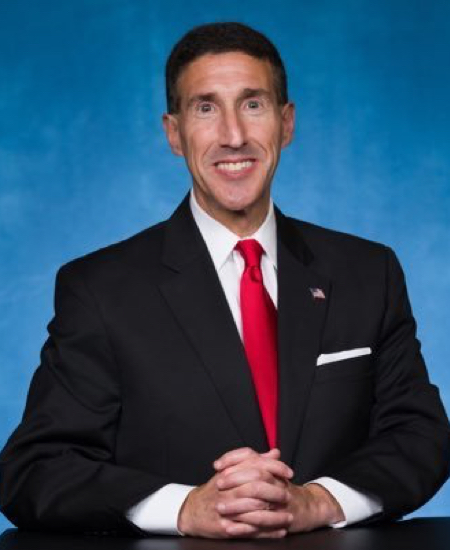
Rep. David Kustoff
Sponsored bills
Maddy summaryThis bill would strip tax-exempt status from organizations that provided material support to designated terrorist groups in the past three years. The IRS must first notify the organization and give it 90 days to prove it didn’t provide support or commit to stopping future support. Organizations failing to "cure" the issue would permanently lose tax-exempt status, though humanitarian aid approved by the government is excluded from the definition of "material support." The law includes procedures for correcting errors and resolving disputes through IRS Appeals or federal courts.
Maddy summaryThe Restoring American Mineral Security Act of 2025 aims to reduce U.S. dependence on China for critical minerals by creating a "Critical Minerals Security Alliance" with other countries. The bill would encourage countries to impose higher tariffs on minerals from China and other "foreign countries of concern," while offering those countries duty-free access to the U.S. market for their critical minerals and derivative products like batteries and magnets. It establishes a trust fund using duties collected on minerals from China to support U.S. mining and processing projects through the Department of Energy, Department of Defense, and U.S. International Development Finance Corporation. This legislation directly affects U.S. mineral industry stakeholders, foreign trade partners, and companies producing critical minerals and related products, focusing on trade policy rather than direct regulation of mineral production.
Miracle on Ice Congressional Gold Medal Act This act provides for the award of Congressional Gold Medals to the members of the 1980 U.S. Olympic men's ice hockey team in recognition of the team's achievement at the 1980 Winter Olympic Games.
Maddy summaryThis bill directs the American Battle Monuments Commission to correct historical errors by identifying Jewish World War I and II veterans buried overseas under incorrect Christian markers (Latin crosses) and replacing them with appropriate markers. It establishes a 10-year program to contact families of affected veterans, with the Commission funding the effort at $500,000 annually through nonprofit contracts. The program specifically targets veterans buried in foreign U.S. military cemeteries with markers indicating non-Jewish faith, addressing a documented mistake affecting approximately 900 Jewish servicemembers. This directly affects Jewish veterans' families by honoring their heritage and correcting past burial inaccuracies.
Maddy summaryHR 6449, the "DO NOT Call Act," amends the Telephone Consumer Protection Act of 1993 to strengthen penalties for illegal robocalls. It increases criminal penalties for willful violations to up to one year in prison (or three years for aggravated offenses like repeated high-volume calls or calls intended to support felonies), and raises fines for inaccurate caller identification from $10,000 to $20,000 per violation. The bill directly affects businesses and entities making unsolicited calls without consent, including those using auto-dialers or prerecorded messages. Key provisions define "calls" broadly to include unsolicited texts sent via auto-dialers without prior permission.
Maddy summaryHR 6393, the "DSH in Tennessee Act," permanently restores and guarantees specific federal hospital funding for Tennessee starting in fiscal year 2026. It directs the federal government to provide Tennessee with a Disproportionate Share Hospital (DSH) allotment equal to the state's 2015 level, adjusted annually for inflation based on the Consumer Price Index. This funding directly supports hospitals in Tennessee that serve large numbers of low-income patients, ensuring they receive consistent federal financial assistance. The bill treats Tennessee as a "low DSH state" for future funding calculations, establishing a permanent, inflation-adjusted funding formula.
Maddy summaryThis bill requires the Social Security Administration to create a dedicated team for victims of identity theft involving their Social Security number. It directly affects individuals whose SSN was misused to fraudulently claim benefits (under Social Security, Supplemental Security Income, or other programs) or to alter their records. The key provision mandates a single point of contact who tracks the case to resolution, coordinates with other SSA units, and ensures continuity - even if the specific staff changes - while keeping victims informed. The goal is to streamline the resolution process for these victims, reducing the complexity of navigating multiple departments.
Give Kids a Chance Act of 2025 This bill expands the Food and Drug Administration’s (FDA’s) authority with respect to research on rare pediatric diseases, including by permitting the FDA to take enforcement action against drug sponsors that fail to satisfy pediatric study requirements and by reauthorizing programs that support pediatric research. Specifically, the bill modifies requirements relating to molecularly targeted pediatric cancer investigations to permit research on new drugs in combination with active ingredients that have already been approved, provided certain conditions are met; permits the FDA to take enforcement action against drug sponsors that fail to comply with pediatric study requirements, if such sponsors demonstrated a lack of due diligence in satisfying the requirement; renews the FDA’s authority to award priority review vouchers to sponsors of new products intended to treat rare pediatric diseases through September 30, 2029; and reauthorizes through FY2027 certain funding for the National Institutes of Health to support priority pediatric research. The bill also provides statutory authority for the FDA’s interpretation of the orphan drug exclusivity period. The bill specifies, consistent with FDA regulations, that the seven-year market exclusivity period for drugs for rare diseases or conditions (i.e., orphan drugs) prohibits the approval of the same drug for the same approved use or indication with respect to the disease or condition. (In Catalyst Pharmaceuticals, Inc. v. Becerra , a court rejected the FDA’s interpretation and held that orphan drug exclusivity extends to all uses or indications for the disease or condition.)
Maddy summaryThis bill prohibits Medicare-approved medical residency programs from requiring residents to undergo abortion training without their voluntary consent. It specifically bans programs from making such training mandatory (requiring residents to "opt-in" rather than "opt-out") or from discriminating against residents who refuse this training or do not perform abortions. The law directly affects medical residents in Medicare-funded postgraduate training programs across the U.S., ensuring they cannot be forced into abortion-related clinical experiences or penalized for declining them.