

Maddy summaryThis bill would add pharmacist services to Medicare Part B coverage for beneficiaries, specifically covering pharmacist-led testing and treatment for illnesses like flu, COVID-19, or strep throat during public health emergencies. It defines covered services as those performed under state law, often requiring collaboration with a physician, and sets payment at 80% of the lesser of the actual charge or 85% of physician payment rates. Pharmacists would be prohibited from balance billing for these services, ensuring Medicare beneficiaries pay only their standard copayment. The changes would take effect January 1, 2026.
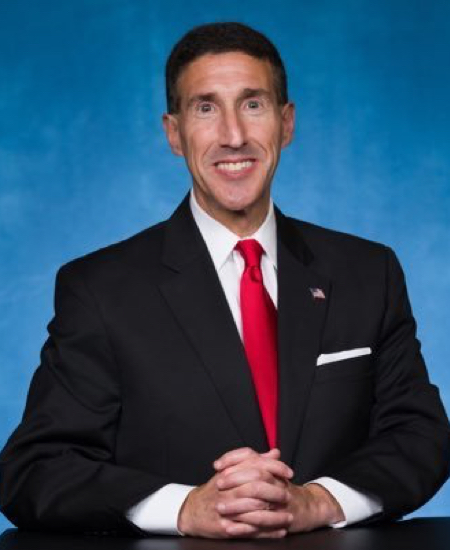
Rep. David Kustoff
Sponsored bills
Maddy summaryThis bill authorizes the U.S. Mint to produce commemorative $5 gold and $1 silver coins marking the 25th anniversary of the September 11, 2001, terrorist attacks. The coins must feature designs honoring victims and first responders (including the inscription "Never Forget") and will be sold only during 2027-2028. All surcharges ($35 per gold coin, $10 per silver coin) collected from sales will fund the National September 11 Memorial and Museum at the World Trade Center, with no net cost to the federal government. The coins are legal tender but primarily intended for collectors, not circulation.
Maddy summaryThe IGNITE HBCU Excellence Act authorizes federal grants to Historically Black Colleges and Universities (HBCUs) to fund long-term improvements to their campus facilities and infrastructure. These grants are awarded competitively to eligible HBCUs based on criteria such as the age of their facilities, deferred maintenance needs, financial capacity, and student enrollment levels. Recipients may use the funds to construct or renovate buildings, upgrade technology and broadband systems, improve safety measures, and develop workforce training hubs, while being prohibited from using the money for routine maintenance or athletic facilities. The legislation also includes provisions for reporting on project outcomes and requires institutions to create comprehensive master plans that involve consultation with diverse campus and community stakeholders.
Maddy summaryThis concurrent resolution expresses Congress's support for law enforcement officers and honors those who have died or been injured while performing their duties. The document highlights the dangers officers face, noting high rates of assaults and suicide, as well as current staffing shortages compared to pre-2020 levels. It calls for increased measures to improve officer safety, including more personnel, better training and equipment, stricter penalties for assaulting officers, and expanded mental health resources. This non-binding measure does not create new laws or allocate funding but serves to formally recognize the contributions of police professionals and urge government bodies to provide necessary support.
Maddy summaryThe Connected Vehicle Security Act of 2026 restricts the importation, sale, and manufacture of vehicles and related technology from specific countries, including China, Russia, Iran, and North Korea, to address national security concerns. The law defines prohibited items as connected vehicles, their software, and hardware components and sets different effective dates, with vehicle bans starting in 2027 and hardware restrictions beginning in 2030. A government official can grant exceptions for specific items after reviewing security risks and notifying Congress, while the agency must publish annual reports on enforcement actions and compliance.
Maddy summaryThis bill amends rules for sharing information about suspected intellectual property violations in trade. It requires U.S. Customs and Border Protection to have a reasonable suspicion before sharing data, and permits sharing nonpublic details with online marketplaces, shipping companies, freight forwarders, and other entities involved in U.S. merchandise imports. It also allows CBP to share such information with additional parties (e.g., importers or rights holders) as determined appropriate by the Commissioner. The changes aim to improve coordination between enforcement and industry for intellectual property protection.
Maddy summaryThe Small Business Tax Cut Act increases the qualified business income deduction from 20 percent to 23 percent for eligible taxpayers, directly affecting small business owners and investors. The bill modifies income thresholds that limit this deduction for higher earners and extends the phase-in rules for taxable income above certain limits. Additionally, it allows dividends from qualified business development companies to be treated similarly to qualified REIT dividends for deduction purposes. These changes apply to taxable years beginning after December 31, 2026.
Maddy summaryThis bill, titled the Trump Accounts for All Generations Act, makes a specific program related to "Trump accounts" permanent and adjusts its contribution limits. It directly affects individuals who contribute to these accounts by altering their long-term availability and value. The legislation permanently extends the "Trump accounts" contribution program by removing its scheduled expiration date of January 1, 2029. Furthermore, it introduces an annual inflation adjustment for the program's $1,000 contribution amount, beginning in taxable years after 2028. The bill also removes the word "pilot" from the program's title and related sections of the tax code, formally establishing it as an ongoing program.
Maddy summaryThe SACRED Act adds a new federal crime to protect access to places of religious worship by prohibiting intimidating or harassing conduct within 100 feet of religious buildings. It directly affects individuals who engage in disruptive behavior near religious sites and those seeking to enter or exit them. The law defines prohibited actions as conduct that causes reasonable fear for physical safety or intentionally harasses people within 8 feet, with penalties ranging from fines up to $10,000 for nonviolent first offenses to potential life imprisonment if death results. The bill also establishes civil remedies allowing aggrieved individuals or religious organizations to sue for damages and injunctive relief, while permitting state and federal attorneys general to bring civil actions on behalf of affected persons. Importantly, the legislation explicitly preserves the right to peaceful expressive conduct like picketing and does not override existing state or local laws.
Maddy summaryThe Save Struggling Hospitals Act adjusts Medicare reimbursement rates for hospitals in low-wage areas to help them remain financially viable. It directly affects hospitals located in regions where the average hospital wages fall below the 25th percentile nationally. The bill increases the area wage index for these struggling hospitals by half the difference between their current index and the 25th percentile threshold, starting with discharges on or after October 1, 2019. These adjustments are designed to be budget neutral, meaning the increased payments to low-wage hospitals are offset by reductions elsewhere without decreasing payments to hospitals in the top 75th percentile or reducing any hospital's payment by more than 5 percent from the previous year.