This resolution supports the designation of the International Year of the Woman Farmer and recognizes the critical role of women in agriculture. The resolution also encourages citizens to celebrate the impact these women have on the food systems and agricultural workforce of the United States by encouraging and empowering women to pursue careers in agriculture and cultivate leadership opportunities.
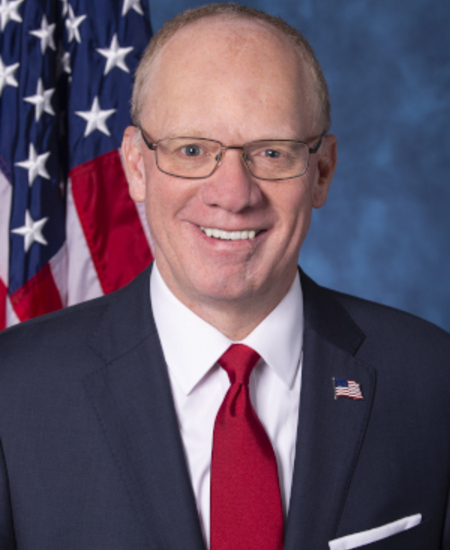
Rep. John W. Rose
Sponsored bills
Safeguard American Voter Eligibility Act or the SAVE America Act This bill requires individuals to provide documentary proof of U.S. citizenship when registering to vote, and requires photo identification to vote, in federal elections. Specifically, the bill prohibits states from accepting and processing an application to register to vote in a federal election unless the applicant presents documentary proof of U.S. citizenship. The bill specifies what documents are considered acceptable proof of U.S. citizenship, such as identification that complies with the REAL ID Act of 2005 that indicates U.S. citizenship. Further, the bill (1) prohibits states from registering an individual to vote in a federal election unless, at the time the individual applies to register to vote, the individual provides documentary proof of U.S. citizenship; and (2) requires states to establish an alternative process to demonstrate U.S. citizenship. Each state must take affirmative steps on an ongoing basis to ensure that only U.S. citizens are registered to vote, which shall include establishing a program to identify individuals who are not U.S. citizens using information supplied by certain sources. Additionally, states must remove noncitizens from their official lists of eligible voters. The bill (1) provides for a private right of action for certain violations, and (2) establishes criminal penalties for certain offenses. Individuals voting in federal elections must present an eligible photo identification document. An individual who votes by absentee ballot must submit a copy of their identification document with both the request for, and the submission of, the absentee ballot.

Maddy summaryThis bill would revoke the tax-exempt status of nonprofit organizations (like charities or health groups) that provide or fund abortions, except in specific cases. It directly affects organizations currently classified under Section 501(c)(3) of the tax code, such as some healthcare providers or advocacy groups. Key provisions define "abortion" as intentionally terminating a pregnancy (excluding cases where the mother’s life is at risk, or the pregnancy resulted from rape or incest), and deny tax exemption to groups meeting this definition. The change would take effect for tax years starting after the bill’s enactment date.
Maddy summaryHR 7248 (MARINA Act) standardizes fees and lease terms for marinas operating on Corps of Engineers waterways. It caps rent at 1% of marina sales (including food, fuel, and boat services), creates fixed administrative fee tiers ($50,000 for major projects, $5,000 for moderate reviews, $1,000 for routine matters), and sets minimum lease terms at 50 years for initial agreements. The bill also prohibits requiring wages above federal minimum wage and mandates a public fee schedule. It directly affects all marina operators under Corps leases, ensuring consistent pricing and reducing arbitrary fees across all districts.
Maddy summaryThe SAFE KIDS Act would void surrogacy contracts between U.S. surrogates and foreign nationals from designated "foreign entities of concern" (nations listed under 10 U.S.C. §4872(f)(2)), except for married couples where at least one prospective parent is a U.S. citizen or lawful permanent resident. It prohibits surrogacy brokers from facilitating such contracts, imposing fines or up to one year in prison for knowingly arranging these agreements. If a contract is voided, custody decisions for the child would be determined by state courts based solely on the child’s best interests, disregarding the invalid agreement. The bill aims to address what Congress identifies as a national security threat involving exploitation of U.S. surrogacy laws and potential human trafficking.
Maddy summaryHR 7156, the SCAM Act, would expand grounds for revoking U.S. citizenship (denaturalization) for naturalized citizens who commit specific offenses within 10 years of becoming citizens. It targets individuals convicted of defrauding federal, state, or local governments (e.g., $10,000+ in public benefit fraud), affiliating with foreign terrorist organizations, or committing aggravated felonies or espionage. If convicted in these categories, the government could automatically revoke citizenship retroactively (as if it never existed) based on evidence that the person lacked good moral character or loyalty to the U.S. at the time of naturalization. This bill directly affects naturalized citizens who commit these offenses within a decade of gaining citizenship, with revocation triggering immediate deportability.
Maddy summaryThis resolution (HRES 998) is a symbolic House of Representatives commendation honoring President Trump, U.S. military/intelligence agencies, and Justice Department personnel for the alleged success of "Operation Absolute Resolve" in apprehending Venezuelan leader Nicolás Maduro. It cites Maduro's charges (including narcoterrorism conspiracy) and the Maduro regime's alleged dismantling of Venezuelan democracy, state-sponsored drug trafficking, and human rights abuses. The resolution expresses support for Venezuela's democratic transition but contains no new policy, funding, or legal changes. As a procedural resolution, it does not directly affect any individuals or alter laws.
Maddy summaryHR 7074 requires the Secretary of the Interior to join the Committee on Foreign Investment in the United States (CFIUS) when reviewing transactions involving land or resources near federal lands managed by agencies like the Bureau of Land Management, National Park Service, or Bureau of Indian Affairs. It specifically targets acquisitions by foreign entities from China, North Korea, Russia, or Iran, mandating CFIUS to assess whether such transactions - reported by the Interior Secretary - constitute a "covered transaction" requiring review. The bill creates a new process for evaluating these land deals, with the review ending for a specific country once it’s removed from the U.S. list of "foreign adversaries." This directly affects foreign buyers from those four nations seeking to acquire land adjacent to federally protected areas.
Maddy summaryThis bill requires state agencies administering the SNAP (food stamp) program to provide recipient-level data to the USDA Secretary upon request. It directly affects state SNAP agencies, which must submit this data within 30 days (or sooner for urgent cases) in secure electronic formats. Key provisions include mandatory data sharing for program oversight and integrity, strict privacy safeguards under the Privacy Act, and potential withholding of federal funds for non-compliance. The bill also clarifies that this does not limit the USDA's existing authority to access state data for program administration.
Maddy summaryHR 2516, the Accreditation for College Excellence Act of 2025, prohibits accreditation agencies from requiring colleges to support specific political views, ideologies, or partisan positions. It explicitly prevents agencies from assessing institutions based on their commitment to any ideology or requiring adherence to statements of faith for religious institutions. The bill also limits federal criteria for accreditation to only what is necessary, ensuring colleges comply with their accreditor’s standards - not additional unrelated requirements. This directly affects all colleges seeking federal funding through accredited programs by clarifying permissible accreditation standards.