

Energy and Water Development and Related Agencies Appropriations Act, 2026 This bill provides FY2026 appropriations for U.S. Army Corps of Engineers civil works projects, the Department of the Interior's Bureau of Reclamation, the Department of Energy (DOE), and several independent agencies. The bill provides appropriations for U.S. Army Corps of Engineers civil works projects, including for Investigations, Construction, Mississippi River and Tributaries, Operation and Maintenance, the Regulatory Program, Flood Control and Coastal Emergencies, Expenses, the Office of the Assistant Secretary of the Army for Civil Works, and the Water Infrastructure Finance and Innovation Program. The bill provides appropriations to the Department of the Interior for the Central Utah Project and the Bureau of Reclamation. The bill provides appropriations to DOE for energy programs, including Energy Efficiency and Renewable Energy; Cybersecurity, Energy Security, and Emergency Response; Electricity; Grid Deployment; Nuclear Energy; Fossil Energy; Naval Petroleum and Oil Shale Reserves; the Strategic Petroleum Reserve; the Northeast Home Heating Oil Reserve; the Energy Information Administration; Non-Defense Environmental Cleanup; the Uranium Enrichment Decontamination and Decommissioning Fund; Science; Nuclear Waste Disposal; the Advanced Research Projects Agency—Energy; the Title 17 Innovative Technology Loan Guarantee Program; the Advanced Technology Vehicles Manufacturing Loan Program; the Tribal Energy Loan Guarantee Program; Indian Energy Policy and Programs; Departmental Administration; and the Office of the Inspector General. The bill also provides appropriations to DOE for Atomic Energy Defense Activities of the National Nuclear Security Administration, Environmental and Other Defense Activities, and the Power Marketing Administrations. The bill provides appropriations to several independent agencies, including the Federal Energy Regulatory Commission and the Nuclear Regulatory Commission. The bill also sets forth requirements and restrictions for using funds provided by this and other appropriations acts.
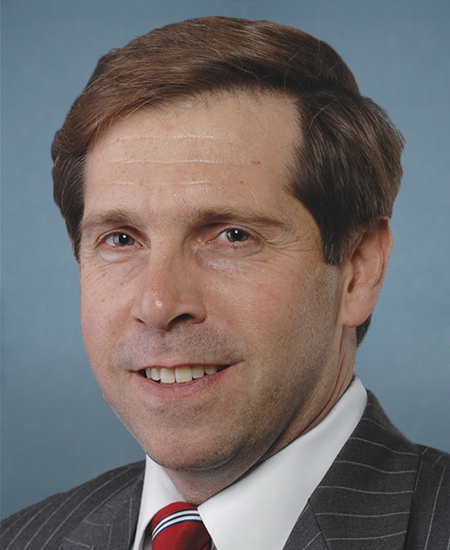
Rep. Charles J. "Chuck" Fleischmann
Sponsored bills
Maddy summaryHR 2808, the Homebuyers Privacy Protection Act, restricts how consumer reporting agencies share credit reports during mortgage applications. It prevents agencies from sending these reports to third parties unless the request is tied to a firm credit offer and the recipient has either the homebuyer’s explicit written consent or is directly involved in the mortgage (like the lender, loan servicer, or the homebuyer’s bank holding an active account). This directly affects homebuyers applying for residential mortgages by limiting unsolicited sharing of their credit information. The law amends the Fair Credit Reporting Act to strengthen privacy protections around mortgage-related credit data.
Maddy summaryHR 5130, the Prevent Government Shutdowns Act of 2025, would automatically continue funding for most federal programs at previous year's levels if Congress fails to pass full-year appropriations by the start of the fiscal year. The bill would provide automatic funding for 14 days, extendable by 14-day periods until Congress passes an appropriations bill, while excluding entitlement programs like food stamps and Social Security. During these automatic funding periods, the bill restricts government travel to essential activities only, limits use of campaign funds for travel, and requires Congress to prioritize passing appropriations bills over other business. This would affect all federal agencies and programs that would otherwise face a shutdown, as well as Members of Congress and their staff who would face new travel restrictions during these periods.
Maddy summaryHR 5056, the Teachers Are Leaders Act of 2025, creates a federal grant program to support teachers in high-need schools who maintain classroom roles while taking on leadership responsibilities. The bill provides funding for eligible school district-university partnerships to offer teachers one year of professional development leading to a teacher leadership credential, plus up to two additional years of support. This includes training in areas like curriculum development, peer coaching, and cultural competencies, with selection criteria requiring at least three years of teaching experience and certification. Grants cover 50% of stipends in the first two years and 33% in the third year, and teachers may repay credential costs if they leave the program early. The program directly affects classroom teachers in high-need schools and aims to improve student achievement through data-driven instructional practices.
Maddy summaryThis bill streamlines defense cooperation between the U.S., Australia, and the United Kingdom under the AUKUS security pact. It removes bureaucratic barriers by allowing direct reexports of U.S. defense articles between these governments without presidential consent, and eliminates certification requirements for commercial technical assistance agreements with Australia or the UK. Key provisions include exempting authorized transfers (including intra-governmental and entity-level movements) from certain export controls and Foreign Assistance Act rules. The changes specifically target defense-related items and services shared among the three nations, reducing administrative hurdles for military collaboration. This affects U.S. defense exports, Australian and UK government entities, and authorized defense contractors involved in AUKUS partnerships.
Maddy summaryThis bill permanently establishes the Coordinator for Afghan Relocation Efforts (CARE) within the State Department, expanding their role to prioritize family reunification for U.S. military personnel and veterans with Afghan allies. It mandates the Coordinator to collect detailed data on Afghan applicants (including special immigrant visa seekers, refugees, and parolees), vetting timelines, and pending family reunification cases into a centralized database. The Coordinator must report this data to Congress every 90 days to ensure transparency and inform policy decisions. The law directly affects Afghan allies and their families seeking U.S. relocation, particularly those connected to U.S. military service.
Maddy summaryHRES 636 is a symbolic House resolution condemning a July 28, 2025, shooting in New York City that killed three civilians and NYPD Officer Didarul Islam, alongside security officer Aland Etienne. It honors the victims, commends the NYPD's response, and condemns violence against law enforcement. The resolution does not create new laws or policies but formally expresses the House's stance against such violence and supports law enforcement. It was introduced by Representatives Stefanik, Tenney, and others and referred to the Oversight Committee.
Maddy summaryHR 4780 (USTRx Act) creates a new Chief Pharmaceutical Trade Negotiator within the U.S. Trade Representative's office to address foreign government drug pricing policies. The bill requires annual reports assessing whether high-income countries' pharmaceutical pricing practices are unfair, non-market-based, or deny U.S. market access. If such practices are found, the USTR must submit a response plan within 30 days to Congress. This bill directly affects U.S. pharmaceutical manufacturers and consumers by aiming to ensure foreign governments pay their "fair share" for drug innovation developed in the U.S.
Maddy summaryHJRES 111 is a joint resolution seeking congressional disapproval of a U.S. Fish and Wildlife Service rule on barred owl management. The rule, published in September 2024, outlined strategies to reduce barred owl populations to protect the endangered spotted owl. Under the Congressional Review Act, this resolution would nullify the rule, preventing its implementation. If enacted, the rule would have no legal effect, and the agency could not enforce the barred owl management strategy.
Maddy summaryHR 4676, the Modern Firearm Safety Act, preempts state and local laws that require specific handgun design features not mandated by federal law. It directly affects handgun manufacturers, sellers, and consumers in jurisdictions with such requirements, such as those mandating loaded indicators, magazine safety mechanisms, or identification systems. The bill prohibits any state or local government from enforcing or creating regulations that require handguns to include features like cartridge identification, magazine insertion sensors, or other mechanisms not required by federal statute. This law establishes federal standards as the sole requirement for handgun design, overriding conflicting state or local regulations.