

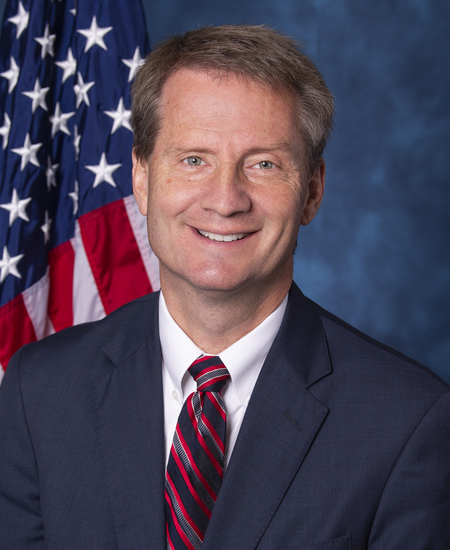
Photo of Tim Burchett
R United States House · District 2 · Tennessee On the 2026 ballot

Rep. Tim Burchett

Compare
Total votes
2,818
all sessions
Attendance
98%
50 missed
Near the chamber average
With party
85%
of cast votes
Lower than 97% of chamber peers
Bipartisan score
8%
crosses aisle rarely
Higher than 96% of chamber peers
Sponsored
743
bills & resolutions
Near the chamber average
Committees
10
assignments
743 bills and resolutions

Sponsored bills

Total
743
Primary
116
Co-sponsor
627
This page
743
matching current filters
Primary HR 1372
Passed · Utah House · Lead sponsor
To designate the facility of the United States Postal Service located at 300 Macedonia Lane in Knoxville, Tennessee, as the Reverend Harold Middlebrook Post Office Building.

Maddy summaryThis bill renames a specific United States Postal Service facility in Knoxville, Tennessee, located at 300 Macedonia Lane, as the "Reverend Harold Middlebrook Post Office Building." It directly affects the USPS location by changing its official name and requires all federal references to the building (in laws, maps, documents, etc.) to reflect the new name. The key provision is the formal designation and updating of all official records to use the new name. This is a ceremonial naming bill with no substantive policy changes.

Passed Aug 6, 2026 0 co-sponsors
Co-sponsor HR 9720
In committee · Utah House · Co-sponsor
D.C. Taxing Authority Review Act

Maddy summaryThis bill, known as the D.C. Taxing Authority Review Act, modifies the rules for how new taxes and fees proposed by the District of Columbia government are reviewed by Congress. It requires that any D.C. law imposing or increasing a tax or fee must receive explicit approval from a joint resolution passed by both the House of Representatives and the Senate within 60 days, or else the law will not take effect. Additionally, the bill limits the time for debating these specific approval resolutions to one hour, split evenly between supporters and opponents. These changes directly affect the District of Columbia government's ability to enact new financial measures without prior congressional consent.

In committee Jul 22, 2026 1 co-sponsor
Co-sponsor HR 6610
In committee · Utah House · Co-sponsor
Pharmacists Fight Back [in Federal Employee Health Benefit Plans Act]

Maddy summaryThis bill requires pharmacy benefits managers (PBMs) administering prescription drug benefits for federal employee health plans to reimburse pharmacies at specific rates, including the national average drug cost plus a small percentage or $50, whichever is lower. It prohibits PBMs from favoring their own pharmacies, restricting patient choice, or reducing pharmacy payments after claims are processed. The bill establishes $10,000 civil penalties for violations, with debarment from federal health plans after 10 penalties in 10 years. This directly affects PBMs, in-network pharmacies, and federal health benefit plans covering millions of federal employees and their families. The law aims to ensure fair reimbursement practices and maintain pharmacy choice under the Federal Employees Health Benefits Program.

In committee Jul 22, 2026 1 co-sponsor
Primary HR 9800
In committee · Utah House · Lead sponsor
Protection Against Mass Surveillance Act

Maddy summaryThe Protection Against Mass Surveillance Act prohibits federal agencies from buying, using, or contracting for automated surveillance systems that rely on license plate recognition, facial recognition, biometric identification, or other technologies designed for mass tracking. It also prevents state, local, and tribal governments from using federal funds to acquire or operate these same surveillance tools. If federal agencies obtain data in violation of these rules, the law requires them to delete the information within 30 days and bars its use as evidence in any court or administrative proceeding.

In committee Jul 21, 2026 0 co-sponsors
Co-sponsor HR 1266
In committee · Utah House · Co-sponsor
Combating Illicit Xylazine Act

Maddy summaryHR 1266, the Combating Illicit Xylazine Act, adds xylazine - a veterinary sedative increasingly found in illicit drug mixtures - to Schedule III of the Controlled Substances Act, regulating its use and trafficking. It directly affects veterinarians, animal owners, and manufacturers by allowing xylazine to be legally dispensed for animal use under specific veterinary prescriptions, while prohibiting non-veterinary human use. The bill includes transition periods (60 days for practitioners, 1 year for labeling) to ease compliance for manufacturers and practitioners, and requires the DEA and FDA to expedite necessary applications. It also mandates two congressional reports on xylazine's illicit use and trafficking patterns, and directs the Sentencing Commission to review penalties for offenses involving xylazine.

In committee Jul 21, 2026 1 co-sponsor
Primary HR 9775
In committee · Utah House · Lead sponsor
Concealed Crime Prevention Act

Maddy summaryThe Concealed Crime Prevention Act amends Washington, D.C. law to impose stricter prison sentences for individuals who wear ski masks or similar head coverings that conceal their identity while committing a crime. This provision specifically targets balaclavas and comparable gear while explicitly excluding religious headwear from the definition. Under the new rules, anyone found guilty of a misdemeanor while wearing such a mask faces a mandatory minimum of six months in prison, and those convicted of a felony face a mandatory minimum of two years. These additional sentences must be served consecutively to any other prison time given for the underlying offense and apply to crimes committed on or after the bill's enactment date.

In committee Jul 20, 2026 0 co-sponsors
Co-sponsor HR 9701
In committee · Utah House · Co-sponsor
Daughters of the American Revolution Membership Integrity Act.

Maddy summaryThis bill, known as the Daughters of the American Revolution Membership Integrity Act, amends federal law to explicitly limit membership in the Daughters of the American Revolution to adult human females. It defines a female as someone who naturally possesses or would have the reproductive system capable of producing ova for fertilization, regardless of any congenital anomalies or medical disruptions. By adding this specific definition to the organization's governing code, the legislation clarifies the genealogical and biological requirements for joining the group. The change directly affects the organization's eligibility rules but does not alter its internal operations or funding.

In committee Jul 15, 2026 1 co-sponsor
Primary HR 9697
In committee · Utah House · Lead sponsor
Cyber Letters of Marque and Reprisal Act

Maddy summaryThis bill, known as the Cyber Letters of Marque and Reprisal Act, authorizes the President to issue official commissions to private individuals or companies, allowing them to conduct specific cyber operations against foreign entities identified as cyberthreats. Under these commissions, private actors could perform tasks such as collecting intelligence, seizing stolen digital assets, and disrupting malicious infrastructure outside U.S. borders, provided they do not target American citizens or organizations. To participate, recipients must post a security bond, maintain detailed activity logs for at least five years, and may be required to forfeit a portion of recovered funds to support a bounty program for future operations. The legislation also grants holders immunity from lawsuits for actions explicitly authorized by their commission and establishes a framework for awarding bounties to both commissioned agents and private informants who assist in recovering funds from cybercriminals.

In committee Jul 15, 2026 0 co-sponsors
Co-sponsor HR 9662
In committee · Utah House · Co-sponsor
Birthright CLAIM Act of 2026

Maddy summaryThis bill, known as the Birthright CLAIM Act of 2026, modifies existing laws to restrict automatic citizenship for children born in the United States to parents who are not U.S. citizens or nationals. Under the new rules, a child born to two non-citizen parents would not be considered a citizen at birth if at least one parent is unlawfully present in the country or lacks lawful permanent residency. Additionally, the legislation extends the residency requirements for children born abroad to U.S. citizens, requiring a longer period of continuous residence before the child can claim citizenship. The bill also introduces a paternity verification process where DNA testing is mandatory to confirm a father's identity before the government issues citizenship documents like passports or Social Security numbers. If paternity cannot be verified through this testing, the child would not receive these documents until the verification is complete.

In committee Jul 14, 2026 1 co-sponsor
Primary HR 9649
In committee · Utah House · Lead sponsor
Stop Retail Food Store SNAP Trafficking Act of 2026

Maddy summaryThis bill aims to combat the misuse of government food assistance benefits by grocery stores through stricter oversight and penalties. It requires the USDA to regularly update its estimates of benefit trafficking using independent data and publish these findings every three years. The legislation also increases civil fines for stores caught trafficking benefits from $100,000 to $250,000 and allows for additional penalties alongside permanent disqualification. Finally, the bill mandates that the USDA report to Congress on its progress in enforcing these new rules and tracking the number of violations within two years of enactment.

In committee Jul 13, 2026 0 co-sponsors
Showing 11 to 20 of 743 bills