

Maddy summaryThe Restoring American Freedom Act (HR 3719) prohibits the U.S. Department of State and entities receiving federal funds from it from censoring U.S. citizens' First Amendment-protected speech. It bans using federal funds to create or distribute "censorship tools" without safeguards and prohibits "advertising blacklists" that target citizens based on their speech content. The bill requires the Department to monitor for censorship, correct past misconduct, and notify Congress and affected citizens when such violations occur. This law directly affects Department of State operations and organizations receiving State Department grants or contracts.
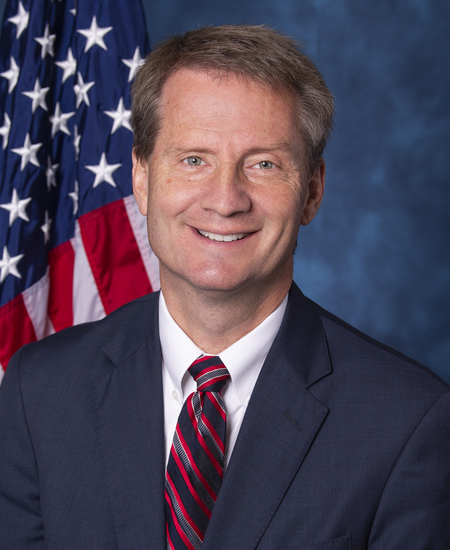
Rep. Tim Burchett
Sponsored bills
Maddy summaryHR 3677 codifies Executive Order 14292 (signed May 5, 2025) into law, making its provisions about "Improving the Safety and Security of Biological Research" legally binding. The bill does not change the order's content but elevates it to statutory force, requiring federal agencies and biological research institutions to follow its safety and security protocols. This directly affects research facilities, federal agencies managing biological research, and entities subject to the order's requirements. The key mechanism is converting an executive directive into enforceable law, ensuring consistent implementation without altering the original safety standards.
Maddy summaryHR 3676, the Executive Order 14293 Act of 2025, would make Executive Order 14293 a permanent law with the force of law. This executive order provides regulatory relief to encourage domestic production of critical medicines by streamlining certain approval processes. The bill directly affects pharmaceutical manufacturers and the U.S. drug supply chain by turning these regulatory changes into legally binding requirements. Its key mechanism is codifying the executive order, ensuring the policy changes cannot be reversed by future executive actions.
Maddy summaryThis bill (HR 3675) codifies Executive Order 14290 into law, making it legally binding. It directly affects federal agencies responsible for distributing taxpayer funds, requiring them to cease subsidizing media organizations deemed "biased" under the order. The key mechanism is converting the executive order - previously issued by the President - into statutory law, giving it the force of a federal statute. The bill does not create new subsidy policies but mandates compliance with the existing order's requirements regarding media funding.
Maddy summaryHR 3598, the Deescalation Drone Pilot Program Act of 2025, establishes a federal pilot program to test nonlethal drones for law enforcement during active shooter events. The program, managed by the FAA, will review nonlethal devices (like sound emitters or cameras) for drones, develop training and safety protocols, and assess effectiveness in indoor scenarios to increase officer safety. It requires drones to be manufactured in the U.S. and mandates a report to Congress within 3 months of the pilot's conclusion, followed by rulemaking to create a formal approval process for law enforcement use. The bill directly affects Federal, State, local, and Tribal law enforcement agencies responding to active shooter events as defined by the legislation.
Maddy summaryHRES 447 is a non-binding House resolution condemning antisemitism and honoring Yaron Lischinsky and Sarah Milgrim, two Israeli Embassy employees killed during a peace-focused panel discussion in 2023. The resolution specifically condemns all forms of antisemitism - including violence, vandalism, and online harassment - and remembers the victims, who were killed by a far-left activist affiliated with the Party for Socialism and Liberation. It calls for enforcing existing hate crime laws and protecting religious freedom, without creating new legislation. This resolution symbolically supports Jewish communities and victims of antisemitic violence but does not alter legal requirements.
Maddy summaryHR 3583 requires funeral honors details presenting a folded U.S. flag to military members or veterans at funerals to recite the 13 specific "Folds of Honor" with their symbolic meanings (e.g., "The 1st fold is a symbol of life"). This applies to flag presentations under federal law for deceased service members or veterans, directly affecting military funeral honors teams. Families may opt out of the recitation if they choose, per the bill's exception clause. The bill adds this requirement to U.S. Code without changing existing funeral procedures.
Maddy summaryHR 3507, the Legislative Accountability Act, requires committee chairs to submit the names of Members of Congress who submitted adopted amendments to bills or resolutions within 3 legislative days after committee reports or passage. These names must appear as footnotes in all versions of the bill (including reported, engrossed, enrolled, or enacted copies), indicating which amendment or provision each Member contributed. The bill applies specifically to amendments adopted by committees (including Appropriations, Ways and Means, and Finance committees) and to bills passed by either chamber. It directly affects Members of Congress who submit amendments that become part of legislation. The requirement is procedural, focusing on transparency in legislative authorship rather than substantive policy changes.
Maddy summaryHR 513, the Offshore Lands Authorities Act of 2025, reverses multiple existing presidential protections that blocked oil and gas leasing on offshore federal lands. It nullifies 8 specific presidential withdrawals (including areas in the Arctic, Atlantic, Gulf of Mexico, and Pacific) and restricts future presidential actions by limiting withdrawals to 150,000 acres per action, capping them at 20 years, and requiring Congressional approval for cumulative withdrawals exceeding 500,000 acres. The bill mandates that before any withdrawal, the Secretary must complete four assessments covering mineral resources, economic/energy value, revenue impacts, and national security. It also establishes a fast-track process for Congress to disapprove withdrawals within 20 days, with limited debate (10 hours) on the resolution.
Maddy summaryThis bill creates a new option for states affected by major disasters: instead of receiving traditional federal disaster aid, states can choose to receive a lump-sum block grant. The grant amount is calculated by assessing the state's total eligible recovery costs (after subtracting the state's required non-Federal share) and validated through consultation with the state. States using this grant must submit detailed reports on fund usage, impacts, and effectiveness, and can use leftover funds for future disaster preparedness. It directly affects states managing disaster recovery under the Stafford Act, offering flexibility in how they allocate federal funds for rebuilding.