

Maddy summaryThis bill strengthens the Vaccines for Children Program and Medicaid immunization coverage to improve vaccine access for children. It expands eligibility to include children enrolled in state child health plans and clarifies that providers can charge fees for vaccine administration and counseling services up to Medicare rates. The legislation also increases federal funding for Medicaid by 1% per quarter starting in 2027, contingent on states providing culturally competent vaccination outreach, and requires annual public reports on vaccination rates by demographic factors.
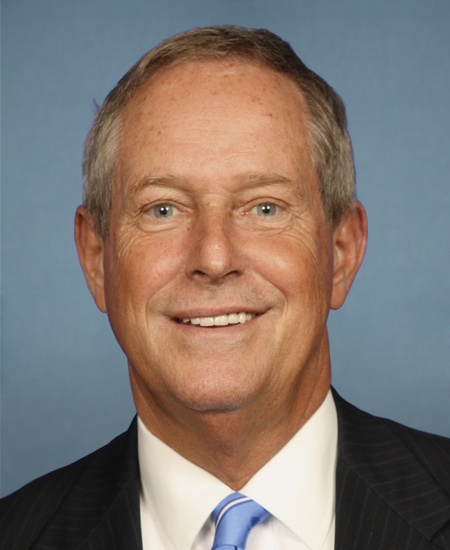
Rep. Joe Wilson
Sponsored bills
Equal Representation Act This bill requires that the statement sent by the President to Congress after the decennial census indicating the number of persons in each state exclude noncitizens. (This statement is the basis for reapportionment of U.S. Representatives.) The bill also requires any questionnaire used in the decennial census to include a checkbox or other similar option for respondents to indicate whether the respondent and each household member is (1) a U.S. citizen, (2) a U.S. national but not a citizen, (3) a non-U.S. national ( alien under federal law) lawfully residing in the United States, or (4) a non-U.S. national unlawfully residing in the United States. The Department of Commerce must make public the number of persons in each state, disaggregated by each of these four categories.
Maddy summaryThis House Resolution recognizes the efforts and public safety contributions of linemen and the important role they play in maintaining the nation's energy infrastructure. It expresses support for designating April 18, 2026, as "National Lineman Appreciation Day" and acknowledges linemen as first responders.
Maddy summaryThe ALERT Act (HR 7613) requires the Federal Aviation Administration to improve aviation safety through several key measures. It mandates the evaluation and potential implementation of enhanced collision avoidance systems (ACAS-Xa) for commercial aircraft and ACAS-Xr for rotorcraft, with specific deadlines for rulemaking and installation. The bill establishes committees to develop recommendations for safety technology requirements, requires safety risk assessments for air traffic controllers, and addresses operational procedures at high-traffic airports like Ronald Reagan Washington National. These provisions affect air carriers, air traffic controllers, rotorcraft operators, and Department of Defense aircraft operations. The act aims to enhance situational awareness and reduce midair collision risks through technology upgrades and improved safety protocols.
Maddy summaryThis bill establishes the Biometric Identification Transnational Migration Alert Program (BITMAP) within the Department of Homeland Security. The program aims to identify and reduce national security, border security, and terrorist threats posed by foreign nationals before they reach the United States border. DHS will coordinate with foreign governments to facilitate the voluntary sharing of biometric and biographic information from these individuals. Partner countries will receive training and equipment to collect this data and compare it against various U.S. national security and counter-terrorism databases. The program is authorized for six years and includes provisions for congressional reporting and a GAO audit.
Maddy summaryThis bill removes the ability for states to avoid penalties when found guilty of fraud in child care programs. It directly affects states receiving federal child care funding who commit fraud, as they can no longer request waivers for sanctions. The key mechanism is amending a specific section of the Child Care and Development Block Grant Act to delete all references to "sanction or" in the penalty provisions, ensuring penalties apply automatically without waiver options. This change makes the enforcement of fraud penalties more consistent and direct.
Maddy summaryThis bill amends the Child Care and Development Block Grant Act to strengthen oversight of federal child care payments. It directly affects state child care programs that receive federal funding under this program. The key provision requires states to submit annual reports to the federal government detailing all improper payments, broken down into specific categories like suspected fraud, verified fraud, non-fraud overpayments, underpayments, and system errors. The report must include both dollar amounts and percentages for each category. This focuses on improving transparency and accountability in payment processing, without changing eligibility or funding levels.
Maddy summaryThe Moldova Support Act of 2026 establishes a formal strategic dialogue between the United States and Moldova to advance bilateral priorities including defense cooperation, EU accession support, and energy security. The bill requires the State Department to submit a four-year strategy report within 30 days of enactment outlining how the U.S. will support Moldova's goal of joining the European Union by 2030 while countering Russian and Chinese influence. Additionally, the legislation maintains existing U.S. sanctions on specific Moldovan political figures and entities, preventing their removal until congressional committees receive written certification that these individuals are no longer engaging in the behaviors that led to the sanctions.
Maddy summaryThe Diplomatic Reserve Corps Act of 2026 creates a new reserve force within the Department of State to provide trained personnel for active service when needed. This independent system is not part of the regular Foreign Service and includes four groups: a senior reserve for current high-level staff, a senior retiree reserve for retired senior staff, a general diplomatic reserve, and a retiree reserve for other former employees. The law establishes specific rules for recruiting members, setting their salaries and benefits similar to active diplomats, and managing their annual training requirements. It also defines how the Secretary of State can call these reservists to active duty during emergencies or to support specific missions, while providing protections for their retirement benefits and employment rights.
Maddy summaryThe RESCUE Act directs the President to develop a strategy for reducing United States reliance on Russian nuclear energy and assisting allies in ending their dependence on Rosatom. It mandates sanctions against foreign entities owned or controlled by the Russian government that operate in the nuclear energy sector, blocking transactions involving their property within the United States. The legislation includes exceptions for medical isotopes, humanitarian aid, and UN activities, with the sanctions authority set to expire seven years after enactment. Additionally, the bill requires the President to submit annual strategies and reports to Congress regarding the implementation of these measures and the status of the US-Russia nuclear cooperation agreement.