

Maddy summaryThis bill simplifies filing requirements for employer-sponsored retirement plans. It extends the deadline for submitting Form 5500 (the annual report for retirement plans) from 210 days or 6 months after the plan year end to 15 days after the end of the 9th calendar month following the plan year. It also allows electronic signatures for these filings and requires agencies to update regulations to reflect these changes. The bill directly affects employers and plan administrators who manage retirement plans under federal law, reducing administrative burdens and modernizing the filing process.
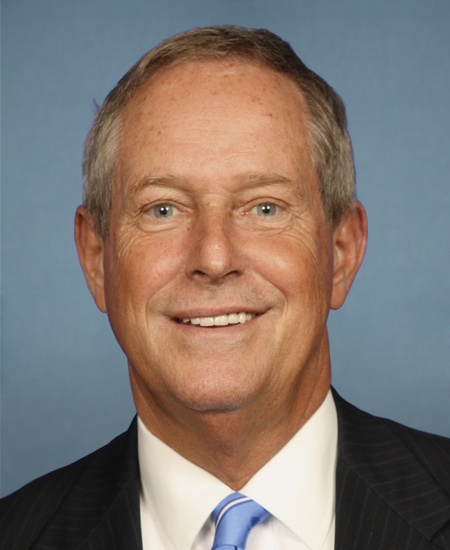
Rep. Joe Wilson
Sponsored bills
Maddy summaryThis bill would add pharmacist services to Medicare Part B coverage for beneficiaries, specifically covering pharmacist-led testing and treatment for illnesses like flu, COVID-19, or strep throat during public health emergencies. It defines covered services as those performed under state law, often requiring collaboration with a physician, and sets payment at 80% of the lesser of the actual charge or 85% of physician payment rates. Pharmacists would be prohibited from balance billing for these services, ensuring Medicare beneficiaries pay only their standard copayment. The changes would take effect January 1, 2026.
Maddy summaryThis bill authorizes the U.S. Mint to produce commemorative $5 gold and $1 silver coins marking the 25th anniversary of the September 11, 2001, terrorist attacks. The coins must feature designs honoring victims and first responders (including the inscription "Never Forget") and will be sold only during 2027-2028. All surcharges ($35 per gold coin, $10 per silver coin) collected from sales will fund the National September 11 Memorial and Museum at the World Trade Center, with no net cost to the federal government. The coins are legal tender but primarily intended for collectors, not circulation.
Maddy summaryThe Smithsonian American Women’s History Museum Act authorizes the creation of a new Smithsonian museum dedicated to women’s history, to be located within the National Mall Reserve in Washington, D.C. If the site is managed by another federal agency, the bill requires that agency to transfer the land after notifying Congress and relevant committees. The museum must ensure exhibits and programs accurately represent diverse women’s experiences by consulting a broad range of experts and community voices. The Smithsonian will submit biennial reports to Congress detailing how the museum meets these representation standards.
Maddy summaryThis bill directs the Department of Defense to connect military recruits who cannot enlist with the Job Corps program for training in skilled industrial jobs within the defense industry. It expands specific workforce incentives to include Job Corps centers and gives local operators more flexibility to hire staff, partner with educational institutions, and manage their programs without waiting for federal approval. The legislation also updates rules to allow Job Corps centers to accept cash donations and grants more easily while streamlining enrollment for veterans and active-duty service members. Overall, the act aims to reduce shortages of skilled workers in defense manufacturing by aligning Job Corps training with the needs of the defense industrial base.
Maddy summaryThe Lainie Jones Comprehensive Cancer Survivorship Act of 2026 establishes a new Office of Cancer Survivorship within the National Cancer Institute to coordinate research and education focused on the long-term health needs of the approximately 18 million Americans living with or beyond a cancer diagnosis. The bill mandates that Medicare and Medicaid cover specific services, including the creation of personalized care plans at key transition points and fertility preservation treatments for survivors facing treatment-related infertility. Additionally, the legislation creates a grant program to support cancer survivors and their families with employment assistance and establishes a new payment model designed to improve the quality and coordination of long-term survivorship care.
Maddy summaryThe FORTIFY Act allows defense equipment and services to move freely between Estonia, Latvia, and Lithuania without needing special permission from the U.S. President. This change removes previous legal barriers that required U.S. approval whenever one Baltic nation shared military supplies with another. Additionally, the bill directs the U.S. Department of Defense to set up a shared digital system so these countries can easily coordinate and share ammunition for training and operations. The legislation aims to strengthen regional security by making it easier for Baltic allies to support each other militarily.
Maddy summaryThis bill directs the Department of Health and Human Services to conduct a comprehensive review of federal programs addressing bleeding disorders in women and girls, with a specific focus on improving diagnosis, provider training, and access to care in underserved areas. Following this review, the legislation authorizes $10 million annually from 2027 to 2031 to fund a national public education campaign aimed at raising awareness among women, girls, and healthcare providers to reduce delays in diagnosis and treatment. The law defines bleeding disorders as inherited conditions affecting blood clotting, such as hemophilia and von Willebrand disease, and requires the report and subsequent campaign to include input from patient advocates and resources tailored for rural and diverse communities.
Maddy summaryThis bill designates the U.S. Chancery building in Pristina, Kosovo, as the "Eliot L. Engel Building" to honor a specific individual. It requires all future legal documents, maps, and official records to use this new name instead of the current designation. The change is purely symbolic and does not alter the building's function or the operations of the U.S. government in Kosovo.
Maddy summaryHRES 64 is a non-binding House resolution affirming the U.S.-South Korea alliance. It highlights historical ties (dating to 1882), economic partnerships (including 2023 trade data), and security cooperation (like the 1953 Mutual Defense Treaty), while celebrating Korean American contributions to U.S. society. The resolution formally supports strengthening security, economic, and cultural ties between the two nations and notes the 2025 anniversary of Korean liberation. It does not create new laws or funding, but serves as a symbolic statement of congressional support for the alliance.