

Entrepreneurs Need Timely Replenishment (for) Eating Establishments Act or the ENTRÉE Act This bill provides FY2021 supplemental appropriations for the Restaurant Revitalization Fund and modifies requirements related to administration of the fund. The fund was established in response to COVID-19 to make grants to eligible food and beverage purveyors for covering specified costs such as payroll, operational expenses, and paid sick leave. The bill correspondingly rescinds unobligated amounts previously made available for the Economic Injury Disaster Loan Program and coronavirus state and local fiscal recovery funds. Further, the bill requires the Small Business Administration (SBA) to (1) review and process grant applications in the order in which they are received; (2) impose requirements on applicants that reduce waste, fraud, and abuse; and (3) submit and report monthly on an oversight and audit plan outlining the SBA's policies, procedures, and activities with respect to these grants.
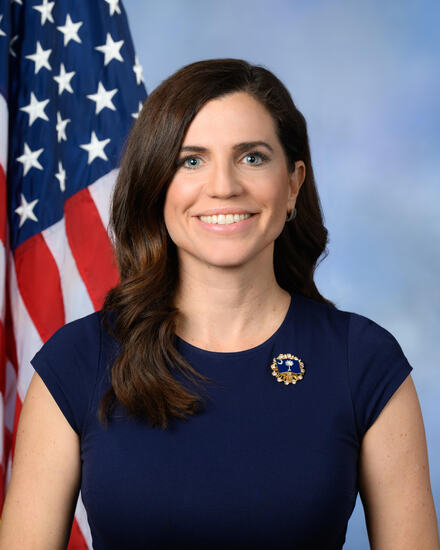
Rep. Nancy Mace
Sponsored bills
Sport Fish Restoration, Recreational Boating Safety, and Wildlife Restoration Act of 2021 This bill reauthorizes through FY2025 the Sport Fish Restoration and Boating Trust Fund, which provides funding for, including fisheries conservation and management, water and boating infrastructure, and recreational boating safety, among other things. The bill modifies use of the Federal Aid to Wildlife Restoration Fund, which supports wildlife restoration, conservation, and hunter education and safety programs. Of the funds disbursed for the purposes of the Sport Fishing and Boating Partnership Council, a portion of such funds remaining unobligated prior to FY2020 shall be used to study (1) the impact of derelict recreational vessels on recreational boating safety and recreational fishing, and (2) the options and methods for recycling for recreational vessels. The Government Accountability Office (GAO) shall conduct a study on recreational boating access. In carrying out the study, the GAO shall consult with the Sport Fishing and Boating Partnership Council and the National Boating Safety Advisory Council on the design, scope, and priorities of such study.
Military Sexual Trauma Retirement Equity Act This bill extends certain special compensation to specified retired survivors of military sexual trauma.
Processing Revival and Intrastate Meat Exemption Act or the PRIME Act This bill expands the exemption of custom slaughtering of animals from federal inspection requirements. Under current law, the exemption applies if the meat is slaughtered for personal, household, guest, and employee uses. The bill expands the exemption to include meat that is slaughtered and prepared at a custom slaughter facility in accordance with the laws of the state where the facility is located; and prepared exclusively for distribution to household consumers in the state or restaurants, hotels, boarding houses, grocery stores, or other establishments in the state that either prepare meals served directly to consumers or offer meat and food products for sale directly to consumers in the state. The bill does not preempt any state law concerning (1) the slaughter of animals or the preparation of carcasses, parts thereof, meat and meat food products at a custom slaughter facility; or (2) the sale of meat or meat food products.
This resolution expresses the sense of the House of Representatives that the Department of Homeland Security (DHS) provides essential protection for our country from foreign and domestic threats and that defunding DHS would be detrimental to our national security.
This bill repeals the joint resolution of March 9, 1957, that provided for the use of certain funds to promote peace and stability in the Middle East.
This bill repeals the January 14, 1991, resolution authorizing the use of military force against Iraq.
Freedom to Fly Act This bill prohibits regulations or policies that allow employees of the Transportation Security Administration to ask passengers flying domestically about vaccinations.
Opportunities for Fairness in Farming Act of 202 1 This bill establishes restrictions and requirements for checkoff programs, which are programs overseen by the Department of Agriculture (USDA) to promote and provide research and information for a particular agricultural commodity without reference to specific producers or brands. The bill prohibits boards established to carry out a checkoff program or a USDA order issued under a checkoff program from entering into a contract or agreement to carry out program activities with a party that engages in activities to influence any government policy or action that relates to agriculture. A board or its employees or agents acting in their official capacity may not engage in any act that may involve a conflict of interest; anticompetitive activity; unfair or deceptive act or practice; or act that may be disparaging to, or in any way negatively portray, another agricultural commodity or product. Upon approval of USDA, a board may enter directly into contracts and agreements to carry out generic promotion, research, or other activities authorized by law if the agreement or contract requires records accounting for the funds received to be submitted to the board. The board must meet specified requirements regarding the publication of budgets and disbursements of funds. The USDA Inspector General and the Government Accountability Office must conduct specified audits regarding checkoff programs.
Taskforce Recommending Improvements for Unaddressed Mental Perinatal & Postpartum Health for New Moms Act of 2021 or the TRIUMPH for New Moms Act of 2021 This bill temporarily establishes within the Department of Health and Human Services the Task Force on Maternal Mental Health. The task force must develop a national strategy for maternal mental health and report on best practices, policies, and programs to prevent, screen for, diagnose, treat, and reduce disparities in maternal mental health conditions. The report must identify opportunities for state- and local-level partnerships to address maternal mental health, and the task force must share those opportunities with state governors.