

Maddy summaryThis bill ensures Medicare coverage for new medical devices designated as "breakthrough devices" during a 4-year period after FDA approval. To qualify, devices must meet specific criteria, including FDA priority review, clinical data from Medicare beneficiaries, and a safety review showing benefits outweigh risks. Medicare must finalize coverage decisions within 6 months of manufacturer applications and before the 4-year period ends. The law appropriates $10 million annually (2025-2030) for Medicare to administer this process.
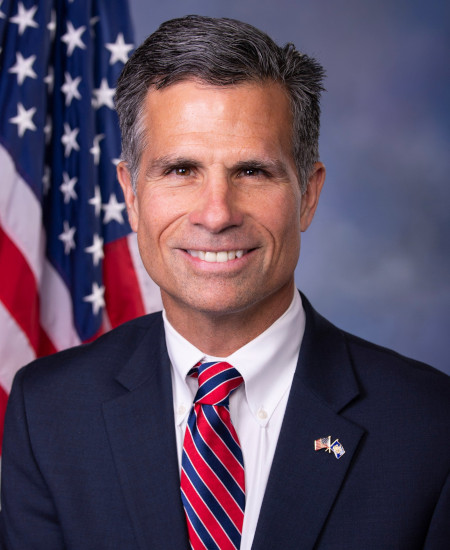
Rep. Daniel Meuser
Sponsored bills
Maddy summaryHR 5401, the Pay Our Troops Act of 2026, ensures military personnel, civilian Defense workers, and supporting contractors receive pay during government funding gaps in fiscal year 2026. It appropriates emergency funds for active-duty service members, reserves, and their supporting personnel (including Coast Guard staff under DHS) if regular appropriations aren't enacted by the end of the fiscal year. The bill provides necessary pay and allowances during any period when full-year funding is unavailable, covering both active service and support roles. Funding expires when regular appropriations are passed, a funding resolution is enacted, or January 1, 2027, whichever comes first. This is a procedural measure to prevent pay delays for military and support staff during fiscal year 2026 funding lapses.
Maddy summaryHR 5100 extends the Small Business Innovation Research (SBIR) and Small Business Technology Transfer (STTR) programs through fiscal year 2026, instead of ending on September 30, 2025. This bill directly affects small businesses and research institutions that rely on federal funding for research and development through these programs. The key mechanism is updating expiration dates across multiple program provisions in the Small Business Act to maintain funding authority and program operations for one additional year. The extension does not alter program eligibility, funding levels, or core requirements.
Maddy summaryThis bill requires pension plan administrators to locate and notify beneficiaries of unclaimed retirement funds ($50 or more) before transferring them to state unclaimed property programs. Administrators must first attempt to update contact information through databases and send a clear notice explaining the transfer process, unless no updated contact can be found. It establishes a national clearinghouse for states to manage these transfers and mandates regular reports to the Labor Secretary about unclaimed funds, including beneficiary details. The law protects administrators from liability if they follow these procedures, ensuring forgotten retirement savings can be recovered by rightful owners through state programs.
Maddy summaryHRES 695 is a commemorative resolution honoring Charlie Kirk, a conservative speaker and Turning Point USA leader, following his assassination on September 10, 2025, in Orem, Utah. The resolution condemns the attack, offers condolences to his family, and recognizes first responders. It reaffirms the First Amendment right to peaceful assembly and emphasizes that violence cannot silence democratic participation. This non-binding resolution does not create new laws or policies but serves as a symbolic tribute to Kirk's memory and the principles of democratic engagement.
Maddy summaryHR 4460, the SAFE Guidance Act, requires specific financial agencies to include a clear disclaimer on all new guidance documents. The bill mandates that this "guidance clarity statement" (stating the guidance has no legal force and doesn’t create rights or obligations) appear prominently on the first page of any guidance issued after enactment. It directly affects nine federal financial agencies, including the CFPB, Treasury, FDIC, and SEC, which issue guidance interpreting laws or regulations. The key provision ensures regulated entities (like banks and lenders) understand that noncompliance with such guidance doesn’t automatically mean breaking the law.
Maddy summaryThis bill changes how the FDIC Board is appointed and governed. It requires two new directors to have specific banking experience (one with oversight of small banks and one with experience at institutions under $10 billion in assets) and limits total board service to 12 years. The Director of the Bureau of Consumer Financial Protection will serve as a non-voting observer on the board, replacing previous references to the Consumer Financial Protection Bureau. These changes directly affect FDIC Board members and the CFPB Director's role in board proceedings.
Maddy summaryHR 2808, the Homebuyers Privacy Protection Act, restricts how consumer reporting agencies share credit reports during mortgage applications. It prevents agencies from sending these reports to third parties unless the request is tied to a firm credit offer and the recipient has either the homebuyer’s explicit written consent or is directly involved in the mortgage (like the lender, loan servicer, or the homebuyer’s bank holding an active account). This directly affects homebuyers applying for residential mortgages by limiting unsolicited sharing of their credit information. The law amends the Fair Credit Reporting Act to strengthen privacy protections around mortgage-related credit data.
Maddy summaryThis bill requires the Bureau of Land Management (BLM) to complete pending coal lease applications under the Mineral Leasing Act. It mandates the BLM to finalize environmental reviews, set fair market value, and approve qualified applications within a "reasonable timeframe," directly affecting coal companies with existing applications awaiting approval. The bill also overrides a 2016 Department of the Interior policy that paused coal leasing, ensuring current leasing processes proceed without further delay. Key provisions include streamlining administrative steps for existing applications and removing barriers to mining activity approvals. The law does not change environmental standards but accelerates the leasing process for applications already in review.
Maddy summaryHR 1569, the CATCH Fentanyl Act, establishes a 5-year pilot program to test nonintrusive inspection technologies at U.S. border ports of entry. The bill requires U.S. Customs and Border Protection (CBP) to evaluate at least five technology enhancements - including AI, machine learning, and quantum sensing - to improve detection of contraband, drugs, weapons, and threats while reducing inspection wait times. Pilot projects must prioritize cost-effective solutions that integrate with existing systems, adhere to privacy protections, and report findings on performance metrics like detection rates and throughput. The program mandates detailed reports to Congress on effectiveness, implementation plans, and privacy impacts, using existing funding without new appropriations.