

Maddy summaryThis resolution expresses the House of Representatives' sense that Congress must urgently restore the Voting Rights Act of 1965 to protect against racial discrimination in voting and ensure fair political representation for all Americans. It specifically calls for ending the 60-vote threshold in the Senate to allow for easier passage of legislation and proposes structural changes to the Supreme Court, including term limits for justices, a binding code of ethics, and potentially expanding the court's size. The text argues that recent Supreme Court decisions have weakened voting protections and enabled partisan gerrymandering, threatening the political power of communities of color and undermining democratic institutions. By outlining these specific legislative and structural goals, the bill aims to rebuild public trust in the judiciary and strengthen the mechanisms that guarantee equal access to the ballot box.
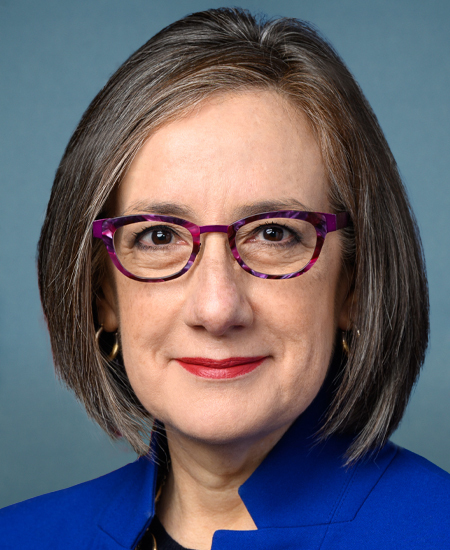
Rep. Andrea Salinas
Sponsored bills
Maddy summaryThe Federal Workforce Reproductive Rights Protection Act prevents federal agencies from relocating headquarters or major operations to states with laws restricting or banning abortion, while also barring the use of funds to build or lease facilities in those locations. To support federal employees who need to access reproductive health care, the bill allows workers to decline transfers to restrictive states, grants up to 21 days of paid leave for travel to obtain such services, and provides reimbursement for travel costs without requiring disclosure of the specific medical procedure. Additionally, the legislation prohibits government agencies from investigating an employee's use of abortion services when reviewing security clearances or making personnel decisions and protects workers from retaliation if they exercise these new rights.
Maddy summaryThe Support our Firefighters Act establishes a new paid rest and recuperation leave program for federal wildland firefighters working for the Forest Service and the Department of the Interior. Under this law, these employees would receive paid time off immediately after completing a qualifying fire incident, with specific rules requiring a minimum number of rest days following periods of deployment. The bill also allows for the transfer of up to $5 million in funding from the Department of Agriculture to the Department of the Interior to help sustain salary increases for these workers. Additionally, the legislation updates existing overtime rules to remove specific year limits, ensuring that wildland firefighters can work extended hours without hitting caps in future years.
Maddy summaryThis bill authorizes the presentation of Congressional Gold Medals to the four crew members of the Artemis II mission to recognize their historic achievement in advancing human space exploration. The legislation directs the Speaker of the House and the President pro tempore of the Senate to arrange for the medals, which will feature the faces of the astronauts and be struck by the Secretary of the Treasury. In addition to the gold medals, the bill permits the minting and sale of duplicate bronze versions to help cover production costs, with any proceeds returned to the United States Mint Public Enterprise Fund.
Maddy summaryThis bill redesignates the existing National Parks and Public Land Legacy Restoration Fund as the America's Legacy Restoration Fund to address deferred maintenance on federal lands. It directs revenue from recreation fees and a portion of energy development income into the fund, which must be used primarily for repairing critical infrastructure like roads, trails, and buildings managed by agencies such as the National Park Service and the Forest Service. The legislation establishes strict rules requiring that most funds go toward non-transportation projects, mandates transparency through public dashboards tracking project status, and sets aside a small percentage for matching private donations. Additionally, the bill increases entrance fees for foreign visitors to ensure they contribute to the fund, while prohibiting the use of these specific funds for land acquisition or employee bonuses.
Maddy summaryThe Pell Grant Preservation and Expansion Act of 2026 aims to increase financial aid for college students by raising the maximum Pell Grant amount to $15,000 by the 2031-2032 award year and ensuring the program is fully funded through mandatory spending rather than annual appropriations. The bill also expands eligibility for students who receive means-tested government benefits by automatically assigning them a lower financial need score, while simultaneously allowing Dreamer students - undocumented immigrants who meet specific criteria such as graduating high school or serving in the military - to qualify for federal aid. Additional provisions restore the total number of semesters a student can receive Pell Grants from 12 to 18 and adjust the rules for satisfactory academic progress to reduce penalties for students who struggle to meet grade requirements. Finally, the legislation restores Pell Grant eligibility for some students who previously received outside scholarships and sets the law's effective date for July 1, 2026.
Maddy summaryThe Latonya Reeves Freedom Act of 2026 strengthens the Americans with Disabilities Act to ensure individuals with long-term service and support needs have a federally protected right to live in their communities rather than institutions. It requires states and insurance providers to offer community-based services that allow people to maintain independence, control their own care, and access affordable, integrated housing. The bill mandates that public entities and insurers create enforceable transition plans to move people out of institutions, conduct self-evaluations to identify barriers, and establish clear grievance procedures for resolving complaints. Enforcement is handled by the Department of Justice, which can investigate violations, while individuals may also file civil lawsuits to seek damages or court orders preventing institutionalization.
Maddy summaryThe Protecting America's Herds Act creates a grant program for cooperative extension services to help prepare for and respond to New World screwworm outbreaks in livestock. Funds awarded through this competitive process can be used to train staff, support animal inspections, educate producers, and provide direct technical assistance on prevention and treatment. The Department of Agriculture must prioritize grants for states and Tribal communities at higher risk of the pest spreading and coordinate closely with veterinary and agricultural experts. This legislation aims to strengthen the nation's ability to detect and manage this specific animal health threat through improved readiness and education.
Maddy summaryThe Disaster Relief Integrity and Independence Act aims to prevent political bias in federal disaster aid and speed up the approval process for disaster declarations. It prohibits the President from making decisions about emergency funding or declaring major disasters based on the political affiliation of a state, territory, or locality. Additionally, the bill requires the President to respond to requests for major disaster declarations within 45 days, automatically approving any request that is not answered by that deadline. These changes directly affect state, tribal, and territorial governments by ensuring their disaster relief requests are handled fairly and without unnecessary delays.
Maddy summaryThe Keep Public Funds in Public Schools Act of 2026 eliminates a federal tax credit that allowed parents to deduct contributions to scholarship granting organizations from their income. By removing these specific tax breaks, the bill prevents the use of public tax dollars to support private school vouchers and scholarship programs. This change directly affects families who currently rely on these tax incentives to fund education outside the public school system. The provisions take effect for taxable years beginning after December 31, 2026.