

Maddy summaryThis resolution (HRES 813) is a non-binding symbolic measure urging the American public to observe October 2025 as Italian and Italian American Heritage Month. It recognizes the historical contributions of Italian and Italian American people to the U.S. in fields like science, arts, and public service, and encourages communities to celebrate their cultural heritage through events. The resolution does not create new laws or requirements, but formally acknowledges their impact on American society. It was introduced by multiple House members and referred to the Committee on Oversight and Government Reform.
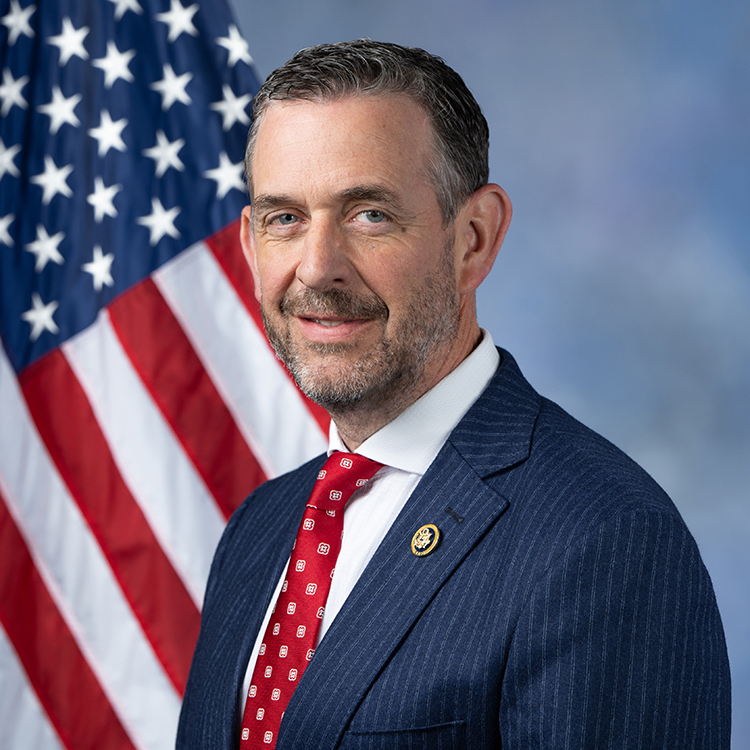
Rep. Michael A. Rulli
Sponsored bills
Maddy summaryThis bill, HR 5789 (the Donald J. Trump Congressional Gold Medal Act), authorizes Congress to award a gold medal to former President Donald J. Trump. It recognizes his "extraordinary peacemaking efforts" as described in the bill's findings, including a fictional 2025 Israel-Hamas peace agreement and other alleged diplomatic achievements. The key provision directs the Treasury Secretary to design and strike the medal, with bronze duplicates available for sale to cover costs. The bill does not create new laws or affect any policies; it is a ceremonial honor for Trump, with no direct impact on constituents or legislation.
Maddy summaryHR 5739, the Italian Heroes and Heritage Act, prohibits federal funding to state or local governments that celebrate Indigenous Peoples Day instead of Columbus Day. The bill requires that during Columbus Day (as defined in U.S. Code) starting October 13, 2025, and annually thereafter, no federal funds may be provided to jurisdictions observing Indigenous Peoples Day in place of Columbus Day. This provision directly affects local and state governments choosing to replace Columbus Day with Indigenous Peoples Day. The bill does not change the legal status of either holiday but ties federal funding to maintaining the traditional observance of Columbus Day.
Maddy summaryThis resolution (HRES 789) expresses the U.S. House of Representatives' support for observing the second Monday in October as "Columbus Day," recognizing Christopher Columbus's historical role and his significance to the Italian-American community. It does not create new law or policy but affirms the existing national observance of the holiday. The resolution was introduced by Rep. Garbarino and 10 co-sponsors in October 2025. It honors Columbus's legacy as connected to Italian-American contributions, without altering current federal holiday status.
Maddy summaryThe Black Vulture Relief Act authorizes livestock producers and their employees to remove or kill black vultures (Coragyps atratus) that are causing or likely to cause harm to livestock, bypassing standard protections under the Migratory Bird Treaty Act. It prohibits using poison for this purpose and requires annual reports to the U.S. Fish and Wildlife Service about such actions, using a simplified form. The law specifically targets vultures threatening livestock as defined in existing federal agriculture law, with reporting deadlines starting after a form is developed by the Fish and Wildlife Service.
Maddy summaryThis bill adds Medicare coverage for multi-cancer early detection screening tests (blood or biological tests analyzing cell-free DNA) starting January 1, 2028. It directly affects Medicare beneficiaries aged 68 and older (starting in 2028, with the age limit increasing by 1 year annually), requiring tests to be FDA-cleared and deemed reasonable/necessary by the Secretary for early cancer detection across multiple organ sites. Payment will initially match current stool DNA test rates before 2031, then shift to a lower rate or new payment system after 2031, with limits preventing more than one test per year. The bill explicitly states it does not alter coverage for existing cancer screenings like breast, colorectal, or prostate cancer tests.
Maddy summaryThis bill would require all states to recognize valid concealed carry permits issued by other states, allowing permit holders to carry concealed handguns (excluding machine guns) in any state that either issues such permits or doesn't prohibit concealed carry. It directly affects law-abiding gun owners with valid permits from their home state, ensuring they can carry in states with similar permit systems or no prohibitions. Key provisions include treating valid permit documents as proof of legal carry (reducing officer stops), shifting the burden of proof to prosecutors if challenged, and allowing civil lawsuits for violations with attorney's fee awards. The bill does not override state laws restricting firearms on private property or government land, nor does it affect federal gun restrictions like those in section 922(q).
Maddy summaryHR 5595, the REMIT Act, increases the tax on money sent abroad (remittance transfers) from 1% to 15% for most senders. It creates an exception for U.S. citizens and nationals using "qualified" money transfer companies that verify sender status, allowing them to claim a refundable tax credit for the 15% tax paid. Money transfer companies must report sender details (including Social Security numbers) to the IRS for transactions where senders claim the credit. The law directly affects U.S. citizens sending money overseas and requires participating companies to verify senders and submit detailed reporting to the IRS.
Maddy summaryHR 5580, the Charlie Kirk Commemorative Coin Act, authorizes the U.S. Mint to produce 400,000 $1 silver coins in 2026 to honor Charlie Kirk, founder of Turning Point USA, who died in 2025. The coins must feature Kirk's image on the obverse and "well done, good and faithful servant" on the reverse, with standard minting specifications. They will be sold at face value plus production costs to collectors, with no net cost to the government. This bill has no policy impact beyond commemoration; it affects only the U.S. Mint and coin collectors.
Maddy summaryThe SAVES Act (HR 2605) creates a 5-year pilot program where the Department of Veterans Affairs (VA) awards competitive grants to nonprofit organizations to provide service dogs to veterans with specific disabilities. It directly affects veterans with covered conditions like blindness, mobility impairments, PTSD, traumatic brain injury, or other disabilities deemed appropriate for service dog assistance by the VA. Key provisions include: grants capped at $2 million per nonprofit (with $10 million annually authorized), no fees charged to veterans, VA-provided lifetime veterinary insurance for the dogs, and requirements for nonprofits to train veterans and maintain humane animal standards. The program aims to expand access to service dogs as a support tool for veterans managing qualifying disabilities.