

Maddy summaryHRES 716 is a symbolic resolution designating September 15-19, 2025, as "National Clean Energy Week" to raise awareness about clean energy. It encourages voluntary actions like investing in clean energy technologies but does not create new laws, funding, or requirements. The resolution cites the clean energy sector's economic role (noting 8.5 million U.S. jobs in 2024 per the Department of Energy) and applauds national laboratories. As a non-binding gesture, it directly affects no individuals or entities but aims to promote existing clean energy initiatives.
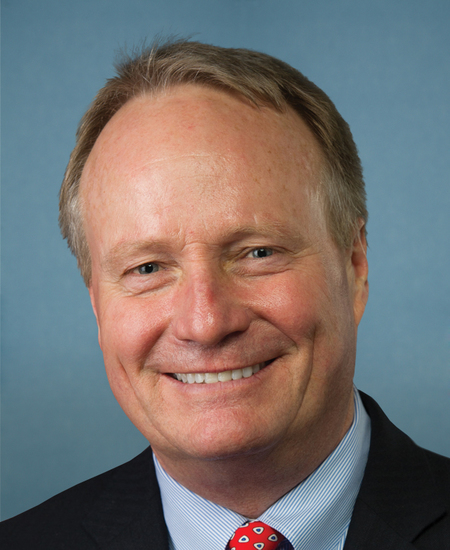
Rep. David P. Joyce
Sponsored bills
Maddy summaryThis bill extends federal funding authorization for Great Lakes fisheries research and monitoring programs. It amends existing law to change the expiration date from 2025 to 2030, ensuring continued support for these programs. The key provision directly affects federal research initiatives focused on assessing and managing fish populations in the Great Lakes Basin. This is a procedural reauthorization, not a new policy, maintaining current funding levels through 2030.
Maddy summaryHR 5309, the Congressional Tribute to Constance Baker Motley Act of 2025, authorizes a posthumous Congressional gold medal for Constance Baker Motley, a pioneering civil rights attorney and judge. The bill directs the Treasury Secretary to strike the medal with her image and name, to be presented to her son, Joel W. Motley III, and her niece, Constance Royster. It also permits the sale of bronze duplicates at cost to cover expenses, with proceeds going to the U.S. Mint fund. This is a commemorative measure with no substantive policy changes, honoring Motley’s legacy as the first African-American woman appointed to a federal judgeship.
Maddy summaryThis bill reauthorizes the existing program providing support and treatment services for law enforcement officers experiencing mental health crises. It extends the funding authorization period from 2020-2024 to 2025-2029 under the Omnibus Crime Control and Safe Streets Act of 1968. The bill directly affects law enforcement officers who access these crisis support services through participating state and local programs. It makes no new policy changes but ensures the current program continues operating without interruption for five additional years.
Maddy summaryHR 3593, the Title VIII Nursing Workforce Reauthorization Act of 2025, reauthorizes and expands federal funding for nursing education programs to address workforce shortages. It directly affects nursing schools, nurse practitioner, nurse-midwifery, nurse anesthesia, and clinical nurse specialist programs by expanding grant eligibility to include these specific training pathways. Key provisions include increasing annual funding from $137 million to $184 million (2026-2030), requiring schools to use funds for simulation/technology resources and faculty/student expansion, and adding clinical partnerships with healthcare facilities. The bill also updates terminology and adds protections for survivors of domestic violence and sexual assault in nursing education settings.
Maddy summary# Summary of the Financial Services and General Government Appropriations Act, 2026 This Act provides funding for various federal agencies and departments under the Financial Services and General Government Appropriations category for fiscal year 2026. The legislation contains over 750 sections with detailed provisions governing how funds may be used, restrictions on certain activities, and requirements for transparency and reporting. Key provisions include: 1. **Restrictions on Healthcare Coverage**: Prohibits funds for gender-affirming care in the Federal Employees Health Benefits program (Section 761) and limits abortion coverage except in cases where the mother's life is endangered or the pregnancy resulted from rape or incest (Sections 809, 818). 2. **Executive Compensation Limits**: Imposes restrictions on pay increases for senior executive positions, including Executive Schedule positions (Sections 737-746), with specific provisions preventing pay rate increases for certain positions during calendar year 2026. 3. **District of Columbia Provisions**: Contains numerous restrictions on how District of Columbia funds may be spent, including prohibitions on: - Enforcing certain abortion-related laws (Section 818) - Implementing certain voting rights or criminal justice reforms (Sections 825, 827) - Legalizing recreational marijuana (Section 830) - Enforcing certain environmental regulations (Section 821) 4. **Prohibitions on Certain Activities**: - Bans implementation of certain executive orders related to voting access (Section 756) - Prohibits funds for vaccine or mask mandates (Section 757) - Restricts funding for entities that engage in "fact-checking" or credibility rating of news outlets (Section 758) - Prohibits funding for certain types of research or medical procedures 5. **Transparency Requirements**: Mandates detailed reporting on conference costs, travel expenses, and other expenditures (Section 738). The Act serves as a comprehensive funding measure for financial services and general government operations while embedding numerous policy restrictions on how those funds may be used across federal agencies and the District of Columbia.
Maddy summaryThis bill reschedules marijuana from the most restrictive Schedule I to Schedule III under federal law. It requires the Attorney General to issue an order effecting this change within 60 days of the bill's enactment. This classification shift would make marijuana less restricted federally, affecting all federal regulations and penalties related to the substance. The change directly impacts federal enforcement, research, and medical access policies for marijuana nationwide.
Maddy summaryThe Parity for Tribal Law Enforcement Act enables tribal law enforcement officers who have contracted federal law enforcement duties under the Indian Self-Determination Act to enforce federal law on tribal lands. To qualify, officers must complete training comparable to Bureau of Justice Services employees, pass a background check, and receive certification from the Bureau. The bill also designates these officers as federal law enforcement officers for legal protections under the Federal Tort Claims Act and retirement benefits. Additionally, it requires the Attorney General to coordinate Department of Justice efforts to improve public safety in tribal communities through better data collection, training, and reporting.
Veterans' Assuring Critical Care Expansions to Support Servicemembers Act of 2025 or the Veterans' ACCESS Act of 2025 This bill addresses the administration of the Veterans Community Care Program (VCCP) and other Department of Veterans Affairs (VA) health care matters. Among other provisions regarding the VCCP, the bill establishes in statute access standards that determine when a veteran is eligible to receive non-VA care through the VCCP, requires the VA to notify veterans regarding their eligibility for care within two business days after the VA is aware the veteran is seeking care, and extends the deadline for the submittal of claims under the VCCP by health care entities and providers. The VA must address its mental health treatment programs by establishing a standardized screening process to determine whether a veteran satisfies criteria for priority or routine admission to a mental health residential rehabilitation treatment program or a program for residential care for mental health and substance abuse disorders, tracking the performance of medical facilities and Veterans Integrated Service Networks in meeting the requirements for mental health treatment screenings and timely admission to treatment programs under such screenings, and establishing an appeal process for when a veteran is denied admission to a covered treatment program or is accepted into a program but not offered bed placement in a timely manner. Additionally, the VA must establish an online self-service module for veterans to request and manage appointments, track referrals, and appeal and track decisions related to requests for care.
Maddy summaryHR 4382 authorizes the U.S. Mint to produce commemorative coins for the 2028 Los Angeles Olympics/Paralympics and 2034 Salt Lake City Winter Olympics/Paralympics. It specifies gold, silver, and half-dollar coin designs with defined mintage limits (e.g., up to 100,000 $5 gold coins for each event), all bearing inscriptions like "2028" or "2034" and standard coin features. A surcharge ($5-$50 per coin) is added to sales, with all funds directed to the respective Olympic committees to support event hosting and legacy programs like youth sports. The bill ensures no net cost to the government by requiring surcharge revenues to cover all design, production, and marketing expenses before funds are disbursed.