

Maddy summaryHRES 1110 is a non-binding House resolution expressing the U.S. House of Representatives' disapproval of the slaughter of dogs and cats for human consumption and urging Japan to enact a nationwide ban. It references the U.S. 2018 ban on this practice (under the Agriculture Improvement Act) and notes similar bans in South Korea, Taiwan, and cities like Shenzhen and Jakarta. The resolution affirms shared U.S.-Japan values on animal welfare, encourages bilateral cooperation on animal rights, and clarifies it does not interfere with protected cultural or religious practices. As a symbolic diplomatic statement, it has no legal force but aims to influence Japan’s policies on animal welfare.
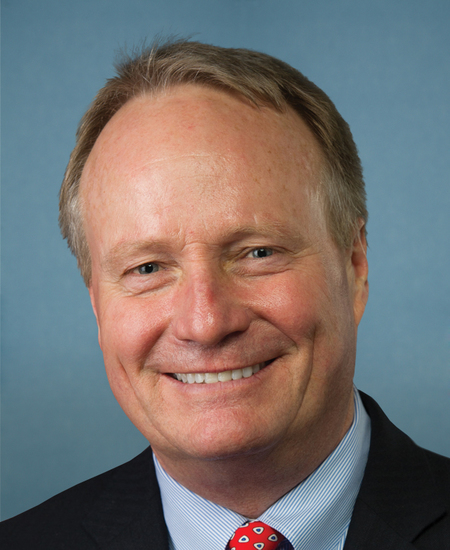
Rep. David P. Joyce
Sponsored bills
Maddy summaryThis bill, known as the Tribal Firearm Access Act, would allow members of federally recognized Tribes to use their Tribal government identification documents instead of state-issued IDs when purchasing firearms from federally licensed dealers. The legislation amends federal law to officially recognize Tribal government IDs as valid forms of identification for firearm transactions, while defining "Tribal government" to include the governing bodies of federally recognized Indian and Alaska Native Tribes. The changes would take effect 90 days after the bill is enacted, directly affecting Tribal members seeking to exercise their right to purchase firearms under current federal regulations.
Maddy summaryHR 7678, the Gun Owner Registration Information Protection Act, prohibits federal funding for state or local databases that track lawfully owned firearms or their owners. The bill allows federal funding for databases recording lost or stolen firearms but bans it for databases listing legal gun ownership. This means states cannot use federal money to create or maintain systems that compile information about legally owned guns. The bill directly affects state and local governments that rely on federal funds for firearm ownership databases.
Maddy summaryThis non-binding joint resolution (HJRES 149) commemorates the 125th anniversary of the Army Nurse Corps' establishment on February 2, 1901, and expresses congressional gratitude for the service of all Army nurses. It directly honors past and present members of the Army Nurse Corps, recognizing their historical contributions in every major U.S. conflict since the Civil War. The resolution contains no policy changes or funding provisions - it solely serves to formally acknowledge their dedication through four statements of tribute and appreciation. As a ceremonial resolution, it affects no legislation or beneficiaries beyond this symbolic recognition.
Maddy summaryThis bill establishes the United States-Israel Defense Technology Cooperation Initiative to accelerate joint development and integration of defense technologies between the two countries. It directs the U.S. Secretary of Defense, with Israel’s agreement, to identify Israeli-origin technologies for rapid adoption into U.S. military systems, focusing on areas like counter-drone systems, missile defense (including "Golden Dome for America"), AI, cyber defense, and directed energy. The initiative requires annual congressional reporting on progress, partnerships with industry, and technology transitions, while authorizing $150 million annually for fiscal years 2027-2029. It aims to strengthen bilateral defense innovation and streamline the use of Israeli technologies within U.S. military programs.
Maddy summaryThis bill prevents state or local governments from banning or restricting energy connections (like installation, modification, or access) based on the type or source of energy, such as electricity, natural gas, or renewable fuels. It directly affects consumers choosing energy providers and energy companies seeking to offer services. The key provision prohibits local laws, regulations, or policies that limit energy services sold in interstate commerce, covering all energy types listed in the bill’s definitions. It does not create new programs but limits regulatory authority at the state or local level. The law aims to ensure open access to diverse energy sources without source-based restrictions.
Maddy summaryThis bill amends existing port infrastructure funding programs to require fair geographic distribution of projects across U.S. regions. It adds new requirements to two key programs: the Port and Intermodal Improvement Program (46 U.S.C. § 54301(a)(6)(B)) and assistance for small inland river/coastal ports (46 U.S.C. § 54301(b)(4)). The key provision mandates that selected projects must ensure equitable representation among all U.S. regions, preventing concentration of funds in specific areas. This directly affects how federal port funding is allocated, requiring the Department of Transportation to consider regional balance when approving projects.
Safeguard American Voter Eligibility Act or the SAVE America Act This bill requires individuals to provide documentary proof of U.S. citizenship when registering to vote, and requires photo identification to vote, in federal elections. Specifically, the bill prohibits states from accepting and processing an application to register to vote in a federal election unless the applicant presents documentary proof of U.S. citizenship. The bill specifies what documents are considered acceptable proof of U.S. citizenship, such as identification that complies with the REAL ID Act of 2005 that indicates U.S. citizenship. Further, the bill (1) prohibits states from registering an individual to vote in a federal election unless, at the time the individual applies to register to vote, the individual provides documentary proof of U.S. citizenship; and (2) requires states to establish an alternative process to demonstrate U.S. citizenship. Each state must take affirmative steps on an ongoing basis to ensure that only U.S. citizens are registered to vote, which shall include establishing a program to identify individuals who are not U.S. citizens using information supplied by certain sources. Additionally, states must remove noncitizens from their official lists of eligible voters. The bill (1) provides for a private right of action for certain violations, and (2) establishes criminal penalties for certain offenses. Individuals voting in federal elections must present an eligible photo identification document. An individual who votes by absentee ballot must submit a copy of their identification document with both the request for, and the submission of, the absentee ballot.
Maddy summaryHR 7279, the Nurse Faculty Shortage Reduction Act of 2026, creates a federal program to address nurse faculty shortages by covering the pay gap between nursing faculty salaries and clinical nursing salaries. It authorizes $15 million annually (2027-2031) for nursing schools to supplement faculty salaries for up to three years, targeting faculty who previously worked in clinical practice or are new hires. Schools must submit detailed salary data comparing clinical nurse pay to faculty pay and demonstrate plans to sustain funding after the grant period. The program prioritizes schools in health professional shortage areas, serving vulnerable populations, or focusing on underrepresented faculty, with a report due to Congress within three years of enactment.
Maddy summaryHRES 1019 is a symbolic House resolution recognizing Certified Registered Nurse Anesthetists (CRNAs) for their 150+ years of service in providing anesthesia care across the U.S. health system. It highlights CRNAs' critical role in rural areas, military medicine, and during public health emergencies, noting they administer over 58 million anesthetics annually and serve as primary providers for 69,000 CRNAs nationwide. The resolution encourages the public, healthcare leaders, and policymakers to acknowledge CRNAs' contributions and participate in National CRNA Week (January 18-24, 2026), though it does not create new laws or policy changes.