

COVID - 19 Hate Crimes Act This bill requires a designated officer or employee of the Department of Justice (DOJ) to facilitate the expedited review of COVID-19 (i.e., coronavirus disease 2019) hate crimes and reports of COVID-19 hate crimes. It defines COVID-19 hate crime as a violent crime that is motivated by two things: (1) the actual or perceived characteristic (e.g., race or ethnicity) of any person, and (2) the actual or perceived relationship to the spread of COVID-19 of any person because of that characteristic. The bill requires DOJ to issue guidance for state and local law enforcement agencies on (1) the establishment of online hate crime reporting processes and the availability of online reporting in multiple languages, and (2) the expansion of culturally competent education campaigns. Additionally, DOJ and the Department of Health and Human Services must issue guidance on best practices for mitigating racially discriminatory language in describing the COVID-19 pandemic.
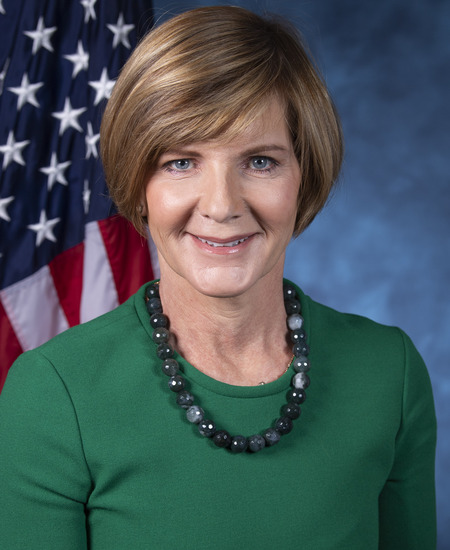
Rep. Susie Lee
Sponsored bills
Pregnant Workers Fairness Act This bill prohibits employment practices that discriminate against making reasonable accommodations for qualified employees affected by pregnancy, childbirth, or related medical conditions. A qualified employee is an employee or applicant who, with or without reasonable accommodation, can perform the essential functions of the position, with specified exceptions. Specifically, the bill declares that it is an unlawful employment practice to fail to make reasonable accommodations to known limitations of such employees unless the accommodation would impose an undue hardship on an entity's business operation; require a qualified employee affected by such condition to accept an accommodation other than any reasonable accommodation arrived at through an interactive process; deny employment opportunities based on the need of the entity to make such reasonable accommodations to a qualified employee; require such employees to take paid or unpaid leave if another reasonable accommodation can be provided; or take adverse action in terms, conditions, or privileges of employment against a qualified employee requesting or using such reasonable accommodations. The bill sets forth enforcement procedures and remedies that cover different types of employees in relation to such unlawful employment practices. The Equal Employment Opportunity Commission must provide examples of reasonable accommodations that shall be provided to affected employees unless the employer can demonstrate that doing so would impose an undue hardship. The bill prohibits state immunity under the Eleventh Amendment to the Constitution from an action for a violation of this bill.
This resolution expresses support for the designation of National Senior Fraud Awareness Day and encourages the development of policies that help prevent scams targeting older adults.
I am Vanessa Guillén Act of 2021 This bill addresses the policies and procedures of the Department of Defense (DOD) for cases or allegations of sex-related offenses.
Homes for Every Local Protector, Educator, and Responder Act of 2021 or the HELPER Act of 2021 This bill establishes a program administered by the Department of Housing and Urban Development to provide mortgage assistance to law enforcement officers, elementary and secondary school teachers, firefighters, or other first responders. Specifically, these individuals may be eligible for a one-time mortgage on a primary family residence with no down payment and no monthly mortgage insurance premium.
Public Safety Employer-Employee Cooperation Act This bill requires the Federal Labor Relations Authority to determine whether a state substantially provides public safety officers or employees the right to form and join a labor organization; recognition by public safety employers of the employees' labor organization, agreement to bargain with the organization, and reduction of any agreements to writing in a contract or memorandum of understanding; the right to bargain over hours, wages, and terms and conditions of employment; and binding interest arbitration to resolve an impasse in collective bargaining negotiations. The bill makes the authority responsible for (1) determining the appropriateness of units for labor representation; (2) supervising elections; (3) conducting hearings and resolving complaints of unfair labor practices; and (4) protecting the right of employees to form, join, or assist any labor organization, or to refrain from doing so. An employer, public safety officer, or labor organization may not engage in a lockout, sickout, work slowdown, strike, or any other organized job action that will measurably disrupt the delivery of emergency services and is designed to compel an employer, public safety officer, or labor organization to agree to the terms of a proposed contract.
Mental Health Professionals Workforce Shortage Loan Repayment Act of 2021 This bill requires the Health Resources and Services Administration to establish a loan repayment program for mental health professionals who work in designated workforce-shortage areas.
Small Business Child Care Investment Act This bill deems certain nonprofit child care providers to be small business concerns so that they may participate in loan programs administered by the Small Business Administration.
This resolution supports the designation of National Asian American, Native Hawaiian, and Pacific Islander Mental Health Day.
Direct Creation, Advancement, and Retention of Employment Opportunity Act or the Direct CARE Opportunity Act This bill directs the Department of Labor to award grants to eligible entities to develop and carry out projects to recruit, retain, or provide advancement opportunities to direct care workers. The term direct care worker includes home health aides, psychiatric aides, nursing assistants, and personal care aides who assist seniors and persons with disabilities in their homes. After the completion of each project assisted with a grant, the Government Accountability Office must study and report to Congress on (1) an assessment of how the project assisted in the recruitment, retention, or advancement of direct care workers; and (2) recommendations for appropriate legislative or administrative actions.