

Medical Student Education Authorization Act of 2022 This bill establishes matching grants awarded by the Health Resources and Services Administration (HRSA) to expand and support medical education with a particular focus on training students to serve as primary care physicians in tribal, rural, or medically underserved communities. HRSA must award the grants to public institutions of higher education located in states that rank in the top quartile of states based on projected unmet demand for primary care providers. In awarding the grants, HRSA must give priority to recipients that (1) are located in states with two or more federally recognized Indian tribes, and (2) demonstrate a public-private partnership. Recipients must use grant funds for specified activities that include developing curricula, expanding partnerships with health care providers and community-based organizations, and providing scholarships.
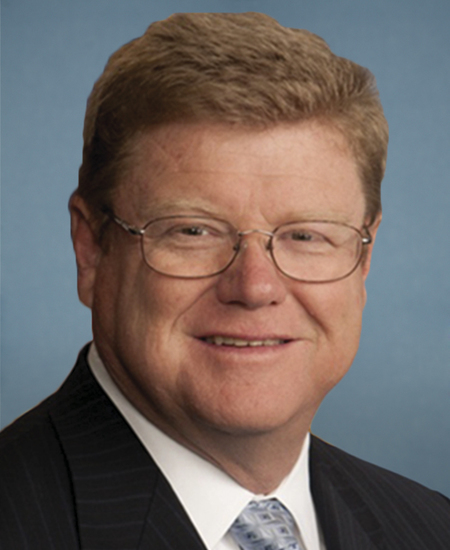
Rep. Mark E. Amodei
Sponsored bills
Maddy summaryThis resolution (HRES 864) is a formal expression of condolence from the U.S. House of Representatives following the death of Senator Harry Mason Reid Jr. of Nevada. It directs the House Clerk to notify the Senate and the senator's family of the House's "profound sorrow," and calls for the House to adjourn immediately as a mark of respect. As a commemorative resolution, it does not create any new laws or policies - it serves solely to honor Senator Reid's service. The bill was introduced on January 10, 2022, after his passing.
Accelerating Access to Critical Therapies for ALS Act This bill establishes grant programs to address neurodegenerative diseases, such as amyotrophic lateral sclerosis (also known as ALS or Lou Gehrig's disease), and contains other related provisions. The Department of Health and Human Services (HHS) shall award grants to eligible entities for scientific research utilizing data from expanded access to investigational ALS treatments for individuals who are not otherwise eligible for clinical trials. The Food and Drug Administration (FDA) shall award grants to public and private entities to cover the costs of research and development of drugs that diagnose or treat ALS and other rare neurodegenerative diseases. HHS shall also establish the Public-Private Partnership for Neurodegenerative Diseases between the National Institutes of Health, the FDA, and at least one eligible entity (generally, an institution of higher education or a nonprofit organization). The partnership shall support the development and regulatory review of drugs that address ALS and other rare neurodegenerative diseases. The FDA shall publish on its website a five-year action plan for fostering the development of drugs that improve or extend the lives of people living with rare neurodegenerative diseases. The Government Accountability Office must report to Congress about the grants provided under this bill, including an analysis of the impact of such grants on research and development of treatments for ALS.
Protecting Our Democracy by Preventing Foreign Citizens from Voting Act This bill prohibits federal funds from being made available to state or local governments that allow noncitizens to vote in federal, state, or local elections.
This bill posthumously provides for the award of a Congressional Gold Medal in commemoration of the 13 service members who died on August 26, 2021, while stationed at Hamid Karzai International Airport in Afghanistan.
Maddy summaryHRES 855 is a symbolic resolution passed by the U.S. House of Representatives to support designating the first week of December 2022 as "National United States Miners Week." It does not create new laws or policies but formally recognizes miners' contributions to the economy and supply chains. The resolution highlights miners' role in providing critical minerals and coal, supporting over 500,000 jobs, and securing domestic resources for everyday products. It directly affects miners and their communities by offering a formal, non-binding acknowledgment of their work. This is a procedural resolution with no concrete policy changes or funding implications.
Radiation Exposure Compensation Act Amendments of 2021 This bill expands two programs that compensate individuals who were exposed to radiation during certain nuclear testing or uranium mining and subsequently developed medical conditions, including cancers. First, the bill expands and extends a program that compensates individuals who were exposed to radiation from atmospheric nuclear testing or other sources and subsequently developed specified cancers. Under current law, this program compensates individuals who were present in a designated geographic area during a period of nuclear testing and certain individuals employed in uranium mining. The bill expands the designated areas to include Colorado, Idaho, Montana, New Mexico, and Guam and additional areas in Arizona, Nevada, and Utah; makes more individuals who worked in uranium mining eligible for the program; increases the amount of compensation awarded to and provides medical benefits for eligible claimants; and extends for 19 years following the bill's enactment the fund that supports this program and the statute of limitations for filing claims (currently, the program terminates on July 10, 2022). Second, the bill makes certain individuals employed in uranium mines or mills eligible for a program that compensates workers, including Department of Energy employees and contractors, for illnesses caused by occupational exposure to radiation and hazardous substances during development and testing of the nation's nuclear weapons stockpile. The bill also establishes a grant program in the National Institute of Environmental Health Sciences for institutions of higher education to study the epidemiological impacts of uranium mining and milling among individuals without occupational exposure.
Community Bank Relief Act of 2021 This bill requires banking agencies to set the community bank leverage ratio between 8% and 8.5% for calendar years 2022, 2023, and 2024 for community banks seeking to satisfy simplified capital adequacy requirements. Currently, banking agencies are statutorily required to set the rate between 8% and 10% through rulemaking. Under current regulations, the rate will increase from 8.5% to 9% on January 1, 2022.
Employee Retention Tax Credit Reinstatement Act This bill provides for a reinstatement of the employee retention tax credit through 2021. The credit was established to compensate employers whose businesses were negatively impacted by the COVID-19 pandemic for wages paid to their employees.
This bill prohibits the Small Business Administration from directly making a loan under the 7(a) Program, which authorizes loans and loan guaranties to small businesses that meet certain requirements.