

Maddy summaryHR 2826, the Save Local Business Act, clarifies when multiple businesses can be held jointly responsible for labor laws. It amends the National Labor Relations Act and Fair Labor Standards Act to state that a business is only a joint employer if it directly controls key employment terms like hiring, pay, schedules, or discipline for another business's workers. This directly affects franchisors, contractors, and similar business models that might previously have been deemed joint employers under broader interpretations. The bill aims to limit joint employer liability to cases where one business has clear, day-to-day control over essential worker conditions.
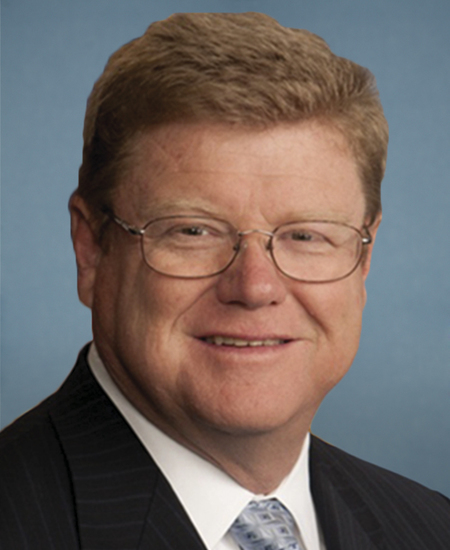
Rep. Mark E. Amodei
Sponsored bills
Maddy summaryHR 2808, the Arnold Daniel Palmer Commemorative Coin Act, authorizes the U.S. Mint to produce three commemorative coins in 2029 honoring golfer Arnold Palmer: $5 gold coins (50,000 max), $1 silver coins (400,000 max), and half-dollar clad coins (750,000 max). The bill requires coin designs to feature Palmer's image and includes surcharges ($35 for gold, $10 for silver, $5 for half-dollar) that fund the Arnold & Winnie Palmer Foundation. All surcharge revenue must support the Foundation's work in youth health, character development through golf, and nature wellness programs. The coins are legal tender but will only be issued in 2029, with all funds covering minting costs before surcharges are directed to the Foundation.
Gun Rights And Marijuana Act or the GRAM Act This bill removes federal firearms-related restrictions on certain individuals who use or are addicted to marijuana. Currently, federal firearms law prohibits the sale or disposition of a firearm or ammunition to persons who are unlawful users of or addicted to a controlled substance. This bill exempts from the prohibition an adult whose use of or addiction to marijuana is lawful in the state or on the tribal lands where the person resides.
Maddy summaryHR 2743 prohibits large financial institutions (over $100 billion in assets) from denying banking services to lawful businesses based on subjective political reasons, industry type, or reputational concerns. It requires these institutions to use objective, risk-based assessments for service decisions and provide written justifications for denials. The law applies to banks, credit unions, and payment networks, with civil penalties for violations including fines up to $10,000 per incident. It specifically ensures businesses operating legally under federal law receive fair access to financial services without discrimination. The bill mandates that denials be based on documented risk factors, not political bias or category-based exclusion.
Maddy summaryHJRES 27 is a congressional resolution seeking to block a federal rule that redefined which waterways fall under the Clean Water Act's protections. It targets a rule submitted by the Army Corps of Engineers, Department of Defense, and Environmental Protection Agency (EPA) on January 18, 2023, which aimed to revise the "Waters of the United States" definition. The resolution would formally disapprove this rule under a specific federal procedure (Chapter 8 of Title 5), preventing it from taking effect. This would directly affect how federal agencies regulate pollution and development near water bodies, including wetlands and smaller streams.
Maddy summaryThis bill corrects a calculation error in funding for the Shoshone-Paiute Tribes of the Duck Valley Reservation water rights settlement. It authorizes $5,124,902.12 for the Development Fund and requires this amount to be adjusted annually for inflation using the Consumer Price Index since 2016. The change directly affects the tribes by ensuring accurate funding for their water rights settlement under the 2023 Act. The bill makes no new policy but fixes a technical oversight in the original settlement’s financial provisions.
Maddy summaryHR 2630, the Safe Step Act, requires group health plans and health insurance issuers to establish a clear, transparent process for patients or their doctors to request exceptions to medication step therapy protocols. These protocols typically force patients to try cheaper drugs first before covering more expensive alternatives. The bill mandates that plans must approve exceptions when prior treatments failed, delay would cause serious harm, a treatment is unsafe, or a patient is stable on a previously approved drug, with strict 72-hour (or 24-hour in emergencies) decision timelines. It also requires plans to publish the exception process online and limit documentation requests to only necessary medical information. This law directly affects health insurers, employers offering health plans, and patients using step therapy for prescription drugs.
Maddy summaryHR 1274, the Lake Tahoe Restoration Reauthorization Act, extends the authorization period for the existing Lake Tahoe Restoration program through 2034. It amends two key sections of the original 2000 law: changing the funding timeframe to end on September 30, 2034, and adjusting the cooperative authorities period to begin with this bill's enactment. This procedural bill directly affects the U.S. Army Corps of Engineers and the Lake Tahoe Restoration Program by ensuring continued funding and operational authority for the project.
Strengthening Supply Chains Through Truck Driver Incentives Act of 2023 This bill allows certain licensed commercial truck drivers a $7,500 tax credit in a taxable year. The adjusted gross income of such drivers may not exceed $90,000 ($135,000 in the case of a joint tax return and $112,500 for heads of household). Such drivers must have driven a truck in a trade or business for a specified number of hours in a taxable year. The credit expires after December 31, 2024.
Maddy summaryThe ALIGN Act (HR 2406) permanently allows businesses to deduct the full cost of qualified equipment and machinery in the year of purchase, rather than spreading the deduction over multiple years. This applies to property placed in service after September 27, 2017, directly affecting businesses that make capital investments in eligible assets like manufacturing equipment or commercial facilities. The bill eliminates the previous requirement to depreciate these costs over time, reducing taxable income in the purchase year. It makes a temporary 2017 tax provision permanent, impacting businesses across various industries that purchase qualifying property.