This joint resolution eliminates the deadline for the ratification of the Equal Rights Amendment, which prohibits discrimination based on sex. The amendment was proposed to the states in House Joint Resolution 208 of the 92nd Congress, as agreed to in the Senate on March 22, 1972. The amendment shall be part of the Constitution whenever ratified by the legislatures of three-fourths of the states.
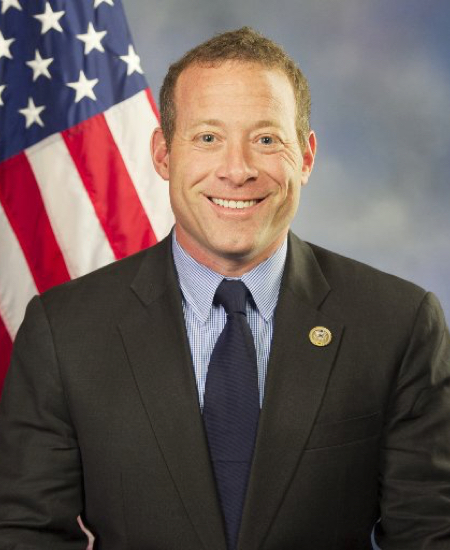
Rep. Josh Gottheimer
Sponsored bills
Neighborhood Homes Investment Act This bill establishes a new business-related tax credit to finance home building and rehabilitation in neighborhoods that meet certain eligibility criteria relating to poverty rates, income, and home values. The credit is limited to 35% of the lesser of the qualified development cost (i.e., the cost of construction, substantial rehabilitation, demolition, and environmental remediation of residential properties) or 80% of the national median sale price for new homes. The credit applies to single family homes containing four or fewer residential units, condominiums, or houses or apartments owned by cooperative housing corporations.
Securing Access for Venue Equity Act or the SAVE Act This bill expands a grant program established to support venue operators in response to COVID-19 (i.e., coronavirus disease 2019) to include hospitality businesses, such as amusement and theme parks, scenic and sightseeing transportation businesses, and travel arrangement and reservation services.
Safe Step Act This bill requires a group health plan to establish an exception to medication step-therapy protocol in specified cases. A medication step-therapy protocol establishes a specific sequence in which prescription drugs are covered by a group health plan or a health insurance issuer. A request for such an exception to the protocol must be granted if (1) an otherwise required treatment has been ineffective, (2) such treatment is expected to be ineffective and delaying effective treatment would lead to irreversible consequences, (3) such treatment will cause or is likely to cause an adverse reaction to the individual, (4) such treatment is expected to prevent the individual from performing daily activities or occupational responsibilities, (5) the individual is stable based on the prescription drugs already selected, or (6) there are other circumstances as determined by the Employee Benefits Security Administration. The bill requires a group health plan to implement and make readily available a clear process for an individual to request an exception to the protocol, including required information and criteria for granting an exception. The bill further specifies timelines under which plans must respond to such requests.
Housing Supply and Affordability Act This bill allows the Department of Housing and Urban Development to award grants to states, local governments, Indian tribes, and Native Hawaiian organizations for the development and implementation of housing policy plans. These plans must increase the housing supply while avoiding resident displacement, increase housing affordability, and reduce barriers to housing development. The amounts provided by the bill are designated as an emergency requirement pursuant to the Statutory Pay-As-You-Go Act of 2010 (PAYGO) and the Senate PAYGO rule. (This excludes the budget effects from being counted for the purposes of enforcing the PAYGO rules.)
Success for Rural Students and Communities Act of 2021 This bill establishes a grant program through which the Department of Education may award funds to eligible partnerships to support rural postsecondary education and economic growth and development in rural communities. A grant recipient must be a partnership whose members represent at least three designated types of organizations, specifically (1) a local educational agency or educational service agency serving a rural area, (2) an institution of higher education (IHE), (3) a regional economic development entity, or (4) a rural community-serving organization with demonstrated success supporting rural students in accessing higher education and attaining degrees. A grant recipient must use awarded funds to carry out no fewer than two specified activities, namely (1) improving postsecondary enrollment rates for rural secondary school students, (2) increasing enrollment and completion rates of rural nontraditional students in degree programs at IHEs, (3) creating or strengthening academic programs at rural-serving IHEs to prepare graduates to enter into high-need occupations in the regional and local economies, or (4) generating local and regional economic development that creates employment opportunities for rural students with postsecondary degrees.
Veteran Suicide Prevention Act This bill requires the Department of Veterans Affairs (VA) to complete a review of the deaths of all covered veterans who died by suicide during the five-year period preceding the enactment of this bill. Covered veterans are those who received VA hospital care or medical services during the five-year period preceding the death of the veteran. The VA shall report on the results of the review and make such report publicly available.
Puppies Assisting Wounded Servicemembers Act of 2021 or the PAWS Act of 2021 This bill requires the Department of Veterans Affairs (VA) to implement a grant program for the purpose of pairing service dogs with eligible veterans. Organizations that receive grants must provide veterinary health insurance coverage, hardware, and travel expenses for each service dog and veteran participating in the program. Eligible veterans are those who (1) are enrolled in the VA health care system, (2) have been evaluated and treated for post-traumatic stress disorder (PTSD) but remain diagnosed with PTSD, (3) may benefit from a service dog, and (4) agree to successfully complete training provided by an eligible organization. Veterans are required to see a VA health care provider at least once every six months to determine whether the veteran continues to benefit from a service dog. Eligible organizations are nonprofit organizations that provide service dogs to veterans with PTSD, meet publicly available standards set forth by the Association of Service Dog Providers for Military Veterans, have expertise in the needs of veterans with PTSD, agree to cover all costs in excess of the grant amount to guarantee the benefits of the program, agree to reaccept or replace a service dog provided to a veteran, and submit an application to the VA. Any improvement in PTSD symptoms as a result of the provision of a service dog shall not affect the veteran's eligibility for any other VA benefits. The Government Accountability Office must report on the grant program.

Veterans Expedited TSA Screening Safe Travel Act or the VETS Safe Travel Act This bill makes certain veterans eligible for the Transportation Security Administration (TSA) PreCheck Program at no cost if they meet the program's background check and security requirements. Veterans who are eligible for this fee waiver are those who are in the annual patient enrollment system of the Department of Veterans Affairs (VA) and require the use of a wheelchair, prosthetic limb, or other assistive device to aid with mobility due to (1) loss, or loss of use, of a limb; (2) full or partial paralyzation; or (3) permanent blindness. The VA and the TSA must develop and implement a process to provide disabled veterans effective outreach about TSA programs that are designed to improve the screening process for passengers with disabilities.
Ethan's Law This bill establishes a framework to regulate the storage of firearms on residential premises at the federal, state, and tribal levels. At the federal level, the bill establishes statutory requirements for firearms on residential premises to be safely stored if a minor is likely to gain access without permission or if a resident is ineligible to possess a firearm. An individual who violates the requirements is subject to criminal penalties. A firearm stored in violation of the requirements is subject to seizure and forfeiture. At the state and tribal levels, the bill requires the Department of Justice to award grants to implement functionally identical requirements for the safe storage of firearms.