

Medal of Sacrifice Act of 2025 This act directs the President to issue a medal of sacrifice for eligible law enforcement officers and first responders who are killed in the line of duty. The act also directs the President to establish a commission on the medal of sacrifice and appoint its members. The act sets forth responsibilities of the commission, including to advise on the design of the medal and determine how the medal will be presented. Under the act, eligible law enforcement officers and first responders include federal, state, local, tribal, or territorial law enforcement officers or first responders who are not subject to an official act of wrongdoing (e.g., a determination that the officer or first responder acted outside the scope of their duties or in a manner that was not in accordance with official policies or procedures). A law enforcement officer or first responder who is subject to an official act of wrongdoing is generally not eligible for the medal of sacrifice. However, in the case of such an officer or first responder, the act requires the commission to investigate the circumstances surrounding the officer or first responder's cause of death and issue a final determination on their eligibility.
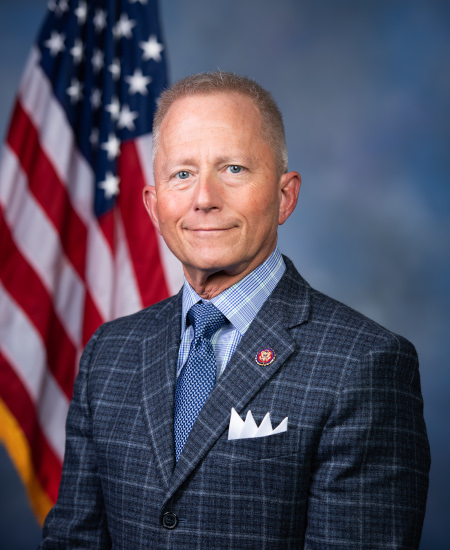
Rep. Jefferson Van Drew
Sponsored bills
Maddy summaryThe DONOR Milk Act establishes new federal regulations to improve the safety and oversight of pasteurized donor human milk, which is milk collected from mothers and given to infants other than their own. This legislation requires facilities that produce or store this milk to undergo annual inspections, including unannounced visits, to ensure they meet food safety standards. To support these facilities in complying with the new rules, the bill authorizes an $8 million grant program to help with equipment upgrades and necessary certifications. These changes directly affect nonprofit organizations and food establishments that manufacture, process, pack, or hold donor human milk.
Maddy summaryThis bill, the Provider Reimbursement Stability Act of 2026, aims to create more predictable payment adjustments for physicians and other healthcare providers under the Medicare program. It directly affects medical practices and providers who receive reimbursement for services through the physician fee schedule. The legislation increases a threshold for certain budget neutrality calculations from $20 million to $54.3 million in 2027, with automatic increases every five years thereafter. It also requires the government to correct payment estimates when actual service usage differs significantly from projections, mandates regular updates to cost calculations for practice expenses, and limits how much Medicare payment rates can change from year to year to a maximum of 2.5 percent.
Maddy summaryThis bill would add pharmacist services to Medicare Part B coverage for beneficiaries, specifically covering pharmacist-led testing and treatment for illnesses like flu, COVID-19, or strep throat during public health emergencies. It defines covered services as those performed under state law, often requiring collaboration with a physician, and sets payment at 80% of the lesser of the actual charge or 85% of physician payment rates. Pharmacists would be prohibited from balance billing for these services, ensuring Medicare beneficiaries pay only their standard copayment. The changes would take effect January 1, 2026.
Maddy summaryThis bill authorizes the U.S. Mint to produce commemorative $5 gold and $1 silver coins marking the 25th anniversary of the September 11, 2001, terrorist attacks. The coins must feature designs honoring victims and first responders (including the inscription "Never Forget") and will be sold only during 2027-2028. All surcharges ($35 per gold coin, $10 per silver coin) collected from sales will fund the National September 11 Memorial and Museum at the World Trade Center, with no net cost to the federal government. The coins are legal tender but primarily intended for collectors, not circulation.
Maddy summaryThe Smithsonian American Women’s History Museum Act authorizes the creation of a new Smithsonian museum dedicated to women’s history, to be located within the National Mall Reserve in Washington, D.C. If the site is managed by another federal agency, the bill requires that agency to transfer the land after notifying Congress and relevant committees. The museum must ensure exhibits and programs accurately represent diverse women’s experiences by consulting a broad range of experts and community voices. The Smithsonian will submit biennial reports to Congress detailing how the museum meets these representation standards.
Maddy summaryThis resolution formally recognizes National Public Works Week, which takes place from May 17 to May 23, 2026, to honor the work of public works professionals. It highlights the essential roles these workers play in maintaining critical infrastructure like roads, bridges, and water systems, as well as their contributions to emergency response efforts. The measure also expresses support for initiatives aimed at strengthening the public works workforce and increasing public awareness of the importance of infrastructure maintenance.
Maddy summaryThis bill directs the Secretary of the Interior to study the Mullica River watershed in New Jersey for potential designation as a Wild and Scenic River. The study will focus on specific segments of the Mullica River and its tributaries, including the Wading River, Batsto River, and various creeks and brooks. If the study concludes that these waters meet the necessary criteria, the federal government could officially protect them under the Wild and Scenic Rivers Act. This legislation does not immediately change the status of the rivers but establishes a process to evaluate their suitability for conservation.
Hemp Planting Predictability Act This bill extends by two years the implementation of changes to the regulation of hemp products, which reimpose certain federal controls over some hemp products. Specifically, Congress enacted the FY2026 agriculture appropriations act (P.L. 119-37) on November 12, 2025. Effective November 12, 2026, the act modifies the statutory definition of hemp products that are considered to be lawful. This bill extends the effective date to November 12, 2028. As background, the 2018 farm bill excluded hemp from the Controlled Substances Act definition of marijuana and defined hemp . As a result, hemp and hemp-derived products at or below the 0.3% delta-9 tetrahydrocannabinol (THC, the psychoactive component of marijuana) concentration threshold were no longer regulated as Schedule I controlled substances and registration with the Drug Enforcement Administration was no longer required to cultivate or handle hemp and hemp-derived products. However, hemp remained subject to Department of Agriculture and Food and Drug Administration regulation. The 2025 changes to the definition of hemp, include changing the limit to a total THC concentration of not more than 0.3% on a dry weight basis rather than only delta-9 THC, explicitly including industrial hemp, excluding seeds from a cannabis plant that exceed a certain THC concentration, and excluding various types of hemp-derived cannabinoid products. Cannabinoids refer to unique chemical compounds that are found in hemp and marijuana (e.g., THC) and are known to exhibit a range of psychological and physiological effects.
Maddy summaryHR 6776, the Farmers to Families Act, allows WIC participants to use their nutrition benefits to purchase fresh, local foods directly from farmers, farmers' markets, and food hubs. It requires states to integrate cash-value benefits and coupons into the electronic benefits transfer (EBT) system within 18 months, enabling participants to pay for unprepared, locally grown foods through a single EBT card. The bill also automatically authorizes farmers to sell to WIC participants and establishes a Technical Assistance Center to help farmers and markets accept nutrition benefits. This directly affects WIC participants and farmers' markets, expanding where benefits can be spent while simplifying access for sellers. The law focuses on concrete changes to program rules, not outcomes.