Ensuring Survivor Benefits during COVID-19 Act of 2021 This bill requires the Department of Veterans Affairs to get a medical opinion to determine if a service-connected disability was the principal or contributory cause of death in situations where a veteran's death certificate identifies COVID-19 (i.e., coronavirus disease 2019) as the principal or contributory cause of death, the certificate does not clearly identify any of the veteran's service-connected disabilities as the principal or contributory cause of death, and a claim for dependency and indemnity compensation is filed with respect to the veteran.
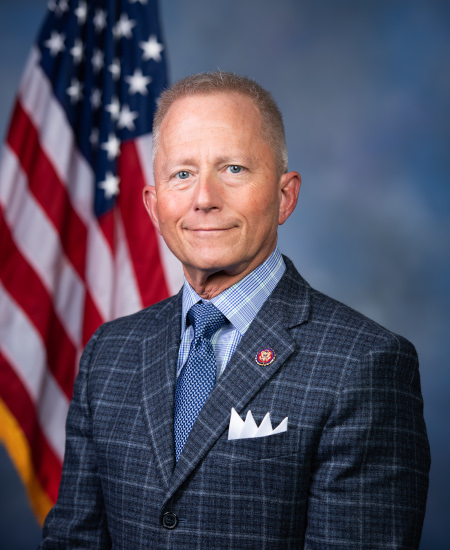
Rep. Jefferson Van Drew
Sponsored bills
Veterans Economic Recovery Act of 2021 This bill addresses the employment and retraining of veterans, specifically during the COVID-19 (i.e., coronavirus disease 2019) public health emergency. The bill requires the Department of Veterans Affairs (VA) to implement a program under which the VA must provide up to 12 months of nontransferable retraining assistance (including a housing stipend) to up to 35,000 eligible veterans for the pursuit of a specified program of education. Under the bill, an eligible veteran is an individual who, among other requirements, is unemployed due to COVID-19. Veterans who receive retraining assistance may only use such assistance to pursue specified programs, including those designed to provide training for high-demand occupations. The bill requires the Department of Labor to conduct outreach to veterans participating in the program to notify them of employment placement services and facilitate employment placement. Additionally, the VA must enter into a memorandum of understanding with one or more qualified nonprofit organizations to facilitate the employment of veterans participating in the program. The Government Accountability Office must report on the outcomes and effectiveness of the retraining assistance program. The program will terminate 21 months after the date of the enactment of this bill.
Supporting Veteran Families in Need Act This bill permanently extends the authorization for the Department of Veterans Affairs to provide financial assistance for supportive services for very low-income veteran families in permanent housing.
Women and Lung Cancer Research and Preventive Services Act of 2021 This bill requires the Department of Health and Human Services to conduct an interagency review of the status of women and lung cancer. The review must report on the status of existing research and current knowledge gaps; identify new opportunities for collaborative research to determine the causes of lung cancer and advance prevention, screening, diagnosis, and treatment; and provide recommendations for a national cancer screening strategy and public education campaign.
Energizing American Shipbuilding Act of 2021 This bill directs (1) the Federal Energy Regulatory Commission (FERC) to require specified percentages of liquefied natural gas exports to be transported on vessels built or retrofitted in the United States and documented under its laws, and (2) the President to require specified percentages of crude oil exports to be transported on vessels built or retrofitted in the United States and documented under its laws. FERC and the President may waive these requirements under specified circumstances. The Energy Information Administration must collect and publish information on exports of natural gas and crude oil by vessels, including forecasts and data on those exports.
Pharmacy Benefit Manager Accountability Study Act of 2021 This bill requires the Government Accountability Office to report on the role of pharmacy benefit managers in the pharmaceutical supply chain and recommend legislative actions to lower the cost of prescription drugs. The report must address the use of rebates and fees, the average prior authorization approval time, and the use of step therapy within the 10 largest pharmacy benefit managers.
Funding for Aviation Screeners and Threat Elimination Restoration Act or the FASTER Act This bill repeals the requirement that a portion of aviation security service fees collected from passengers be credited as offsetting receipts and deposited in the general fund of the Treasury. It requires such fees to be deposited into a separate account in the Treasury for expenditure to pay only the costs of activities and services for which the fee is imposed (i.e., aviation security screening).
Youth Mental Health and Suicide Prevention Act of 2021 This bill authorizes the award of matching grants to enhance services in secondary schools for students with mental and behavioral health issues that can lead to failure in school, such as depression and substance abuse. The Substance Abuse and Mental Health Services Administration may award these grants on a competitive basis to state or local educational agencies that serve at least one secondary school.
Developing Responsible Individuals for a Vibrant Economy Act or the DRIVE-SAFE Act This bill directs the Department of Transportation to promulgate regulations to implement an apprenticeship program for licensed commercial motor vehicle drivers under the age of 21. Under the program, an apprentice must complete two probationary periods that total 400 hours of on-duty time, of which at least 240 hours must be driving time in a commercial motor vehicle. Additionally, the apprentice must be accompanied in the cab of the commercial motor vehicle by an experienced driver. Further, the bill requires all commercial motor vehicles used in the program for training to be equipped with safety technology such as active braking collision mitigation systems and video event capturing systems. An employer shall not knowingly allow, require, permit, or authorize a driver under the age of 21 to operate a commercial motor vehicle unless the driver is participating in, or has completed, an apprenticeship program that meets the requirements set forth in this bill.
Protecting the Right to Organize Act of 20 21 This bill expands various labor protections related to employees' rights to organize and collectively bargain in the workplace. Among other things, it (1) revises the definitions of employee , supervisor , and employer to broaden the scope of individuals covered by the fair labor standards; (2) permits labor organizations to encourage participation of union members in strikes initiated by employees represented by a different labor organization (i.e., secondary strikes); and (3) prohibits employers from bringing claims against unions that conduct such secondary strikes. The bill also allows collective bargaining agreements to require all employees represented by the bargaining unit to contribute fees to the labor organization for the cost of such representation, notwithstanding a state law to the contrary; and expands unfair labor practices to include prohibitions against replacement of, or discrimination against, workers who participate in strikes. The bill makes it an unfair labor practice to require or coerce employees to attend employer meetings designed to discourage union membership and prohibits employers from entering into agreements with employees under which employees waive the right to pursue or a join collective or class-action litigation. The bill further prohibits employers from taking adverse actions against an employee, including employees with management responsibilities, in response to that employee participating in protected activities related to the enforcement of the prohibitions against unfair labor practices (i.e., whistleblower protections). Such protected activities include providing information about a potential violation to an enforcement agency, participating in an enforcement proceeding, initiating a proceeding concerning an alleged violation or assisting in such a proceeding, or refusing to participate in an activity the employee reasonably believes is a violation of labor laws. Finally, the bill addresses the procedures for union representation elections, provides employees with the ability to vote in such elections remotely by telephone or the internet, modifies the protections against unfair labor practices that result in serious economic harm, and establishes penalties and permits injunctive relief against entities that fail to comply with National Labor Relations Board orders.