

This resolution expresses the sense of the House of Representatives that the Department of Homeland Security (DHS) provides essential protection for our country from foreign and domestic threats and that defunding DHS would be detrimental to our national security.
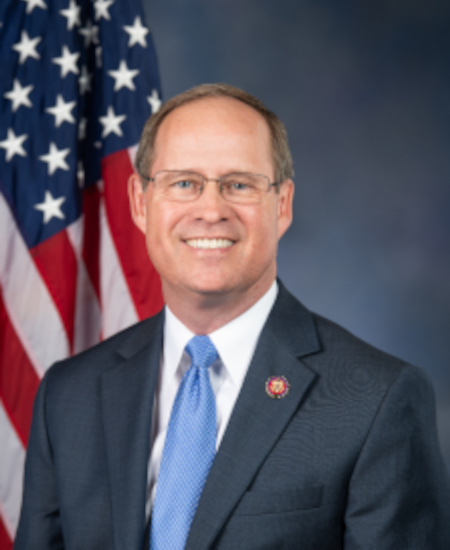
Rep. Gregory F. Murphy
Sponsored bills
This resolution recognizes and expresses support for the efforts of democracy and human rights activists in Cuba.
This bill modifies certain boundaries of the John H. Chafee Coastal Barrier Resources System Unit located in North Topsail Beach, North Carolina.
This resolution expresses support for the designation of National Independence and Veterans Appreciation Month.
This bill requires the Government Accountability Office to study and report on how direct-to-consumer pharmaceutical advertising negatively impacts drug costs to consumers.
SNAP Reform Act of 2021 This bill modifies eligibility under the Supplemental Nutrition Assistance Program (SNAP) with respect to individuals who receive other forms of assistance. Currently, households may be considered categorically eligible for SNAP if all members receive certain other assistance, such as under the Temporary Assistance for Needy Families (TANF) program. The bill specifies that members receiving TANF assistance must (1) receive at least $150 a month in cash assistance under TANF for an extended period with an income of up to 130% of the federal poverty level (FPL), or (2) be elderly or disabled and receive cash assistance or ongoing and substantial services under TANF with an income of up to 200% of the FPL. The bill also increases the maximum allowable resources for SNAP eligibility and specifies that certain allowances relating to energy assistance extend only to households with elderly members.
Rebuilding Communities After Disasters Act This bill requires the Small Business Administration (SBA) to increase the loan limits for the disaster loan program and to communicate certain information about the program following disasters. Specifically, the bill raises from $40,000 to $75,000 the loan amount for repair or replacement of household and personal effects and from $200,000 to $400,000 the loan amount for repair or replacement of a primary residence. Further, the bill requires the SBA to communicate through radio, television, print, and web-based outlets all relevant information needed by disaster loan applicants if a disaster is declared or the SBA declares eligibility for additional disaster assistance. (Currently, the SBA is only required to endeavor to communicate such information.) The SBA must submit a report on the disaster loan program that includes information such as the number and dollar value of program loans and the average estimated dollar value of damage sustained by borrowers.
Minor League Baseball Relief Act This bill establishes a program for the relief of certain minor league baseball clubs and independent professional baseball clubs that experienced large business losses. The bill provides funding for the Small Business Administration to make grants to such clubs that experienced decreases in gross revenue in 2020 of at least 75%, as measured against revenues in 2019 (or, if revenues were negatively affected by a natural disaster or weather disruption in 2019, by the average of revenues over the prior three-year period). The source of funding for the grants shall be funds appropriated under enacted COVID-19 relief legislation that have not been obligated and are no longer being used to carry out activities authorized under those laws. Grant amounts provided to any club may not exceed $10 million.
Foreign Gain-of-Function Research Prevention Act of 2021 This bill prohibits the use of federal funds to conduct or support gain-of-function research involving potential pandemic pathogens by China, Russia, Iran, North Korea, or other foreign adversaries. Gain-of-function research is any research that is anticipated to confer an attribute on a pathogen to enhance its pathogenicity or transmissibility in mammals. If the Department of State finds that an entity has used funds for prohibited research, the entity may not receive any federal funding for a period of five years.
Campus Free Speech Restoration Act This bill addresses expressive activities (e.g., peacefully assembling, distributing literature, or carrying signs) on college campuses. First, the bill generally prohibits a public institution of higher education (IHE) that participates in federal student-aid programs from restricting noncommercial expressive activities on campus. Further, the bill prohibits a public IHE from receiving federal funds if the Department of Education determines that the public IHE (1) maintains a policy that infringes upon the expressive rights of students; or (2) maintains or enforces time, place, or manner restrictions on expressive activities, except in limited circumstances. In addition, the bill prohibits retaliation against an individual because the individual reported or complained about restrictions on expressive activities or participated in an investigation or hearing. The bill also requires a private IHE that receives federal funds to provide students with its policies related to expressive rights. The bill also establishes a framework for investigating complaints and for IHEs to regain eligibility for federal funds.