

Maddy summaryThe Recycled Materials Attribution Act of 2026 allows companies to use mass balance accounting to support claims about recycled content in their products, provided they follow independent third-party certification rules. This method lets manufacturers mix recycled materials with conventional ones in the same supply chain while still crediting the final product with a specific amount of recycled content based on documented inputs. The Federal Trade Commission will update its existing environmental marketing guidelines to reflect these new standards and will enforce the rules against misleading recycled content claims. Additionally, the law prevents states from passing their own conflicting regulations on how recycled content claims are made or enforced.
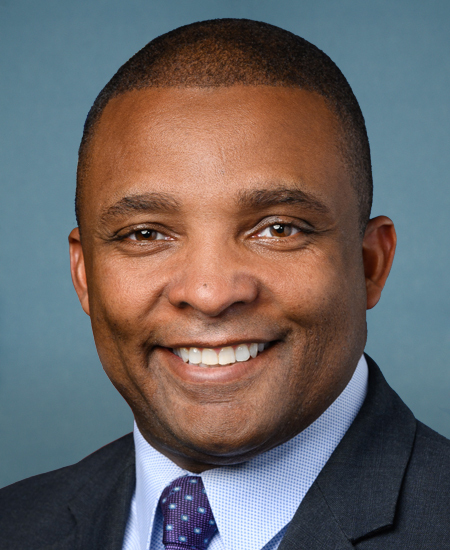
Rep. Donald G. Davis
Sponsored bills
Maddy summaryHR 6152, the Foreign Robocall Elimination Act, establishes an interagency task force to address foreign robocalls entering the United States. The task force, composed of the FCC, FTC, DOJ, and private sector representatives, will study the origins, impacts, and potential solutions to foreign robocalls and must submit a report to Congress within 360 days. The bill also modifies existing law to require FCC notices about robocall mitigation every three years instead of annually, and introduces a bond requirement for providers using the Robocall Mitigation Database. This legislation affects telecommunications providers, federal agencies, and all U.S. telephone users who receive unwanted calls. The bill aims to improve coordination between U.S. agencies and foreign countries in combating illegal robocalls through concrete policy changes.
Maddy summaryHR 1869 creates a new DOJ task force within the Criminal Division to investigate and prosecute international trade crimes, such as customs evasion, smuggling, and trade-based money laundering. It requires the DOJ to hire specialized prosecutors, coordinate with agencies like U.S. Customs and Border Protection, and focus on specific violations covered under statutes like 18 U.S.C. §§ 541-546 and 21 U.S.C. § 331. The bill authorizes $20 million in funding for fiscal year 2026 (with 80% dedicated to criminal prosecutions), mandates annual reports to Congress on enforcement activities, and requires the DOJ to develop multi-agency partnerships to address these crimes. This directly affects federal prosecutors, border enforcement agencies, and industries impacted by trade violations.
Maddy summaryThis bill authorizes the Secretary of the Army to transfer approximately 20 acres of land at Fort Bragg in North Carolina to the state government without charge. The property is intended for the construction of a veterans' home under the jurisdiction of the North Carolina Department of Military and Veterans Affairs. The state is required to pay all costs associated with the transfer, including environmental reviews and administrative fees, with any excess prepayments refunded by the federal government. If the land is no longer used for the designated veterans' facility, ownership may revert to the United States at the Secretary's discretion.
National Law Enforcement Officers Remembrance, Support and Community Outreach Act. [ sic ] This bill temporarily directs the Department of the Interior to award a grant to the National Law Enforcement Officers Memorial Fund for the expenses associated with operating and enhancing the community outreach, public education, and officer safety and wellness programs of the National Law Enforcement Museum.
Maddy summaryThe Lifelong Learning Act amends the Workforce Innovation and Opportunity Act to increase the percentage of federal funds that states must reserve for incumbent worker training and transitional jobs programs. It requires states to report on the performance outcomes of these specific training initiatives, which will then be used to adjust performance targets for other adult and dislocated worker programs. Additionally, the bill expands flexibility by allowing local boards to serve as one-stop operators if they enter into written agreements with local officials and adhere to strict conflict-of-interest controls.
Maddy summary# Summary of Digital Commodities and Blockchain Technology Regulatory Framework This comprehensive legislation establishes a new regulatory framework specifically for digital commodities and blockchain technology, creating a balanced approach that protects investors while fostering innovation. ## Key Components 1. **New Regulatory Structure**: - Creates new categories for digital commodity exchanges, brokers, and dealers under the Commodity Futures Trading Commission (CFTC) - Establishes "qualified digital asset custodians" as a new regulatory category - Defines "mature blockchain systems" with special regulatory treatment 2. **Core Requirements**: - Mandates segregation of customer assets and strict custody requirements - Requires robust risk management systems - Sets capital requirements for digital commodity brokers and dealers - Establishes new disclosure and reporting obligations - Defines "blockchain control persons" with special restrictions on selling digital commodities 3. **Innovation-Focused Provisions**: - Creates a "Strategic Hub for Innovation and Financial Technology" (FinHub) at the SEC - Establishes "LabCFTC" as a dedicated innovation lab within the CFTC - Provides exemptions for SEC-registered entities from certain CFTC requirements - Includes provisions for expedited hiring of digital commodities experts 4. **Studies and Research**: - Mandates studies on decentralized finance (DeFi) - Requires a study on non-fungible tokens (NFTs) - Directs a study on financial literacy among digital commodity holders - Requires a study on tokenized securities and derivatives 5. **Exclusions**: - Excludes decentralized finance activities from regulation - Excludes certain blockchain-related activities from regulatory requirements The legislation aims to create a functional regulatory framework that acknowledges the unique benefits and risks of digital commodities while ensuring investor protection, preventing market manipulation, and promoting the responsible development of this emerging technology within the United States. It seeks to prevent the shift of digital commodity development to less regulated countries by establishing a clear, balanced regulatory path.
Maddy summaryThe PERM Backlog Reduction Act of 2026 directs the Department of Labor to create an optional premium processing program for employers seeking permanent labor certifications, a key step in sponsoring foreign workers for green cards. By paying a $1,200 fee, which is adjusted annually for inflation starting in fiscal year 2028, employers can have their applications processed within 30 calendar days, or within 15 days if they submit a request for information on a delayed case. The bill mandates that these fees be deposited into a dedicated Treasury account to cover the costs of staffing, training, fraud detection, and system upgrades necessary to run the program. Additionally, it requires that this expedited service does not slow down the standard processing times for other labor certification forms and allows for streamlined rulemaking procedures to ensure rapid implementation.
Maddy summaryThe Virtual-Based Opioid Treatment for Veterans Act directs the Department of Veterans Affairs to launch a two-year pilot program aimed at expanding access to virtual opioid treatment for enrolled veterans who face barriers to in-person care. This initiative requires the VA to conduct outreach, build referral networks, and coordinate with other federal agencies to connect veterans with telehealth programs that combine medication and counseling in a single visit. The bill also mandates a study on treatment barriers and requires annual reports to Congress on the program's progress until the opioid crisis is no longer considered a public health emergency.
Maddy summaryThis resolution commemorates the 61st anniversary of the Medicare program, which was enacted in 1965 to provide health insurance for seniors and individuals with disabilities. It acknowledges the program's role in covering approximately 70 million Americans and highlights its growth from 19 million beneficiaries in 1966 to its current scale. The text honors the contributions of healthcare providers, caregivers, and government personnel who maintain the system while recognizing the program's impact on healthcare access and financial security.