

Reduce Exacerbated Inflation Negatively Impacting the Nation Act This bill requires the Office of Management and Budget and the Council of Economic Advisers to provide an inflation estimate for each executive order that is projected to cause an annual gross budgetary effect of at least $1 billion. The estimate must determine whether the executive order will have no significant impact on inflation, a quantifiable inflationary impact on the consumer price index, or a significant impact on inflation that cannot be quantified at the time the estimate is prepared. The requirement does not apply to executive orders that (1) provide for emergency assistance or relief at the request of any state or local government or an official of the government, or (2) are necessary for national security or the ratification or implementation of international treaty obligations.
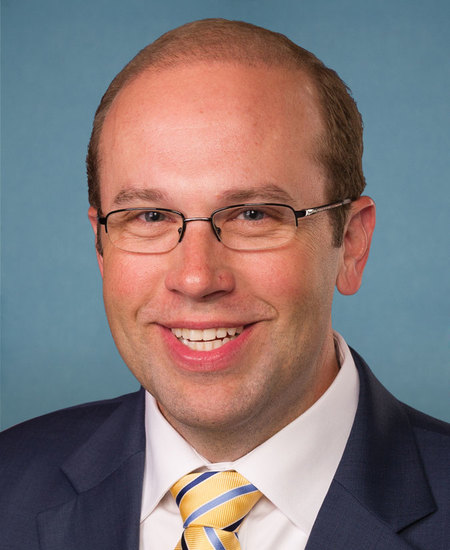
Rep. Jason Smith
Sponsored bills
Permanent Extension of Rate Cuts and Extension of National Tax Simplification Act of 2022 or the PERCENTS Act of 2022 This bill makes permanent provisions in Public Law 115-97 (also known as the Tax Cuts and Jobs Act) relating to individual taxpayers, including the modification of individual income and capital gains tax rates and the increased exemption for the alternative minimum tax. It also increases the standard tax deduction and repeals the limitation on itemized tax deductions.
This resolution sets forth the rule for consideration of H.R. 1011 (Life at Conception Act), which declares that the right to life guaranteed by the Constitution is vested in each human being at all stages of life, including the moment of fertilization, cloning, or other moment at which an individual comes into being.
Hmong Congressional Gold Medal Act This bill provides for the award of a Congressional Gold Medal to the Hmong people in recognition of their highly distinguished service in the Vietnam War and the fight against communism.
Reducing Farm Input Costs and Barriers to Domestic Production Act This bill addresses various provisions related to the regulation of domestic agricultural products, including by requiring the Department of Agriculture to publish criteria for considering requests from meat and poultry establishments to operate at line speeds in excess of the current regulatory limitations. The bill also nullifies the final rule issued by the Council on Environmental Quality on April 20, 2022, that reinstated various National Environmental Policy Act regulatory provisions.
Promoting Cross-b order Energy Infrastructure Act This bill establishes a new process for approving the construction and operation of energy infrastructure across an international border of the United States and replaces the existing process established under specified executive orders. Specifically, this bill requires a person to obtain a certificate of crossing before constructing, connecting, operating, or maintaining a border-crossing facility for the import or export of oil, natural gas, or electricity across an international border. A certificate must be obtained from the Federal Energy Regulatory Commission (FERC) for a facility consisting of oil or natural gas pipelines or the Department of Energy (DOE) for an electric transmission facility. As a condition of issuing a certificate, DOE must require that an electric transmission facility be constructed, connected, operated, or maintained consistent with specified policies and standards. FERC and DOE must meet a deadline for issuing a certificate as set forth by this bill. The bill also requires FERC to meet a deadline for approving applications to import or export natural gas to or from Canada or Mexico.
Chase COVID Unemployment Fraud Act of 2022 This bill addresses fraud and overpayments of pandemic unemployment assistance, including by allowing states to retain a specified percentage of recovered funds and prohibiting the Department of Labor from allowing blanket waivers of overpayments.
Preventing Racism in Medicare Act of 2022 This bill prohibits the Centers for Medicare & Medicaid Services from including the development of anti-racism plans (i.e., plans to address systemic racism in health care) as a qualifying clinical practice improvement activity under the Merit-based Incentive Payment System (MIPS), as described in a November 2021 rule. (MIPS is an incentive program under Medicare that allows health care professionals to receive payment adjustments based on certain performance measures.)
Maddy summaryHRES 1131 is a resolution proposing to remove the January 13, 2021, impeachment of President Trump from the official congressional record, treating it as if it never occurred. It specifically targets the House resolution (H. Res. 24) that impeached Trump for "incitement of insurrection" following the January 6 Capitol riot. The resolution argues the impeachment lacked due process, omitted context about the 2020 election, and violated constitutional procedures by rushing the vote before Trump’s term ended. If passed, it would formally erase the impeachment from legislative history but would not affect Trump’s legal status or future eligibility for office. This is a symbolic procedural measure, not a binding law, and would not change the actual voting record or constitutional implications.
No Timber From Tyrants Act This bill prohibits the importation of wood and related articles from Russia and Belarus. It also directs the Department of the Interior and the Department of Agriculture (USDA) to replace these prohibited imports with timber production on certain lands. Specifically, the bill directs the President to prohibit the importation of all wood and related articles from Russia and Belarus. The President may terminate this prohibition upon certification to Congress that certain conditions have been met, including that Russia or Belarus (or both, as applicable) reached an agreement to withdraw forces in Ukraine. Additionally, the bill directs Interior and USDA to authorize timber harvest in an amount sufficient to equal the volume, with respect to calendar year 2021, of imports of wood and related articles from Russia and Belarus. Interior may authorize timber harvest only on public lands and USDA may authorize timber harvest only on National Forest System lands. The bill generally prohibits Interior and USDA from approving a plan that reduces the allowable sale quantity of timber.