

Maddy summaryThe Protect America's Workforce Act cancels an executive order issued on March 27, 2025, that excluded certain groups from federal labor-management relations programs, making it legally unenforceable. It also ensures that all collective bargaining agreements between federal agencies and labor unions, which were active as of March 26, 2025, remain fully effective until their agreed terms expire. This directly affects federal agencies, labor unions, and the employees covered by these agreements. The bill prevents federal funds from being used to implement the canceled executive order while preserving existing labor agreements.
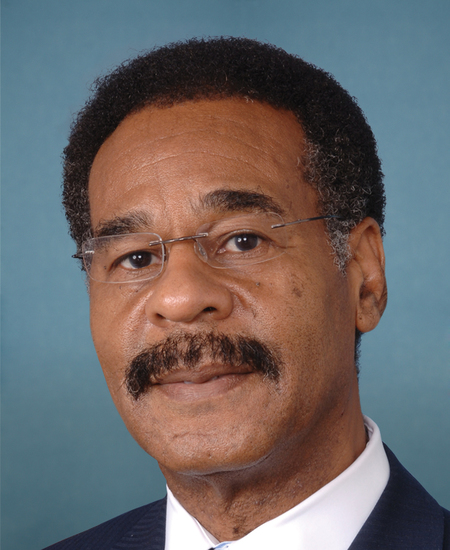
Rep. Emanuel Cleaver
Sponsored bills
Miracle on Ice Congressional Gold Medal Act This act provides for the award of Congressional Gold Medals to the members of the 1980 U.S. Olympic men's ice hockey team in recognition of the team's achievement at the 1980 Winter Olympic Games.
Maddy summaryThe Workforce of the Future Act of 2025 requires federal agencies to produce reports analyzing artificial intelligence's impact on the workforce, including data on affected industries, demographic impacts, and necessary skills. It authorizes $160 million in Department of Education grants to expand emerging and advanced technology education in schools, with a focus on underserved communities and students from low-income backgrounds. The bill also allocates $90 million in Department of Labor grants to support workforce training for workers most affected by AI, particularly those in high-impact industries. Both programs require detailed reporting on demographic data and will be evaluated for effectiveness. The legislation aims to prepare workers and students for an AI-driven economy through education, training, and equitable access to technology skills.
Maddy summaryThis concurrent resolution (HCONRES 65) is a symbolic congressional commendment of state and local governments that have affirmed reproductive rights as human rights. It recognizes efforts by jurisdictions like Carrboro, North Carolina; Austin, Texas; and Fulton County, Georgia, which passed resolutions or proclamations declaring abortion access a human right and condemning criminalization of pregnancy outcomes. The resolution urges states to repeal restrictive abortion laws and protect access to reproductive care, but it does not create new legal requirements or fund programs. As a procedural resolution, it has no binding effect on federal or state law.
Maddy summaryHR 6597, the LET’S Protect Workers Act, increases civil penalties for employers violating key labor laws to strengthen worker protections. It raises fines for child labor violations to up to $700,000 per incident causing death or serious injury, and doubles penalties for repeated wage/hour violations (up to $50,000 per violation). The bill also significantly boosts OSHA penalties (e.g., up to $800,000 for serious violations), adds new retaliation penalties for mine safety violations (up to $200,000 for repeat offenses), and clarifies that recordkeeping violations continue until corrected. These changes apply to employers across sectors, including manufacturing, agriculture, and mining, under the Fair Labor Standards Act, Occupational Safety and Health Act, and Mine Safety Act.
Maddy summaryThe STOP Scams Against Seniors Act directs federal Byrne funds to create elder justice task forces focused on preventing and investigating financial scams targeting seniors aged 60 and older. These task forces must coordinate with local law enforcement, prosecutors, and federal agencies like the FBI and FTC to address fraud. Grantees must report detailed data on cases opened, resolved, victims supported, scam types, and signs of organized crime, with the Attorney General submitting an annual summary to Congress. The bill directly affects seniors vulnerable to financial exploitation and the agencies implementing these task forces.
Maddy summaryThe Dignity for Detained Immigrants Act establishes minimum standards for detention facilities operated by the Department of Homeland Security, requiring them to follow the American Bar Association's Civil Immigration Detention Standards. It mandates annual unannounced inspections by the DHS Inspector General, with penalties including fines for noncompliant private facilities and transfers of detainees from noncompliant facilities. The bill requires DHS to publicly report on facility compliance, phase out private detention facilities over three years, and prohibit solitary confinement. It also ensures detainees have access to legal orientation, counsel, and more frequent custody review hearings. The bill directly affects all individuals detained in DHS custody, including immigrants, asylum seekers, and refugees held in facilities operated by or contracted to DHS.
Maddy summaryHRES 925 is a non-binding resolution condemning the Iranian government's ongoing persecution of the Baha'i religious minority. It directly affects Baha'is in Iran, who face systemic discrimination, imprisonment, denial of education and employment, and violence due to their faith. The resolution calls on Iran to immediately release Baha'i prisoners, end hate propaganda targeting them, and reverse policies banning their access to education and jobs. It also urges the U.S. President and Secretary of State to demand Iran's compliance and use existing sanctions authorities against officials responsible for human rights abuses against Baha'is.
Give Kids a Chance Act of 2025 This bill expands the Food and Drug Administration’s (FDA’s) authority with respect to research on rare pediatric diseases, including by permitting the FDA to take enforcement action against drug sponsors that fail to satisfy pediatric study requirements and by reauthorizing programs that support pediatric research. Specifically, the bill modifies requirements relating to molecularly targeted pediatric cancer investigations to permit research on new drugs in combination with active ingredients that have already been approved, provided certain conditions are met; permits the FDA to take enforcement action against drug sponsors that fail to comply with pediatric study requirements, if such sponsors demonstrated a lack of due diligence in satisfying the requirement; renews the FDA’s authority to award priority review vouchers to sponsors of new products intended to treat rare pediatric diseases through September 30, 2029; and reauthorizes through FY2027 certain funding for the National Institutes of Health to support priority pediatric research. The bill also provides statutory authority for the FDA’s interpretation of the orphan drug exclusivity period. The bill specifies, consistent with FDA regulations, that the seven-year market exclusivity period for drugs for rare diseases or conditions (i.e., orphan drugs) prohibits the approval of the same drug for the same approved use or indication with respect to the disease or condition. (In Catalyst Pharmaceuticals, Inc. v. Becerra , a court rejected the FDA’s interpretation and held that orphan drug exclusivity extends to all uses or indications for the disease or condition.)
Maddy summaryHR 6293, the Housing Supply Expansion Act of 2025, updates federal definitions to include manufactured homes built without a permanent chassis under the same regulatory framework as traditional manufactured homes. It requires the Secretary of Housing and Urban Development to establish new labeling standards (including distinct data plates and invoice notations) for these homes and mandates that states certify they treat them equally to homes on permanent chassis in areas like financing, installation, and sales. States must submit initial certification within one year (or two years for biennial legislatures) and annual recertifications to confirm compliance, with non-compliant states prohibited from allowing the sale or installation of these homes. The bill directly affects manufacturers, state regulators, and homebuyers purchasing manufactured homes without permanent chassis, ensuring consistent federal and state treatment.