Abortion Providers Loan Elimination Act This bill makes abortion providers ineligible to receive a loan under the Paycheck Protection Program, which was established to support small businesses in response to COVID-19. This prohibition shall not apply to hospitals or entities that exclusively provide abortions (1) where the pregnancy is the result of rape or incest, or (2) where the pregnancy endangers the life of the mother. The Inspector General of the Small Business Administration must report on the number of paycheck protection loans made to the Planned Parenthood Federation of America and to other abortion providers.
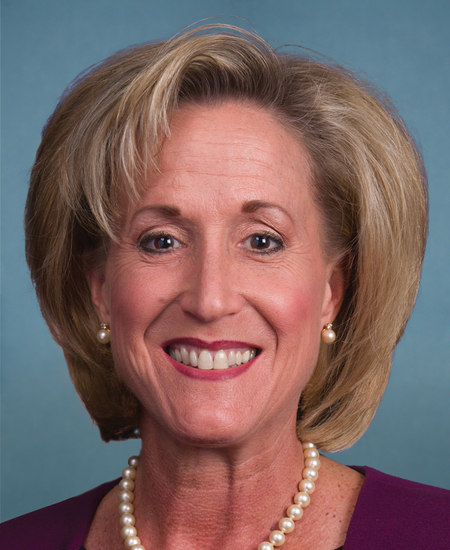
Rep. Ann Wagner
Sponsored bills
No Taxpayer Funding for Abortion and Abortion Insurance Full Disclosure Act of 2021 This bill modifies provisions relating to federal funding for, and health insurance coverage of, abortions. Specifically, the bill prohibits the use of federal funds for abortions or for health coverage that includes abortions. Such restrictions extend to the use of funds in the budget of the District of Columbia. Additionally, abortions may not be provided in a federal health care facility or by a federal employee. Historically, language has been included in annual appropriations bills for the Department of Health and Human Services (HHS) that prohibits the use of federal funds for abortions—such language is commonly referred to as the Hyde Amendment. Similar language is also frequently included in appropriations bills for other federal agencies and the District of Columbia. The bill makes these restrictions permanent and extends the restrictions to all federal funds (rather than specific agencies). The bill's restrictions regarding the use of federal funds do not apply in cases of rape, incest, or where a physical disorder, injury, or illness endangers a woman's life unless an abortion is performed. The Hyde Amendment provides the same exceptions. The bill also prohibits qualified health plans from including coverage for abortions. Currently, qualified health plans may cover abortion, but the portion of the premium attributable to abortion coverage is not eligible for subsidies.

Finish the Wall Act This bill requires the Department of Homeland Security (DHS) to resume activities related to the construction of a barrier system along the U.S.-Mexico border and addresses other border-related issues. DHS must resume all such construction activities that were planned or underway prior to January 20, 2021. DHS must also expend all funds appropriated or explicitly obligated since October 1, 2016, for construction of this barrier system. DHS may not cancel contracts for activities related to such construction entered into on or before January 20, 2021. Furthermore, within 14 days of this bill's enactment, DHS must certify to Congress that U.S. Customs and Border Protection facilities that process adults taken into custody at the border are fully compliant with certain laws related to the collection of DNA. (Among other things, these laws allow for the collection of DNA samples from non-U.S. persons detained under U.S. authority.)
Global Electoral Exchange Act of 2021 This bill authorizes the Department of State to establish a Global Electoral Exchange Program to promote sound election-administration practices around the world. The State Department may award grants to qualified, tax-exempt, U.S.-based organizations that have expertise and experience in relevant topics, such as election-system integrity. Grants may be used to design programs to bring relevant individuals, such as election administrators and poll workers, together to study and discuss election procedures. The State Department shall periodically report to Congress on the program's activities.
This resolution states that the August 9, 2020, election in Belarus was neither free nor fair and, as such, the House of Representatives does not recognize Alyaksandr Lukashenka as the country's legitimate president. The resolution also states that the people of Belarus have the right to determine the country's future without unwelcome intervention from outside actors and condemns the human rights violations committed by Belarusian authorities.
American Workforce Empowerment Act This bill allows tax-preferred college savings plans (529 plans) to fund certain postsecondary certificate programs and apprenticeship programs.
Withstanding Attempts to Encroach on our Resources Act of 2021 or the WATER Act This bill specifies which bodies of water fall under the scope of the Clean Water Act and are thereby under federal jurisdiction. Specifically, the bill provides statutory authority for the definition of waters of the United States , commonly known as WOTUS, included in the 2020 Navigable Waters Protection Rule: Definition of "Waters of the United States." The 2020 rule replaced a 2015 rule that included a more expansive definition of WOTUS.
Chiropractic Medicare Coverage Modernization Act of 2021 This bill expands Medicare coverage of chiropractic services to include all services provided by chiropractors, rather than only subluxation corrections through manual manipulation of the spine.
Southeast Asia Strategy Act This bill directs the Department of State to submit to Congress a strategy for engagement with Southeast Asia and the Association of Southeast Asian Nations (ASEAN). The strategy shall include various elements including (1) an identification of enduring U.S. interests in the region and efforts to bolster ASEAN's effectiveness; (2) a list of ongoing and planned initiatives to strengthen U.S. relationships in the region, including efforts to promote inclusive economic growth and energy innovation; and (3) a summary of ongoing efforts to promote human rights and democracy and strengthen the rule of law.
This resolution expresses the sense of the House of Representatives that (1) clean water is a national priority, and (2) the 2020 final rule titled The Navigable Waters Protection Rule: Definition of "Waters of the United States" should not be withdrawn or vacated.