

Eliminating Abusive and Rampant Neglect of Interactive Technologies Act of 2022 or the EARN IT Act of 2022 This bill revises the federal framework governing the prevention of online sexual exploitation of children. The bill establishes the National Commission on Online Child Sexual Exploitation Prevention. The commission must develop best practices for interactive computer services providers (e.g., Facebook and Twitter) to prevent, reduce, and respond to the online sexual exploitation of children. Additionally, the bill limits the liability protections of interactive computer service providers with respect to claims alleging violations of child sexual exploitation laws. The bill replaces various statutory references to child pornography and material that contains child pornography with child sexual abuse material . Finally, the bill makes changes to the reporting requirements for electronic communication service providers and remote computing service providers (providers) who report apparent instances of crimes involving the sexual exploitation of children to the National Center for Missing and Exploited Children. Among the changes, the bill requires providers to report facts and circumstances sufficient to identify and locate each minor and each involved individual. The bill also increases the amount of time that providers must preserve the contents of a report.
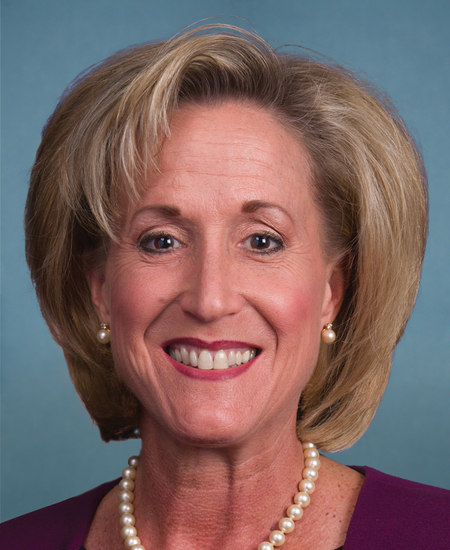
Rep. Ann Wagner
Sponsored bills
Crime Doesn't Fly Act of 2022 This bill prohibits the use of warrants for the arrest, removal, or deportation of an alien as proof of identity at an airport security checkpoint unless the alien is being removed from the United States pursuant to immigration laws.
Child Tax Credit for Pregnant Moms Act of 2022 This bill allows a child tax credit for an unborn child who is born alive. It also allows the credit upon certification that a mother's pregnancy resulted in a miscarriage (the involuntary death of an unborn child who was carried in the womb for less than 20 weeks) or that the child was stillborn (the involuntary death of an unborn child who was carried in the womb for 20 weeks or more).
Sex Trafficking Demand Reduction Act This bill expands requirements for fighting human trafficking that apply to foreign countries receiving U.S. foreign assistance. (The President is authorized to reduce assistance to, or take other actions against, countries that fail to meet such requirements and are not making significant efforts to do so.) The Department of State, when evaluating whether a country has met such requirements, shall assess whether the country has made serious efforts to prohibit the purchase of commercial sex acts if the government has authority to do so, whereas currently the State Department must assess whether a country has made serious efforts to reduce such activities. The State Department shall also assess whether a country has made serious efforts to (1) educate buyers of commercial sex acts on how traffickers exploit prostituted persons, and (2) ensure that anti-trafficking training and provisions are incorporated into codes of conduct for government staff.
Accelerating Access to Critical Therapies for ALS Act This bill establishes grant programs to address neurodegenerative diseases, such as amyotrophic lateral sclerosis (also known as ALS or Lou Gehrig's disease), and contains other related provisions. The Department of Health and Human Services (HHS) shall award grants to eligible entities for scientific research utilizing data from expanded access to investigational ALS treatments for individuals who are not otherwise eligible for clinical trials. The Food and Drug Administration (FDA) shall award grants to public and private entities to cover the costs of research and development of drugs that diagnose or treat ALS and other rare neurodegenerative diseases. HHS shall also establish the Public-Private Partnership for Neurodegenerative Diseases between the National Institutes of Health, the FDA, and at least one eligible entity (generally, an institution of higher education or a nonprofit organization). The partnership shall support the development and regulatory review of drugs that address ALS and other rare neurodegenerative diseases. The FDA shall publish on its website a five-year action plan for fostering the development of drugs that improve or extend the lives of people living with rare neurodegenerative diseases. The Government Accountability Office must report to Congress about the grants provided under this bill, including an analysis of the impact of such grants on research and development of treatments for ALS.
This concurrent resolution expresses the sense of Congress that tax-exempt fraternal benefit societies provide critical benefits to the people and communities of the United States and their work should continue to be promoted.
Stop Federal Vaccine Mandates for Employees Act This bill prohibits the Occupational Safety and Health Administration from issuing any emergency temporary standard that requires an employee to receive a drug, vaccine, or other biological product.
This bill posthumously provides for the award of a Congressional Gold Medal in commemoration of the 13 service members who died on August 26, 2021, while stationed at Hamid Karzai International Airport in Afghanistan.
FDIC Board Accountability Act This bill revises provisions related to the board of directors of the Federal Deposit Insurance Corporation. Specifically, the bill removes the director of the Consumer Financial Protection Bureau from the board as a voting member and requires the appointment of an individual with demonstrated primary experience working in or supervising small depository institutions. Further, the bill limits the term length of a board member to twelve years.
Opioid Prescription Verification Act of 2021 This bill modifies overdose prevention activities carried out by the Department of Health and Human Services (HHS) and the Centers for Disease Control and Prevention (CDC). Specifically, HHS must update pharmacist training materials to include information about how to verify the identity of patients who are prescribed medications. In addition, the CDC may give preference, in awarding grants for overdose prevention, to states that maintain a prescription drug monitoring program that mandates the collection of specified information, require prescribers of certain potentially addictive medications to issue prescriptions electronically (subject to some exceptions), and require dispensers of certain potentially addictive medications to enter particular information about the purchase of such medications into their state's prescription drug monitoring program.