

Maddy summaryHR 4382 authorizes the U.S. Mint to produce commemorative coins for the 2028 Los Angeles Olympics/Paralympics and 2034 Salt Lake City Winter Olympics/Paralympics. It specifies gold, silver, and half-dollar coin designs with defined mintage limits (e.g., up to 100,000 $5 gold coins for each event), all bearing inscriptions like "2028" or "2034" and standard coin features. A surcharge ($5-$50 per coin) is added to sales, with all funds directed to the respective Olympic committees to support event hosting and legacy programs like youth sports. The bill ensures no net cost to the government by requiring surcharge revenues to cover all design, production, and marketing expenses before funds are disbursed.
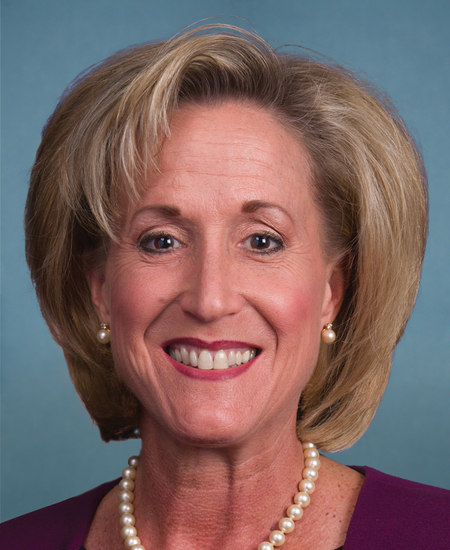
Rep. Ann Wagner
Sponsored bills
Maddy summaryHR 4149 requires the U.S. President to submit biannually a list of foreign individuals or entities undermining Bosnia and Herzegovina's stability, such as those forming illegal parallel institutions or obstructing the Dayton Peace Agreement. It mandates sanctions including asset freezes and visa bans for listed persons, with exceptions for humanitarian aid and national security. The bill specifically targets actions threatening Bosnia's territorial integrity, like those by Republika Srpska officials, and urges EU coordination to sanction figures like Milorad Dodik. Sanctions apply to individuals, their family members (unless they condemn the actions), and entities facilitating transactions for them. The law expires seven years after enactment.
Maddy summaryHR 3422, the Promoting Opportunities for Non-Traditional Capital Formation Act, requires the Securities and Exchange Commission (SEC) to provide educational resources and host events specifically for underrepresented small businesses. This includes women-owned, minority-owned, rural businesses, and those impacted by natural disasters, to raise awareness about capital-raising options. The bill also mandates that the SEC meet annually with state securities commissions to coordinate efforts supporting small businesses and investors. These provisions aim to improve access to capital formation opportunities for groups historically underserved in financial markets.
Maddy summaryHR 3381, the Encouraging Public Offerings Act of 2025, allows any company planning an initial public offering (IPO), follow-on offering, or initial securities listing to confidentially submit draft registration statements to the Securities and Exchange Commission (SEC) for staff review before public filing. The bill removes the previous restriction that limited this confidential review process to "emerging growth companies" and expands it to all issuers. Companies must publicly file the draft and any amendments within specific deadlines: 10 days before an IPO's effective date, 10 days before a securities listing, or 48 hours before a follow-on offering's effective date. This change directly affects businesses preparing to go public by providing a more flexible pre-filing review process.
Maddy summaryHR 2225, the Access to Small Business Investor Capital Act, modifies how investment companies report fees related to business development companies (BDCs). It allows registered investment companies to exclude fees paid indirectly to BDCs (which primarily invest in small businesses) from their "Acquired Fund Fees and Expenses" calculation on SEC registration statements. This change simplifies reporting for investment companies holding BDC shares by removing those specific fees from expense calculations. The bill directly affects investment companies filing SEC forms (N-1A, N-2, N-3) that hold BDC investments, potentially reducing their reported expense ratios. It does not create new funding for small businesses but aims to streamline investment in BDCs by easing reporting burdens.
Maddy summaryThe FIRM Act (HR 2702) prohibits federal banking agencies from considering "reputational risk" in supervising banks and credit unions. It requires agencies to remove all references to reputational risk - defined as concerns about negative publicity affecting an institution's reputation - from regulations, examinations, and enforcement actions. The bill directly affects depository institutions (banks and credit unions) and federal regulators like the FDIC and CFPB, banning them from using reputational risk as a basis for supervision or enforcement. This policy change aims to limit regulatory actions based on subjective public opinion rather than financial safety and soundness.
Maddy summaryHRES 481 is a symbolic resolution condemning recent antisemitic attacks in the U.S., specifically referencing the June 1, 2025, Boulder, Colorado, assault on a Jewish community gathering and other incidents like the May 2025 Washington, D.C., embassy shooting. It formally recognizes a pattern of violence targeting Jewish individuals and institutions, including attacks during religious events. The resolution calls on law enforcement to thoroughly investigate and prosecute such incidents and urges elected officials to publicly oppose antisemitism and politically motivated violence. As a non-binding resolution, it does not create new laws or allocate funding but serves to affirm congressional stance against antisemitism.
Maddy summaryHR 3323, the "Helping Startups Continue To Grow Act," raises the revenue threshold for companies to qualify as "emerging growth companies" (EGCs) under securities law. It increases the limit from $1 billion to $3 billion in annual revenue, allowing more startups to retain EGC status. This directly affects early-stage companies that would otherwise lose access to simplified reporting requirements under the Securities Act of 1933 and Securities Exchange Act of 1934. The key change extends regulatory relief for qualifying businesses, helping them avoid more complex disclosure rules as they grow.
Maddy summaryThis bill requires the Securities and Exchange Commission (SEC) to create rules allowing covered financial entities (like investment companies, brokers, and advisers) to deliver required regulatory documents - such as prospectuses, annual reports, and proxy statements - electronically to investors. It mandates specific transition steps: initial paper delivery for investors preferring it, a 180-day shift to electronic delivery, and annual paper reminders for two years after transition to maintain opt-out options. The rules must ensure documents are readable, securely delivered, and include clear mechanisms for investors to switch back to paper at any time. The SEC must finalize these rules within one year of the bill’s enactment, while existing document delivery requirements remain unchanged.
Maddy summaryHRES 447 is a non-binding House resolution condemning antisemitism and honoring Yaron Lischinsky and Sarah Milgrim, two Israeli Embassy employees killed during a peace-focused panel discussion in 2023. The resolution specifically condemns all forms of antisemitism - including violence, vandalism, and online harassment - and remembers the victims, who were killed by a far-left activist affiliated with the Party for Socialism and Liberation. It calls for enforcing existing hate crime laws and protecting religious freedom, without creating new legislation. This resolution symbolically supports Jewish communities and victims of antisemitic violence but does not alter legal requirements.