

Maddy summaryHR 5553 prohibits the Secretary of Veterans Affairs from providing or paying for surgical treatments related to gender transition. This directly affects transgender veterans who rely on VA healthcare for gender-affirming surgical procedures. The bill blocks VA funding specifically for these surgical treatments, without altering coverage for other healthcare services. It applies to all veterans seeking such care through the VA system.
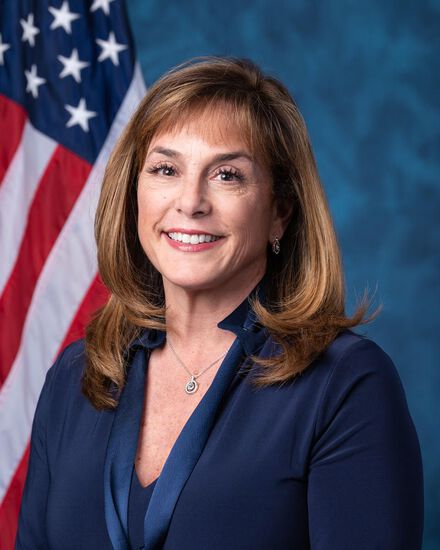
Rep. Lisa C. McClain
Sponsored bills
Accountability in Foreign Animal Research Act This bill prohibits the National Institutes of Health from conducting or supporting research that involves testing on vertebrate animals in China, Cuba, Iran, North Korea, Russia, or other countries determined to be a foreign adversary.
This resolution requests the President and directs the Department of State to transmit to the House of Representatives, not later than 14 days after the adoption of this resolution, copies of both classified and unclassified documents that refer or relate to certain information on the withdrawal of the United States from Afghanistan, including reactions, concerns, or objections expressed by certain allies and partners; any agreement reached with the Taliban related to the evacuation of specified individuals; and numbers of specified individuals in contact with the State Department to request evacuation assistance from Afghanistan, from July 30, 2021, to the present.
Israel Relations Normalization Act of 2021 This bill requires the Department of State to take certain actions promoting the normalization of relations between Israel, Arab states, and other relevant countries and regions. Specifically, the State Department must develop a strategy on expanding and strengthening the Abraham Accords (the term used to refer collectively to agreements between Israel and the United Arab Emirates and between Israel and Bahrain marking the public normalization of relations between the two Arab countries and Israel). The strategy must include a description of how the U.S. government will encourage further normalization of relations with Israel. In addition, the State Department must report on options for U.S. international efforts to promote the strengthening of ties between Israel, Arab states, and other relevant countries and regions. The State Department must also report on the status of the normalization of relations with Israel, including information on (1) laws that punish individuals for people-to-people relations with Israelis (i.e., anti-normalization laws), and (2) evidence of steps taken by Arab governments toward permitting or encouraging normalized relations between their citizens or residents and Israeli citizens.
This resolution expresses the sense of the House of Representatives that Canada should not allow construction of a nuclear waste repository within the Great Lakes Basin and that the President and the Department of State should work with Canada to prevent such construction and craft a long-term solution for nuclear waste storage that does not threaten the Great Lakes.
This resolution celebrates the contributions of small businesses in every U.S. community and supports the designation of National Small Business Week. Further, it supports efforts to provide small businesses with aid and assistance through certain programs and initiatives.
Working Dog Commemorative Coin Act This bill directs the Department of the Treasury to mint and issue 50,000 $5 gold coins, 500,000 $1 silver coins, and 750,000 half-dollar clad coins in commemoration of the service that working dogs provide to society. The designs of the coins minted under this bill shall be emblematic of the contributions of working dogs to society, including in detection, military service, therapy and assistance. Treasury may issue coins only during the one-year period beginning on January 1, 2023. All sales of coins shall include a surcharge, which shall be paid to America's VetDogs for general expenses associated with the fulfillment of its mission.
Guaranteeing Healthcare Access to Personnel Who Served Act This bill addresses the administration and provision of health care to veterans through the Department of Veterans Affairs (VA) and non-VA providers. First, the bill provides statutory authority for the eligibility thresholds for when a veteran must receive non-VA care under the Veterans Community Care Program (VCCP) for primary care, mental health care, noninstitutional extended care services, specialty care, or specialty services. Additionally, the bill establishes access to care standards for non-VA care under the VCCP, meaning a veteran's appointment must be within specified distances and time frames. Among other requirements, the VA must also implement an 18-month pilot program to allow certain veterans to use a website or mobile application to request, schedule, and confirm medical appointments with VCCP providers; ensure that VCCP third party administrators and credentials verification organizations comply with specified requirements to help ensure that certain health care providers are excluded from providing non-VA health care services; develop a strategic plan to ensure the effectiveness of the telehealth technologies and modalities delivered by the VA; and establish an online health care education portal for veterans. The bill requires the Government Accountability Office to report on (1) the VA program under which third parties provide transportation for veterans who are seeking VA services or benefits, (2) VA telehealth services, and (3) the VA's Foreign Medical Program. Finally, the Paperwork Reduction Act does not apply to the voluntary collection of information during research conducted by the Veterans Health Administration.
Curriculum Review of Teachings Transparency Act or the CRT Transparency Act This bill requires a local educational agency, in order to receive certain federal education grants, to post on a publicly accessible website the curriculum for each grade level of its elementary and secondary schools.
Countering Communist China Act This bill addresses issues related to China, tax incentives, and other topics. The bill imposes visa- and property-blocking sanctions on certain entities and individuals that (1) are involved in acts of malign disinformation on behalf of a foreign government or political party, or (2) have engaged in a pattern of significant infringement of intellectual property belonging to a U.S. entity or individual. It also authorizes sanctions on developers and owners of software that makes unauthorized transmissions of user data to servers that are located in China and are accessible by China's government. The bill also provides tax incentives for relocating pharmaceutical, medical supply, or medical device manufacturing to the United States, including by allowing accelerated depreciation of nonresidential real property acquired in connection with such relocation; eliminates the five-year amortization requirement for research and experimental expenditures scheduled to begin in 2022, thus allowing continued expensing of such expenditures in the taxable years in which they are incurred; prohibits an institution of higher education from receiving certain federal funds if the institution has a contractual partnership with an entity controlled by China's government or organized under China's laws; modifies presumptions and evidentiary standards in administrative patent validity challenges; bars China from asserting sovereign immunity in certain instances; requires U.S. representatives to the International Monetary Fund (IMF) to take certain actions, such as opposing any increase to the weight given to China's currency when determining the value of IMF Special Drawing Rights; and permanently rescinds unobligated funds previously made available for certain economic relief programs related to COVID-19.