

Maddy summaryThis bill, known as the ABLE MATCH Act, aims to help individuals with disabilities save money by providing a federal tax credit that is automatically deposited into their ABLE savings accounts. The program targets low-income earners by offering a 100% match on up to $2,000 of annual contributions, provided their income falls below 200% of the federal poverty limit, with the credit amount gradually decreasing for higher incomes. To support wider adoption, the legislation also authorizes the Treasury to award $5 million annually in grants to states for promoting these accounts and includes a requirement for collecting demographic data on account holders. These changes are designed to increase financial security for people with disabilities by encouraging savings without jeopardizing their eligibility for other government benefits.
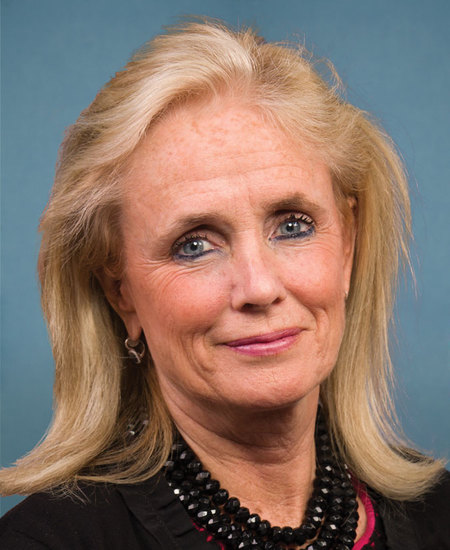
Rep. Debbie Dingell
Sponsored bills
Maddy summaryThe Earth MRI Reauthorization Act of 2026 extends funding for the Earth Mapping Resources Initiative through fiscal year 2031. This program, managed by the U.S. Geological Survey, will support the collection and analysis of subsurface data using advanced technologies like modern sensing and digital geochemistry to map critical minerals and geothermal resources. The bill also updates the initiative's scope to include the 3D Hydrography Program and allocates $84 million for operations between 2027 and 2031.
Maddy summaryThe Aquatic Invasive Species Control and Prevention Act of 2026 strengthens federal efforts to manage and prevent the spread of non-native aquatic organisms by updating existing laws and creating new funding opportunities. The bill establishes a competitive grant program to research and develop environmentally sound technologies for controlling these species, while also requiring a comprehensive study of federal regulations that might slow down rapid response actions when an invasion is detected. It mandates the creation of a national plan for inspecting and decontaminating watercraft at boat launches to stop the transfer of invasive species, and it authorizes funding to support regional panels and monitoring programs across various waterways. Additionally, the legislation updates the National Invasive Species Council's role to better coordinate federal actions and encourages the adoption of advanced ballast water management systems on ships.
Maddy summaryThis bill reauthorizes funding for the C.W. Bill Young Cell Transplantation Program, setting $31 million for fiscal year 2025 and $33 million annually for fiscal years 2027-2031. It also extends the deadline for the national cord blood inventory program from 2026 to 2031. The legislation directly affects stem cell research programs and cord blood banks by maintaining federal funding levels and prolonging the inventory program’s timeline. These provisions ensure continuity for existing research infrastructure and blood bank operations without introducing new policy changes.
Maddy summaryHR 2004, titled "Tyler’s Law," requires the Secretary of Health and Human Services to study how often hospital emergency departments test for fentanyl during overdose cases (beyond standard drug tests), including associated costs, patient benefits/risks, and impacts on privacy and patient-physician relationships. The study must be completed within one year of the bill's enactment. Based on the study results, the Secretary must issue guidance within six months on whether emergency departments should routinely test for fentanyl, how to inform clinicians about test contents, and how such testing may affect future overdose risks and health outcomes. This bill directly affects hospital emergency departments and patients experiencing overdoses by shaping future testing protocols.
Maddy summaryThe Save MEDICARE Act of 2026 aims to improve the Medicare Advantage program by starting in 2028 with several changes to how health plans are paid and monitored. It requires the government to exclude diagnoses from chart reviews when calculating payments to prevent plans from inflating costs based on questionable data. The bill also speeds up audits and appeals to ensure faster resolution of coding disputes and introduces a new penalty system to recover overpayments from plans. Additionally, the law allows states to enforce Medicare rules within their borders and bans financial incentives for doctors based on how they code patient records. Finally, it establishes a mechanism for the Department of Veterans Affairs to recover costs when Medicare Advantage plans cover care that should have been paid for by the VA.
Maddy summaryThis resolution expresses the House of Representatives' support for maintaining equity, diversity, and inclusion in federally funded health research to improve scientific quality and patient outcomes. It opposes proposed administrative rules that would allow political appointees to override peer reviews, restrict international collaborations, and ban funding for studies on diversity and health disparities. The text highlights historical data showing that excluding women and people of color from research has led to medical gaps, such as inaccurate diagnostic tools for Black patients and delayed diagnoses for women with heart disease. Ultimately, the bill urges the administration to preserve the current science-based peer review system and remove barriers that prevent underserved communities from benefiting from medical advancements.
Maddy summaryThis concurrent resolution does not create new laws or change existing regulations but serves to formally recognize the ongoing need for better physical access in federally funded facilities, especially for people with disabilities. It highlights statistics on disability prevalence and employment gaps while reaffirming support for the Architectural Barriers Act of 1968 and the Americans with Disabilities Act of 1990. The measure pledges to use universal and inclusive design as a guiding principle for future infrastructure projects and encourages full compliance with current accessibility laws.
Maddy summaryThe Mamas First Act aims to reduce maternal mortality rates by expanding Medicaid coverage to include support services from doulas, midwives, tribal midwives, and lactation providers. This legislation modifies the Social Security Act to allow these professionals to bill Medicaid for prenatal, labor, and postpartum care delivered in various settings, including homes, hospitals, and clinics. To qualify for reimbursement, doulas must hold a certification requiring continuing education and gather specific client or provider recommendations, while midwives and lactation support providers must meet defined state or international standards. The bill also prohibits Medicaid programs from charging copayments or deductibles for these essential services, with the changes taking effect on January 1, 2027.
Maddy summaryThis bill directs the Centers for Medicare & Medicaid Services to test a new payment model that allows blood transfusions for hospice patients to be billed separately from the standard daily hospice rate. Under this proposed change, Medicare would reimburse these transfusions at the same rate used when they are provided outside of a hospice setting. The legislation requires the agency to evaluate the model by comparing patient outcomes, such as hospital visits and chemotherapy use, between those receiving the new payment structure and similar patients under the current system. This initiative aims to determine if separating the payment for blood transfusions impacts care delivery and resource utilization for individuals receiving end-of-life care.