

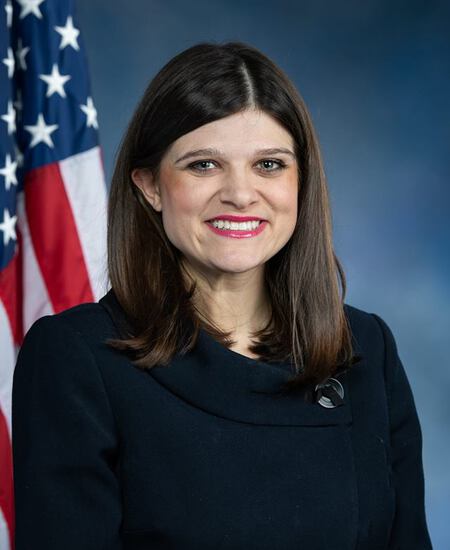
Photo of Haley M. Stevens
D United States House · District 11 · Michigan

Rep. Haley M. Stevens

Compare
Total votes
2,818
all sessions
Attendance
100%
9 missed
Higher than 76% of chamber peers
With party
97%
of cast votes
Near the chamber average
Bipartisan score
1%
crosses aisle rarely
Near the chamber average
Sponsored
1,259
bills & resolutions
Near the chamber average
Committees
5
assignments
1,259 bills and resolutions

Sponsored bills

Total
1,259
Primary
111
Co-sponsor
1,148
This page
1,259
matching current filters
Co-sponsor HR 5724
In committee · Utah House · Co-sponsor
FAST Justice Act

Maddy summaryHR 5724, the FAST Justice Act, creates a 120-day deadline for the Merit Systems Protection Board (MSPB) to act on most federal employee appeals. If the MSPB fails to take action within this period, affected federal employees or job applicants can file a civil lawsuit in federal court. The bill specifies where these lawsuits can be filed (based on where the personnel action occurred or where the employee would have worked) and clarifies that courts must use standard review procedures for MSPB decisions. This directly affects federal workers facing delays in employment-related appeals.

In committee Oct 8, 2025 1 co-sponsor
Co-sponsor HR 842
In committee · Utah House · Co-sponsor
Nancy Gardner Sewell Medicare Multi-Cancer Early Detection Screening Coverage Act

Maddy summaryThis bill adds Medicare coverage for multi-cancer early detection screening tests (blood or biological tests analyzing cell-free DNA) starting January 1, 2028. It directly affects Medicare beneficiaries aged 68 and older (starting in 2028, with the age limit increasing by 1 year annually), requiring tests to be FDA-cleared and deemed reasonable/necessary by the Secretary for early cancer detection across multiple organ sites. Payment will initially match current stool DNA test rates before 2031, then shift to a lower rate or new payment system after 2031, with limits preventing more than one test per year. The bill explicitly states it does not alter coverage for existing cancer screenings like breast, colorectal, or prostate cancer tests.

In committee Oct 3, 2025 1 co-sponsor
Co-sponsor HR 5645
In committee · Utah House · Co-sponsor
Pray Safe Act of 2025

Maddy summaryThe Pray Safe Act of 2025 establishes a federal Clearinghouse within the Department of Homeland Security to provide houses of worship, faith-based organizations, and nonprofit groups at risk of threats with evidence-based safety resources. The Clearinghouse will publish online best practices for security planning, facility safety, and incident response, while listing existing federal and state grant programs to help these organizations implement these measures. It requires annual updates based on user feedback and includes a centralized resource section for contacts like Protective Security Advisors and Fusion Centers. The program expires four years after enactment and does not create new funding but coordinates existing federal and state safety resources.

In committee Oct 1, 2025 1 co-sponsor
Primary HR 5609
In committee · Utah House · Lead sponsor
Stop RFK’s BS Act

Maddy summaryThis bill restores National Institutes of Health (NIH) grants and awards suspended or terminated between January 20, 2025, and its enactment date (unless fraud or mismanagement is found). It requires NIH to immediately reinstate eligible funding, process payment requests within 30 days, and extend grant terms by one year for reinstated awards. The bill directly affects NIH grant recipients (like researchers and institutions) and NIH officials responsible for award management. It focuses on concrete procedural changes to funding access, not on policy content or scientific substance.

In committee Sep 26, 2025 0 co-sponsors
Co-sponsor HR 5557
In committee · Utah House · Co-sponsor
Mental Health Services for Students Act of 2025

Maddy summaryThe Mental Health Services for Students Act of 2025 would establish a federal grant program to fund school-based mental health services for students in grades K-12, particularly those experiencing trauma, grief, suicide risk, or violence. It directly affects schools (including Bureau of Indian Education schools), students, and community mental health providers through partnerships that must include school districts and local mental health entities. Key provisions require services to be culturally appropriate, trauma-informed, and integrated with positive behavioral supports, with grants capped at $2 million per award for 5 years (renewable) and funded at $300 million annually for 2027-2028. Recipients must report annually on program outcomes, ensure equitable access across urban and rural areas, and comply with privacy laws like HIPAA and FERPA.

In committee Sep 23, 2025 1 co-sponsor
Co-sponsor HR 5509
In committee · Utah House · Co-sponsor
Safe Step Act

Maddy summaryThis bill requires health plans and insurers to create a clear, timely process for patients or doctors to request exceptions when step therapy protocols (which force patients to try cheaper drugs first) might harm them. It mandates approval for exceptions in six specific cases, such as when prior treatments failed, delaying care risks severe harm, or the required drug causes adverse reactions. Plans must respond within 72 hours (24 hours for emergencies) and cover the requested drug for at least one year if approved. Additionally, health plans must report annual data on exception requests, approvals, denials, and reasons to the government for transparency.

In committee Sep 19, 2025 1 co-sponsor
Co-sponsor HR 5536
In committee · Utah House · Co-sponsor
HEADACHE Act

Maddy summaryThe HEADACHE Act establishes a National Headache Disorders Initiative (NHDI) under the Department of Health and Human Services to address conditions like migraines, cluster headaches, and other headache disorders affecting vulnerable groups including children, pregnant women, and older adults. It creates an Advisory Council with patient advocates, healthcare providers, and federal agency representatives to guide research, improve diagnosis protocols, and reduce disparities in care. The bill requires federal agencies to share headache-related data and mandates an annual congressional report evaluating progress, disparities across demographics, and recommendations for better access to treatment and stigma reduction, with the initiative set to expire after five years.

In committee Sep 19, 2025 1 co-sponsor
Co-sponsor HR 5486
In committee · Utah House · Co-sponsor
Tyler Clementi Higher Education Anti-Harassment Act of 2025

Maddy summaryThe Tyler Clementi Higher Education Anti-Harassment Act of 2025 requires U.S. colleges and universities participating in federal financial aid programs to create and distribute clear anti-harassment policies covering harassment based on race, color, national origin, sex (including sexual orientation and gender identity), disability, or religion. These policies must explicitly prohibit harassment in all settings - including online, on campus, off-campus housing, and during school-sponsored activities - and outline reporting procedures and support services for victims. The bill also establishes a $50 million annual grant program to fund schools developing prevention programs, victim support services, or staff/student training on recognizing and addressing harassment. Grants are competitive, require annual reporting on effectiveness, and must be used to improve existing efforts without replacing existing civil rights laws like Title IX.

In committee Sep 18, 2025 1 co-sponsor
Co-sponsor HR 5445
In committee · Utah House · Co-sponsor
Federal-State Partnership for Clean Water Act of 2025

Maddy summaryThis bill increases federal funding for state and tribal wetlands programs under the Clean Water Act. It authorizes $300 million annually for fiscal years 2026-2030 (up from $75 million previously), with at least $100 million each year specifically dedicated to state, tribal, and municipal wetlands protection, management, and restoration programs. Additionally, it allocates $500 million annually for state management assistance starting in 2026. The bill directly affects states, tribes, and municipalities by providing new funding streams for wetlands initiatives.

In committee Sep 18, 2025 1 co-sponsor
Primary HR 5446
In committee · Utah House · Lead sponsor
No Tariffs on Groceries Act

Maddy summaryThis bill prohibits the President from imposing new tariffs on food items without specific congressional approval. It requires the President to submit a formal request to Congress for any proposed food tariffs, which must then be approved by a separate law. The bill covers a broad range of food-related products, including groceries, animal feed, seeds, fertilizers, and agricultural chemicals. Existing tariff-rate quotas for food are exempt from this restriction.

In committee Sep 17, 2025 0 co-sponsors
Showing 141 to 150 of 1,259 bills
Previous 1 14 15 16 126 Next