

Maddy summaryHR 7257, the GLRI Act of 2024, reauthorizes federal funding for the Great Lakes Restoration Initiative. It specifically adds $500 million annually for fiscal years 2027 through 2031 to the existing program under the Federal Water Pollution Control Act. This funding directly supports ongoing environmental restoration projects in the Great Lakes region, including pollution cleanup, habitat restoration, and invasive species management. The bill extends current funding levels for the next five years without altering program requirements or eligibility.
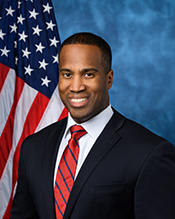
Rep. John James
Sponsored bills
Maddy summaryHRES 1000 is a symbolic resolution designating February 4, 2024, as "National Cancer Prevention Day" to raise awareness about cancer prevention. It does not create new laws, allocate funding, or directly affect any individuals or groups - it is purely a commemorative gesture by the House of Representatives. The resolution cites cancer statistics (e.g., 1 in 4 U.S. deaths linked to cancer) and supports President Biden’s Cancer Moonshot initiative. It expresses recognition of cancer’s impact and encourages broader awareness, early detection, and collaboration with medical experts. As a procedural resolution, it has no binding policy effect.
Maddy summaryThis non-binding resolution urges the U.S. State Department to redesignate Nigeria as a "Country of Particular Concern" (CPC) for systematic religious freedom violations under the International Religious Freedom Act, and to appoint a Special Envoy for Nigeria and the Lake Chad region. It cites U.S. Commission on International Religious Freedom (USCIRF) recommendations, reports of ongoing violence against Christian communities (including church attacks and kidnappings), and Nigeria’s blasphemy laws as justification. The resolution specifically requests the Secretary of State to immediately redesignate Nigeria as a CPC and the President to appoint a Special Envoy with direct reporting to the Secretary. It does not create new law but expresses congressional intent for U.S. diplomatic action. (3 sentences)
Maddy summaryThis resolution condemns the ongoing violence in Sudan, including attacks on civilians and the use of sexual violence as a weapon of war, and calls for immediate diplomatic action to end hostilities. It directly urges the U.S. President to appoint a special envoy for Sudan and directs the Secretary of State to develop a sanctions strategy targeting military leaders, monitor arms sales, and support humanitarian aid access. Key provisions include requiring regular review of atrocities determinations, deepening coordination with the Treasury for sanctions, and urging regional partners to impose targeted sanctions on violators. The resolution focuses on U.S. policy actions to support civilians and accountability, without proposing new laws or funding.
Maddy summaryHRES 974 is a non-binding House resolution supporting the designation of January 21-27, 2024, as "National School Choice Week." It encourages parents to learn about K-12 education options - including public schools, charter schools, private schools, and homeschooling - and promotes public awareness of educational choice. The resolution does not create new laws or policies but formally expresses the House's backing for this annual observance. It directly affects parents and students by highlighting available education pathways and urging communities to host events celebrating school choice. The resolution was introduced by multiple House members and referred to the Education Committee.
Maddy summaryThis bill requires the President's annual budget submission and congressional budget resolutions to include the ratio of public debt to estimated gross domestic product (GDP). It amends existing laws (31 U.S.C. §1105(a) and the Congressional Budget and Impoundment Control Act of 1974) to mandate this specific metric be reported. The change would standardize the inclusion of this ratio in federal budget documents, making it a formal part of fiscal planning. It is a procedural update to reporting requirements, not a policy change affecting debt levels or spending.
Maddy summaryHRES 955 is a resolution commending Taiwan for its democratic election history and supporting Taiwan's democratic institutions. It recognizes Taiwan's transition to democracy since the late 1980s, including 7 presidential and 9 legislative elections held since then, all deemed free and fair. The resolution specifically expresses support for Taiwan's upcoming January 13, 2024, elections and condemns interference by the Chinese Communist Party. It affirms U.S. commitment to a strong partnership with Taiwan across multiple domains and supports Taiwan's self-defense and liberty. As a procedural resolution, it does not create new law but formally expresses congressional support for Taiwan's democratic development.
Maddy summaryHRES 953 is a formal resolution congratulating the University of Michigan Wolverines football team for winning the 2024 NCAA Division I College Football Playoff National Championship. It specifically recognizes their undefeated 15-0 season, 12th national title in school history, and three-peat Big Ten Conference championship. The resolution directs the House to invite the team to the U.S. Capitol for an honor and sends copies to university leadership (President, Athletic Director, and Head Coach) for display. This is a ceremonial resolution with no policy changes or direct impact beyond expressing congressional recognition.
Maddy summaryHR 6926, the Safe and Open Streets Act, makes it a federal crime to intentionally block public roads or highways to disrupt the movement of goods or commerce. The bill adds a specific offense under federal law for purposefully obstructing, delaying, or affecting commerce by blocking roads, with penalties including fines or up to five years in prison. It directly affects individuals who block roads to interfere with transportation or delivery of goods, such as during protests or demonstrations. The law updates existing statutes to clarify and strengthen penalties for this specific type of obstruction, without changing broader traffic or protest laws.
Maddy summaryThe Bipartisan Workforce Pell Act creates a new grant program providing financial aid to students enrolled in short-term, career-focused educational programs (150-600 clock hours, 8-15 weeks) that prepare students for high-demand jobs. To qualify, programs must meet specific standards including alignment with industry needs, minimum job placement rates of 70%, and median earnings that exceed local wage benchmarks. The bill requires institutions to collect and publicly report data on program outcomes including completion rates, job placement, and student earnings through the College Scorecard website. It also establishes new accreditation standards for agencies evaluating these workforce programs, with $40 million authorized for fiscal year 2025 and $30 million for each of the next four years.