

Maddy summaryThis bill amends the Northern Border Security Review Act to establish a new annual deadline for threat analysis (September 2, 2025, and each year after) and requires the Department of Homeland Security to update its northern border strategy within 90 days of each analysis. It mandates that the Secretary provide a classified briefing to congressional committees within 30 days of each threat analysis and develop performance measures for U.S. Customs and Border Protection's Air and Marine Operations to secure the northern border in air and maritime areas within six months of enactment. The bill directly affects the Department of Homeland Security and congressional committees by imposing specific reporting deadlines and review requirements. These changes focus on improving the frequency and structure of security assessments without altering existing border security operations.
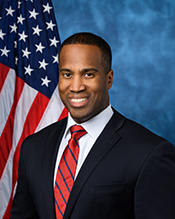
Rep. John James
Sponsored bills
This bill allows a tax deduction for contributions to a qualified tuition program (known as 529 plans) up to $10,000 in a taxable year. Taxpayers whose adjusted gross income exceeds $200,000 in a taxable year are not eligible for the deduction.
Maddy summaryHR 537 authorizes a Congressional Gold Medal to honor 60 diplomats who saved Jewish lives during the Holocaust by issuing visas and passports against their governments' orders, risking expulsion and personal danger. The medal will be presented to the next of kin of these diplomats, alongside representatives from their home countries, and permanently displayed at the United States Holocaust Memorial Museum. The bill also permits the sale of bronze duplicates to cover production costs, with proceeds going to the U.S. Mint. This legislation recognizes the diplomats' humanitarian actions without creating new government programs or altering existing laws.
Maddy summaryHR 6418 creates new small grants ($100,000 maximum) to help educator-led teams plan new charter schools. It directly affects charter school developers led by educators with at least 54 months of school-based experience (including after-school/summer programs) who have already drafted a community-focused school plan. The bill requires states to reserve 5% of certain charter school grant funds specifically for these pre-opening planning grants. This changes how federal funds support charter school development by prioritizing educator-led proposals during the planning phase.
Maddy summaryThis resolution (HRES 1272) calls on the Biden Administration to seek symbolic censure of Iran at the International Atomic Energy Agency (IAEA) for violating nuclear nonproliferation agreements and to refer Iran's case to the United Nations Security Council. It urges diplomatic action to prevent Iran from acquiring nuclear weapons, citing Iran's enrichment of uranium to 60% purity, obstruction of IAEA inspections, and development of advanced centrifuges. The resolution does not create new law but formally requests specific international diplomatic steps from the U.S. government.
Maddy summaryThe AFTER SCHOOL Act (HR 8593) creates a federal grant program to fund after-school programs for students in grades 6-12 in school districts located in counties with a juvenile offense rate of at least 10%. Grants are awarded to eligible school districts or nonprofit organizations (501(c)(3) groups) based on the number of students served, with $100 million authorized annually for 2025-2028. Funds can expand existing programs, create new ones, or partner with nonprofits, but must include educational activities. The program directly affects students in high-risk communities by providing structured after-school opportunities, with school districts required to report program details annually.
Maddy summaryThis resolution (HRES 1254) is a non-binding statement formally celebrating 60 years of U.S.-Kenya diplomatic relations, established in 1964. It recognizes Kenya’s strategic importance as a regional partner in security, economic cooperation, and democracy, highlighting areas like trade, defense collaboration, and regional stability efforts. The resolution reaffirms U.S. support for Kenya’s democratic institutions, economic reforms, and role in addressing regional challenges such as counterterrorism and environmental resilience. It does not create new policies or affect specific groups but serves as a symbolic gesture to strengthen bilateral ties. The resolution was introduced by a bipartisan group of U.S. Representatives in May 2024.
Maddy summaryThis bill requires the U.S. Department of Defense and State Department to immediately deliver all previously approved military equipment and services to Israel within 15 days, reversing any pauses on arms transfers. It prohibits using federal funds to withhold, halt, or cancel defense article deliveries to Israel and mandates that unobligated security assistance funds for Israel must be spent by the end of 30 days. The bill also requires monthly reports to Congress detailing all security assistance provided to Israel since October 7, 2023, including specific items delivered and funding sources. The law directly affects U.S. agencies responsible for military aid and Israel as the recipient of the security assistance.
Maddy summaryHR 8310, the Bipartisan BRIDGE to DRC Act of 2024, directs the U.S. government to develop two new strategies for the Democratic Republic of Congo (DRC). It requires a 180-day plan to promote democracy, peace, and stability - including addressing election flaws and ending armed conflict - and a separate strategy to ensure DRC’s critical minerals (like cobalt and copper) are mined responsibly, with a focus on reducing China-linked companies’ dominance in the sector. The bill mandates U.S. agencies to assess human rights conditions in mines, support local artisanal miners, and increase American investment in the DRC’s mining industry. These strategies must be updated every three years for 12 years, targeting U.S. diplomatic and aid efforts rather than directly changing DRC laws.
Maddy summaryHJRES 98 is a congressional resolution seeking to block a National Labor Relations Board (NLRB) rule that defined how businesses are considered "joint employers" for labor law purposes. The bill targets the NLRB's October 2023 rule (88 Fed. Reg. 73946), which would have changed how companies like franchisors or staffing agencies are held responsible for workers' rights. If passed, this resolution would cancel the rule, directly affecting businesses managing multiple employer relationships and labor organizations enforcing workplace standards. The measure uses a standard process under federal law to disapprove an agency rule, not creating new policy but reversing an existing regulation.